







Question: Consider the following code snippet: public int getCoinValue (String coinName) {...} Which of the following statements is correct? coinName is an explicit parameter. coinName is
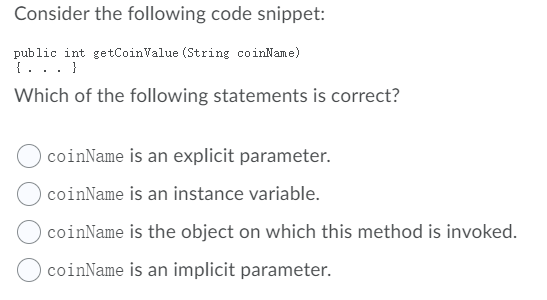
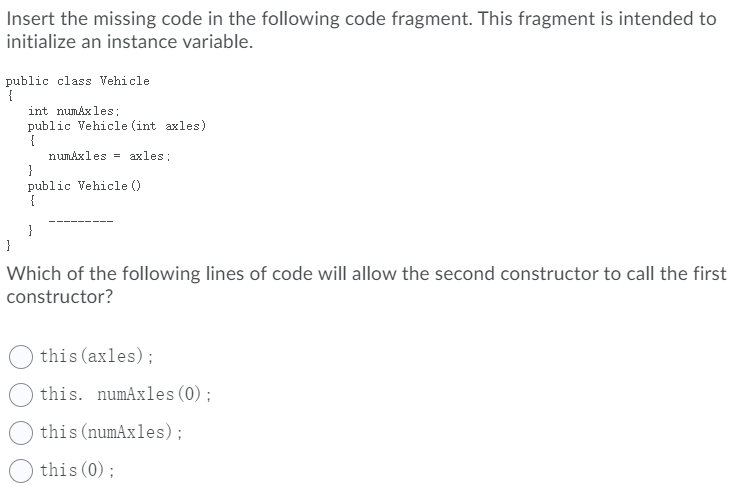
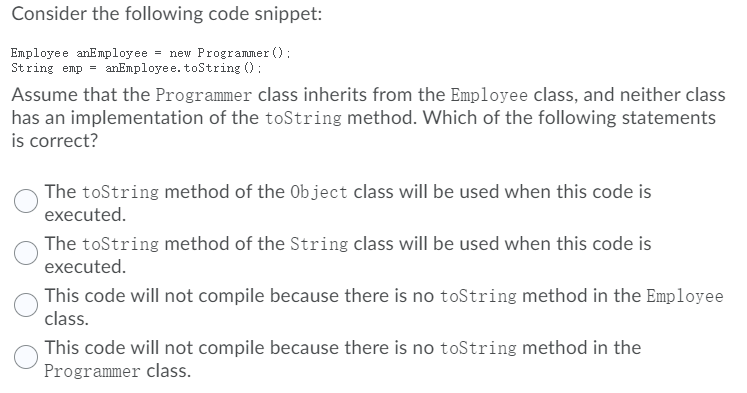
Consider the following code snippet: public int getCoinValue (String coinName) {...} Which of the following statements is correct? coinName is an explicit parameter. coinName is an instance variable. coinName is the object on which this method is invoked. coinName is an implicit parameter. Insert the missing code in the following code fragment. This fragment is intended to initialize an instance variable. public class Vehicle { int numAxles; public Vehicle (int axles) { numxles = axles: } public Vehicle () { } } Which of the following lines of code will allow the second constructor to call the first constructor? this (axles); this. numAxles 0); this (numAxles): this (0 : Consider the following code snippet: Employee anEmployee = new Programmer () : String emp = anEmployee.toString(): Assume that the Programmer class inherits from the Employee class, and neither class has an implementation of the toString method. Which of the following statements is correct? The toString method of the object class will be used when this code is executed. The toString method of the String class will be used when this code is executed. This code will not compile because there is no toString method in the Employee class. This code will not compile because there is no toString method in the Programmer class
Step by Step Solution
There are 3 Steps involved in it

Get step-by-step solutions from verified subject matter experts
 Study Help