



Question: Consider the following Counter class: public class Counter { private int count =0; public Counter() count =0; public void increment() { count++; public int get
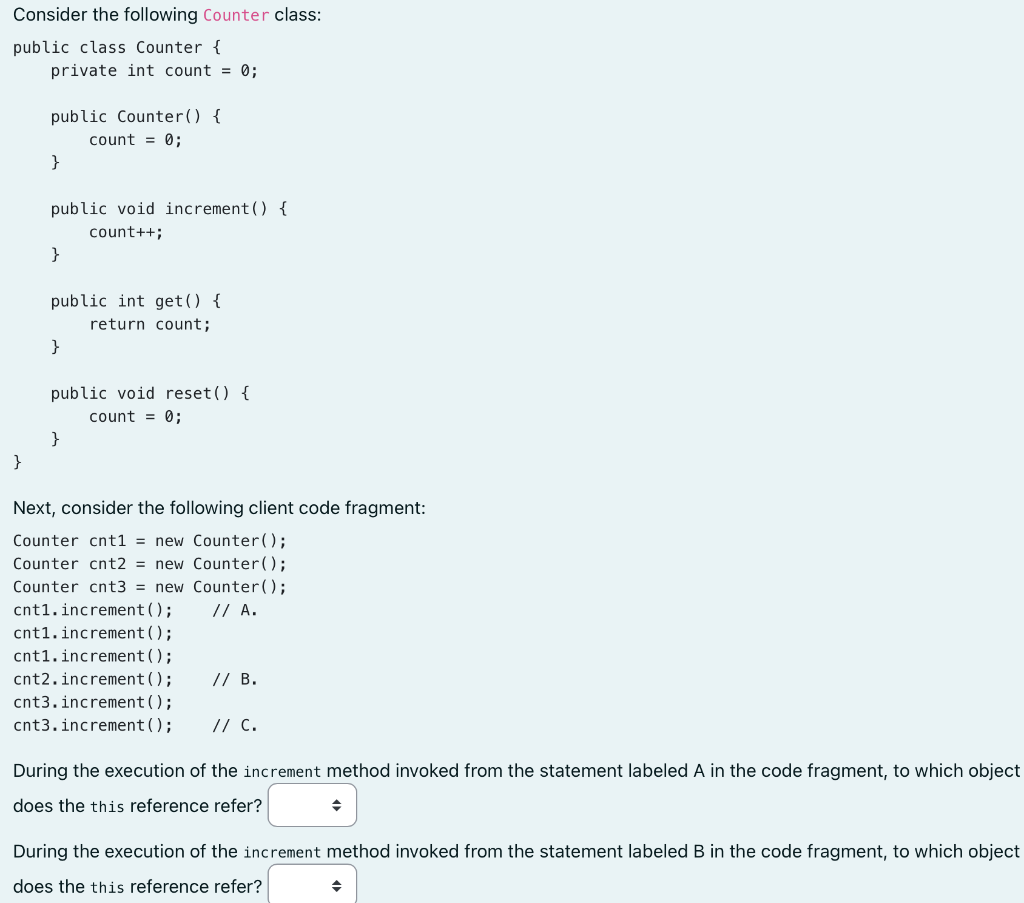

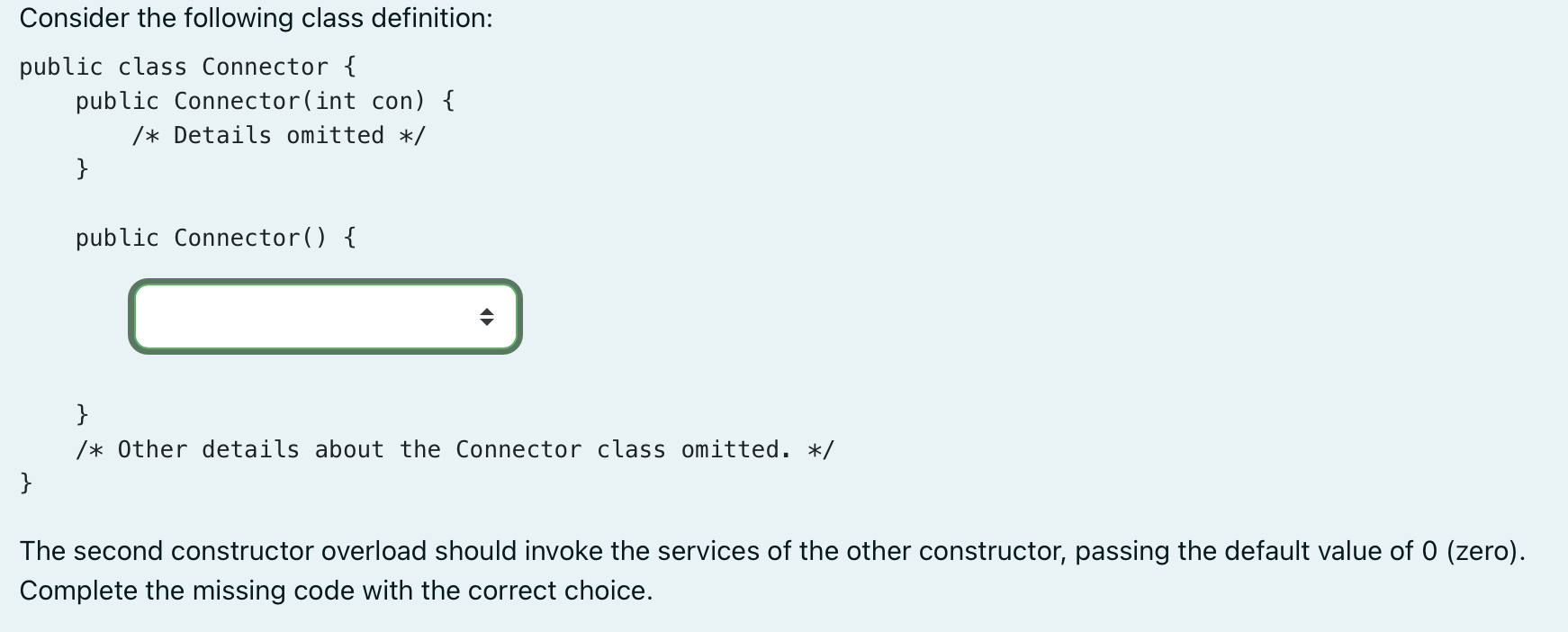
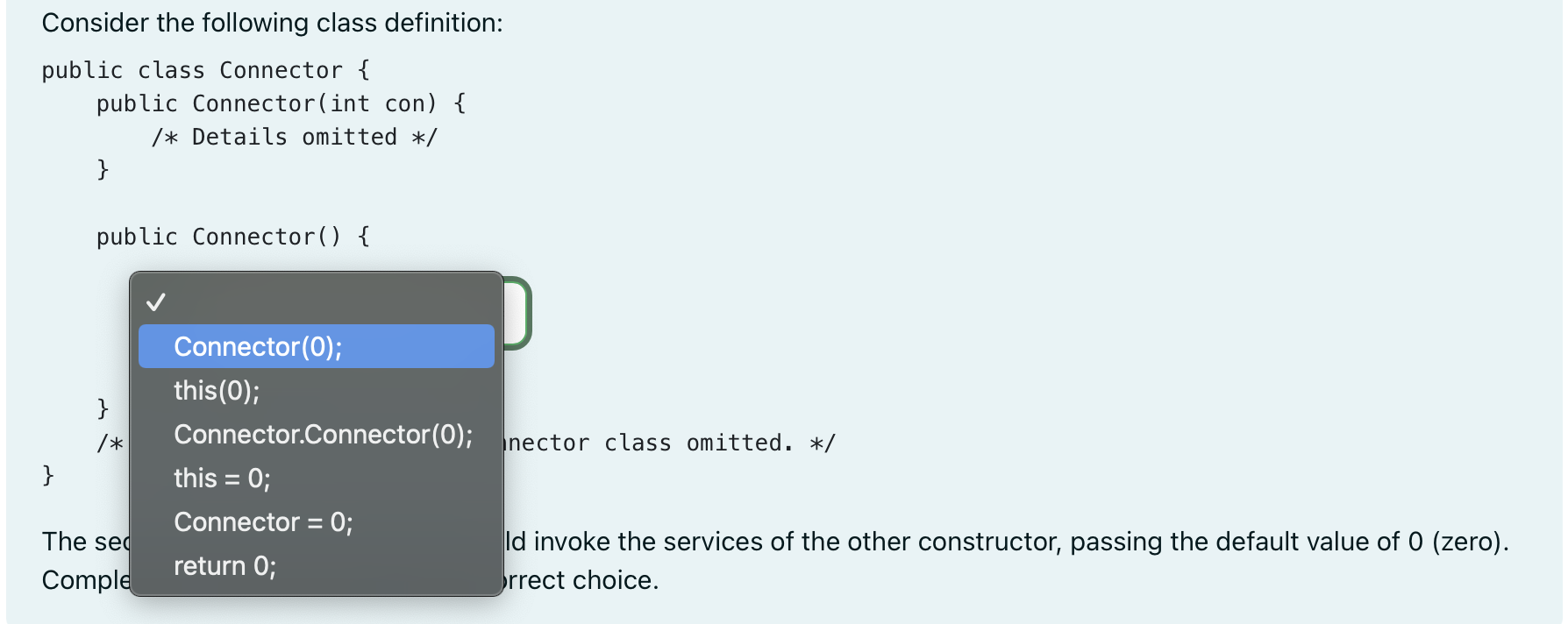
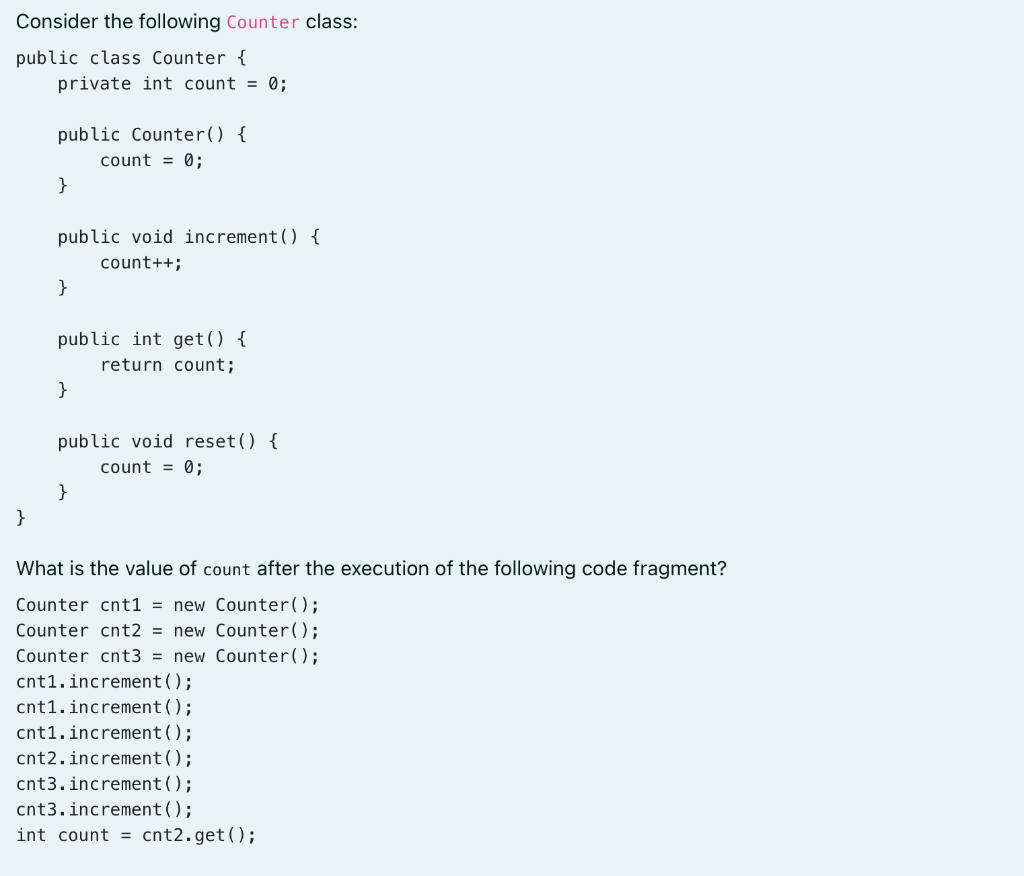
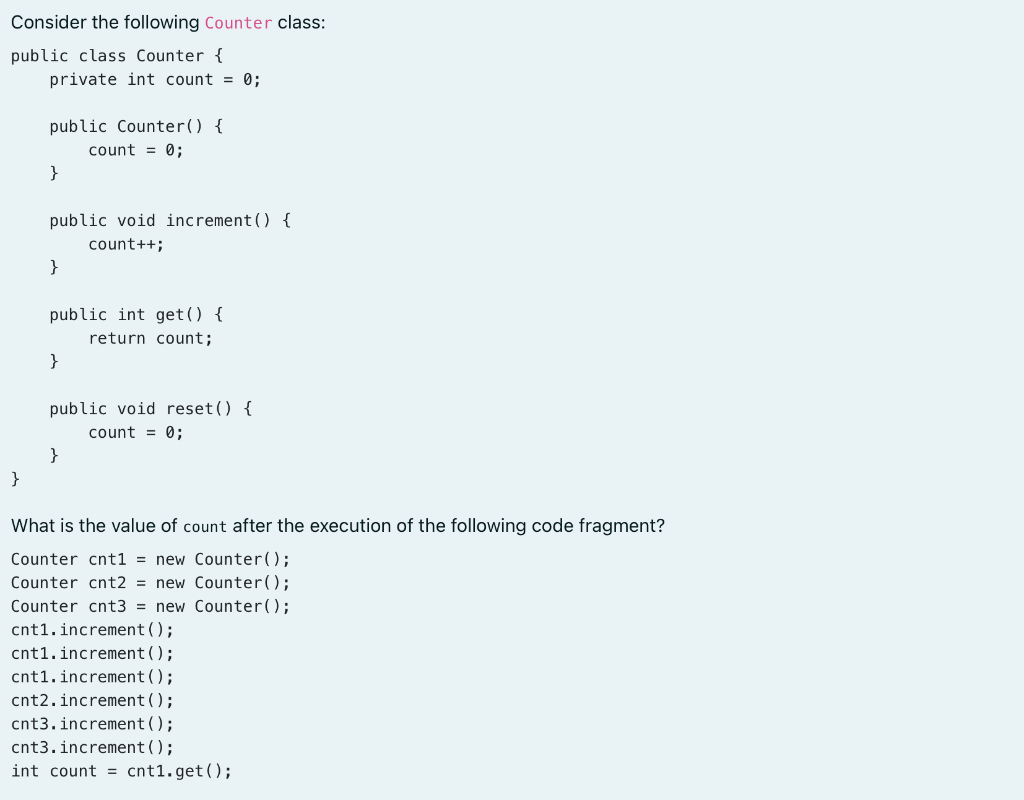
Consider the following Counter class: public class Counter \{ private int count =0; public Counter() count =0; public void increment() \{ count++; public int get () \{ return count; public void reset() \{ \} count 0; Next, consider the following client code fragment: Counter cnt1 = new Counter () ; Counter cnt2 = new Counter () ; Counter cnt3 = new Counter () ; cnt1. increment (); // A. cnt1. increment (); cnt1. increment ( ); cnt2. increment (); // B. cnt3. increment ( ); cnt3. increment (); // C. During the execution of the increment method invoked from the statement labeled A in the code fragment, to which object does the this reference refer? During the execution of the increment method invoked from the statement labeled B in the code fragment, to which object does the this reference refer? During the execution of the increment method invoked from the statement labeled C in the code fragment, to which object does the this reference refer? Consider the following class definition: public class Connector \{ public Connector(int con) \{ /* Details omitted / public Connector ()\{ 3 /* Other details about the Connector class omitted. */ \} The second constructor overload should invoke the services of the other constructor, passing the default value of 0 (zero). Complete the missing code with the correct choice. Consider the following class definition: Consider the following Counter class: public class Counter \{ private int count =0; public Counter() \{ count =0; public void increment ()\{ count++; public int get () \{ return count; public void reset() \{ \} count 0; What is the value of count after the execution of the following code fragment? Counter cnt1 = new Counter () ; Counter cnt2 = new Counter () ; Counter cnt3 = new Counter () ; cnt1. increment ( ) ; cnt1. increment(); cnt1. increment(); cnt2. increment (); cnt3. increment (); cnt3. increment( ) ; int count = cnt 2get(); Consider the following Counter class: What is the value of count after the execution of the following code fragment? Counter cnt1 = new Counter () ; Counter cnt2 = new Counter (); Counter cnt3 = new Counter (); cnt1. increment(); cnt1. increment (); cnt1.increment (); cnt2. increment () ; cnt3. increment (); cnt3. increment (); int count =cnt1get()
Step by Step Solution
There are 3 Steps involved in it

Get step-by-step solutions from verified subject matter experts