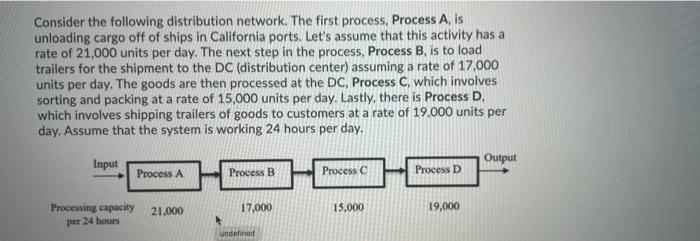
Question: Consider the following distribution network. The first process, Process A, is unloading cargo off of ships in California ports. Let's assume that this activity has
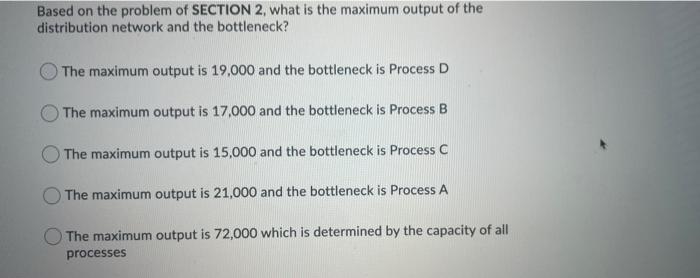
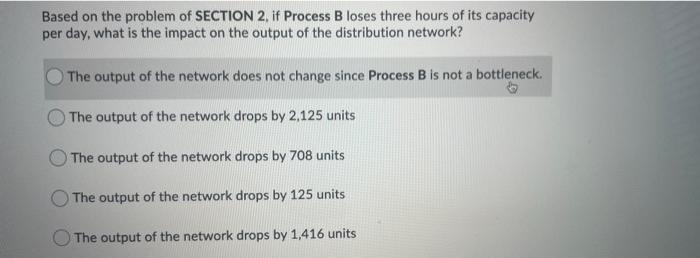
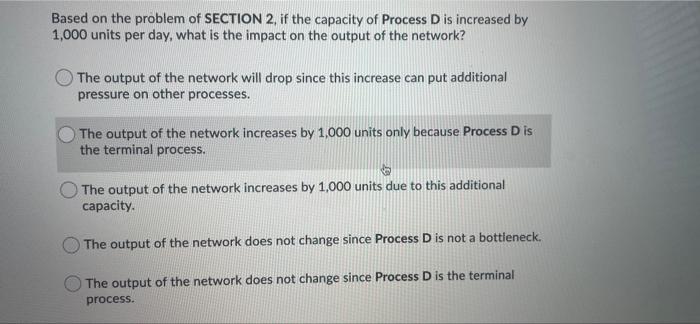
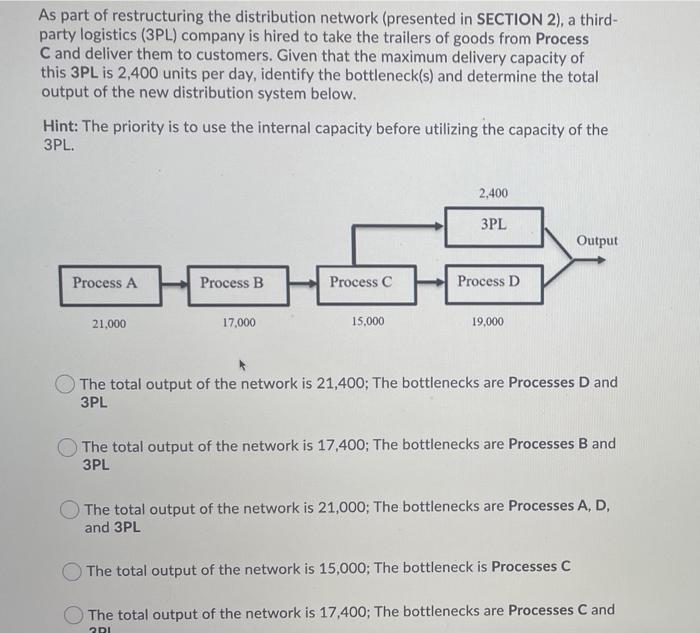
Consider the following distribution network. The first process, Process A, is unloading cargo off of ships in California ports. Let's assume that this activity has a rate of 21,000 units per day. The next step in the process, Process B, is to load trailers for the shipment to the DC (distribution center) assuming a rate of 17.000 units per day. The goods are then processed at the DC, Process C, which involves sorting and packing at a rate of 15,000 units per day. Lastly, there is Process D. which involves shipping trailers of goods to customers at a rate of 19,000 units per day. Assume that the system is working 24 hours per day. Output Input Process A Process B Process C Process D 21,000 17,000 15.000 Processing capacity per 24 hours 19,000 undefined Based on the problem of SECTION 2, what is the maximum output of the distribution network and the bottleneck? The maximum output is 19,000 and the bottleneck is Process D The maximum output is 17,000 and the bottleneck is Process B The maximum output is 15,000 and the bottleneck is Process The maximum output is 21,000 and the bottleneck is Process A The maximum output is 72,000 which is determined by the capacity of all processes Based on the problem of SECTION 2. if Process Bloses three hours of its capacity per day, what is the impact on the output of the distribution network? The output of the network does not change since Process B is not a bottleneck. The output of the network drops by 2.125 units The output of the network drops by 708 units The output of the network drops by 125 units The output of the network drops by 1,416 units Based on the problem of SECTION 2, if the capacity of Process D is increased by 1,000 units per day, what is the impact on the output of the network? The output of the network will drop since this increase can put additional pressure on other processes. The output of the network increases by 1,000 units only because Process Dis the terminal process. The output of the network increases by 1,000 units due to this additional capacity The output of the network does not change since Process D is not a bottleneck. The output of the network does not change since Process D is the terminal process. As part of restructuring the distribution network (presented in SECTION 2), a third- party logistics (3PL) company is hired to take the trailers of goods from Process C and deliver them to customers. Given that the maximum delivery capacity of this 3PL is 2,400 units per day, identify the bottleneck(s) and determine the total output of the new distribution system below. Hint: The priority is to use the internal capacity before utilizing the capacity of the 3PL. 2.400 3PL Output Process A Process B Process C H Process D 21,000 17,000 15,000 19,000 The total output of the network is 21,400; The bottlenecks are Processes Dand 3PL The total output of the network is 17,400; The bottlenecks are Processes B and 3PL The total output of the network is 21,000; The bottlenecks are Processes A, D, and 3PL The total output of the network is 15,000; The bottleneck is Processes C The total output of the network is 17,400; The bottlenecks are Processes C and PRI









 Study Help