







Question: Consider the following example. A risk-neutral worker can choose high or low effort. The manager cannot observe the worker's action, but the manager can observe
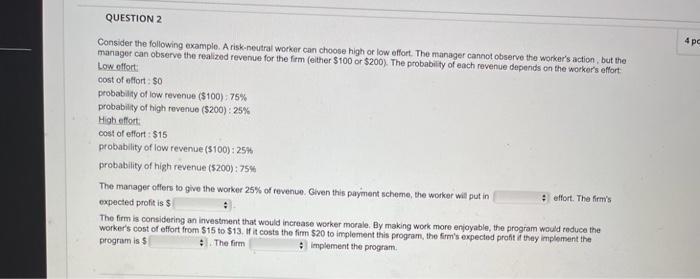
Consider the following example. A risk-neutral worker can choose high or low effort. The manager cannot observe the worker's action, but the manager can observe the real ized revenue for the frm (elther $100 or $200 ). The probability of each revenue depends co the worker's effort. Low offort cost of etfort : \$0 probabilty of low revenue ($100)=75% probability of high revenue ($200):25% Hiab effort: cost of effort : $15 probability of low revenue (3100):25% probability of high revenue (5200):7546 The manager offers to give the worker 25% of revenue. Given this payinent scheme, the worker wit put in expected profit is $ elfort. The firm's The firm is considering an investment that would increase worker morale. By making work more erioyable, the program would toduce the worker's cost of effort from $15 to $13. If it costs the firm $20 to implemsent this program, the firmis expected proft at they implerment the program is 5 The firm implement the program
Step by Step Solution
There are 3 Steps involved in it

Get step-by-step solutions from verified subject matter experts
 Study Help