





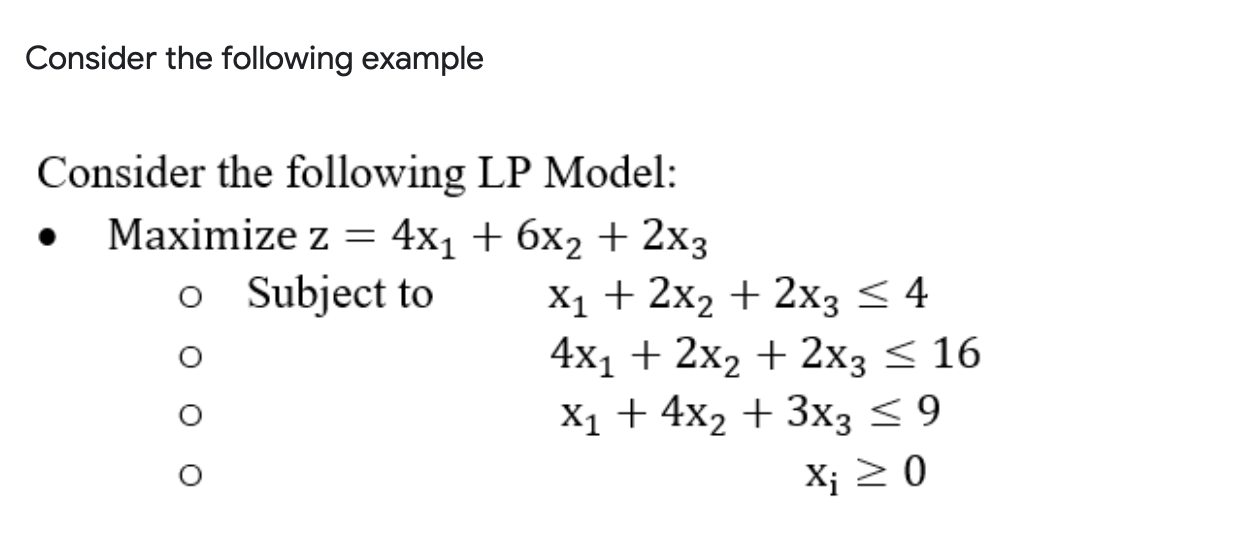
Question: Consider the following example Consider the following LP Model: Maximize z = 4x1 + 6x2 + 2x3 o Subject to X1 + 2x2 + 2x2
Consider the following example Consider theConsider the following example Consider theConsider the following example Consider the

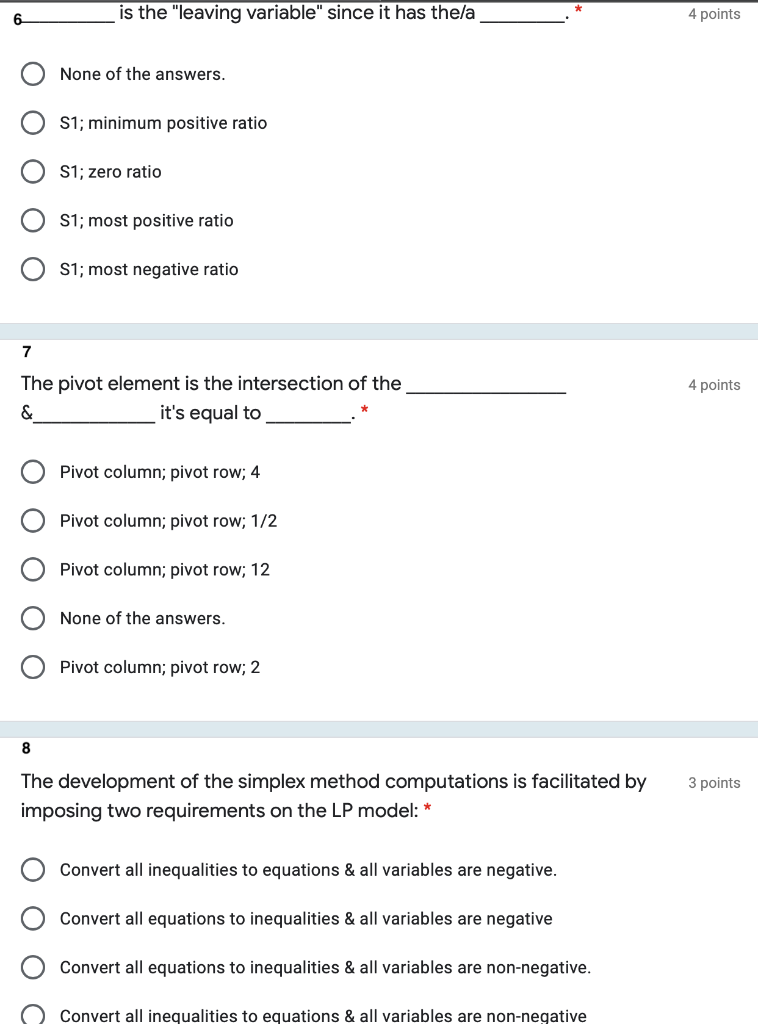
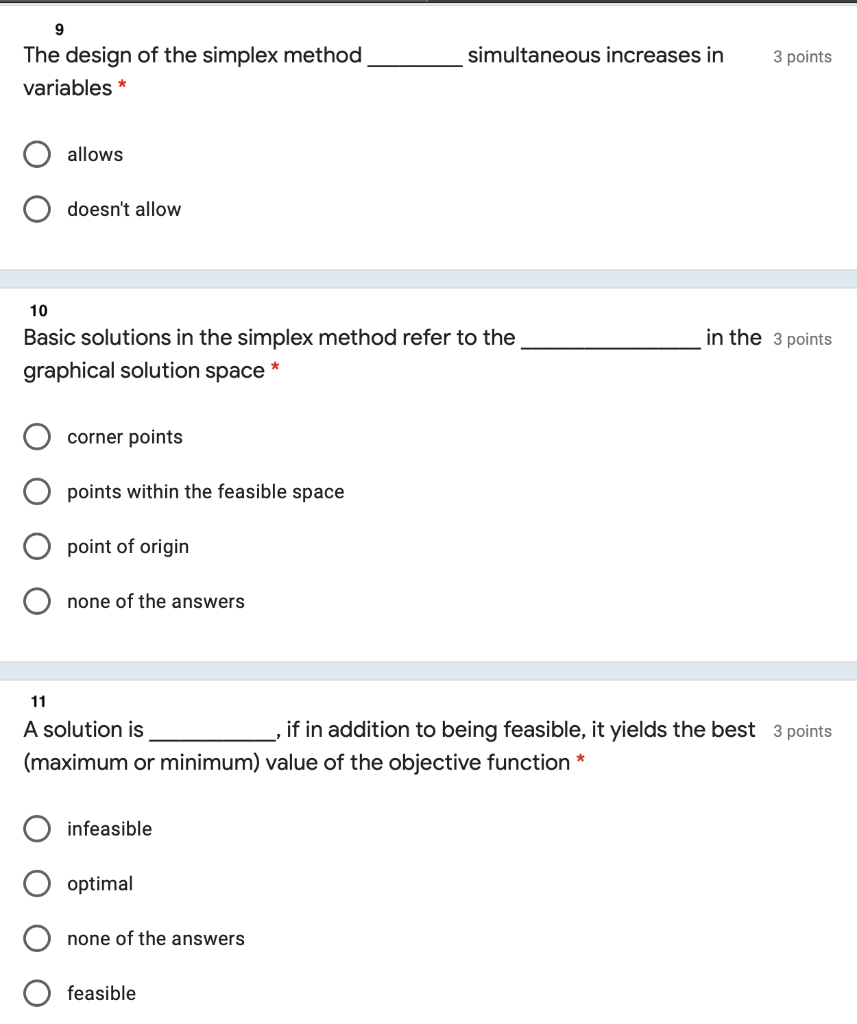
Consider the following example Consider the following LP Model: Maximize z = 4x1 + 6x2 + 2x3 o Subject to X1 + 2x2 + 2x2 0 is the "leaving variable" since it has the/a 4 points O None of the answers. S1; minimum positive ratio S1; zero ratio S1; most positive ratio OO S1; most negative ratio 7 4 points The pivot element is the intersection of the & it's equal to Pivot column; pivot row; 4 Pivot column; pivot row; 1/2 O Pivot column; pivot row; 12 None of the answers. Pivot column; pivot row; 2 3 points The development of the simplex method computations is facilitated by imposing two requirements on the LP model: * Convert all inequalities to equations & all variables are negative. Convert all equations to inequalities & all variables are negative Convert all equations to inequalities & all variables are non-negative. Convert all inequalities to equations & all variables are non-negative 9 The design of the simplex method variables * simultaneous increases in 3 points allows doesn't allow 10 in the 3 points Basic solutions in the simplex method refer to the graphical solution space * corner points points within the feasible space point of origin none of the answers 11 A solution is if in addition to being feasible, it yields the best 3 points (maximum or minimum) value of the objective function * infeasible optimal none of the answers feasible
Step by Step Solution

There are 3 Steps involved in it

1 Expert Approved Answer
Step: 1 Unlock blur-text-image

Question Has Been Solved by an Expert!

Get step-by-step solutions from verified subject matter experts

Step: 2 Unlock
Step: 3 Unlock

Students Have Also Explored These Related General Management Questions!