



Question: Consider the following information: Project A B Project A Co -6,500 -1,800 -5, 100 B C Cash Flows ($) C2 2,500 1,500 C3 C1 2,500
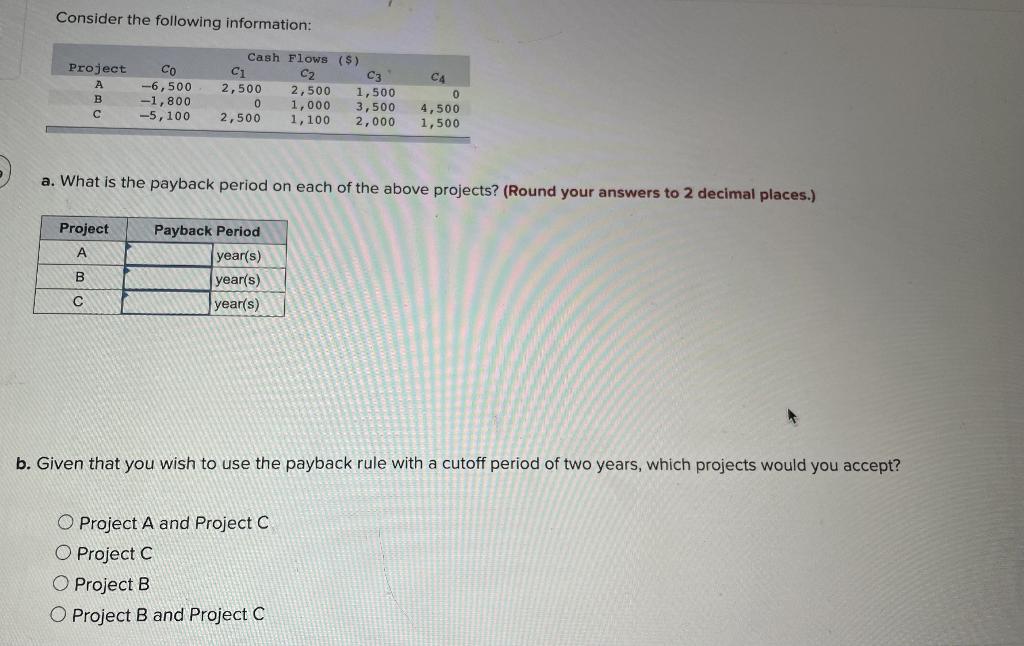
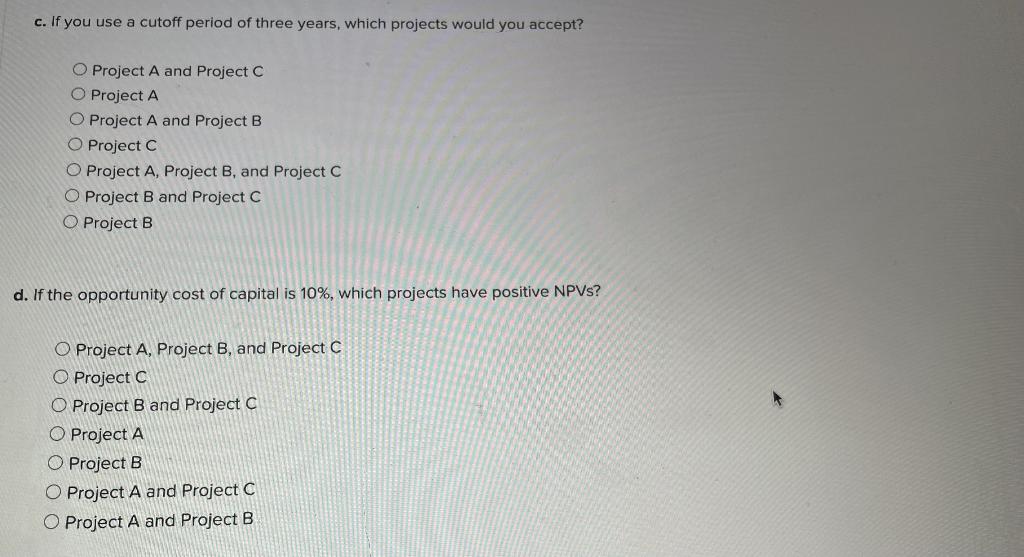
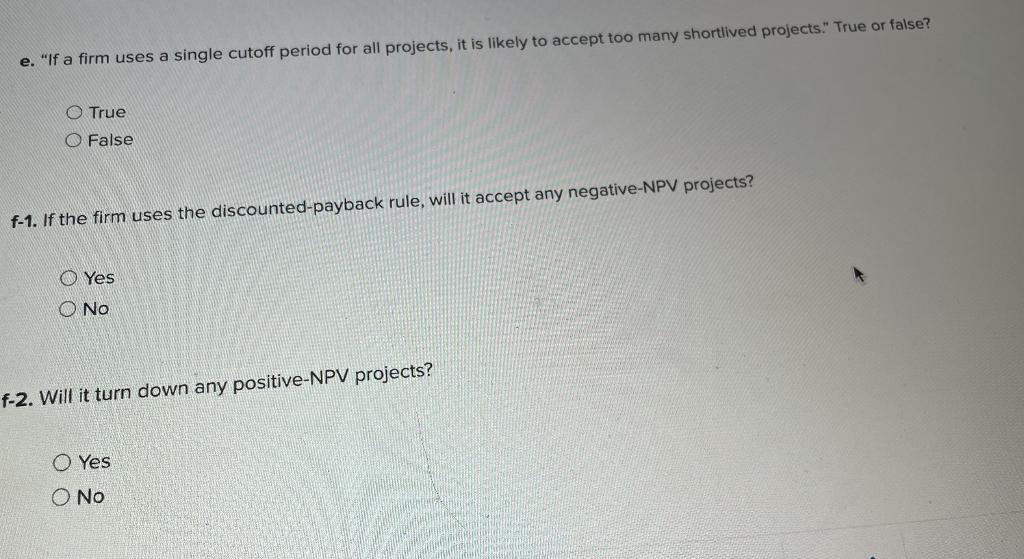
Consider the following information: Project A B Project A Co -6,500 -1,800 -5, 100 B C Cash Flows ($) C2 2,500 1,500 C3 C1 2,500 0 2,500 a. What is the payback period on each of the above projects? (Round your answers to 2 decimal places.) Payback Period year(s) year(s) year(s) 4 0 1,000 3,500 4,500 1,100 2,000 1,500 O Project A and Project C O Project C O Project B O Project B and Project C b. Given that you wish to use the payback rule with a cutoff period of two years, which projects would you accept? c. If you use a cutoff period of three years, which projects would you accept? O Project A and Project C O Project A O Project A and Project B O Project C O Project A, Project B, and Project C O Project B and Project C O Project B d. If the opportunity cost of capital is 10%, which projects have positive NPVs? O Project A, Project B, and Project C O Project C O Project B and Project C O Project A O Project B O Project A and Project C O Project A and Project B e. "If a firm uses a single cutoff period for all projects, it is likely to accept too many shortlived projects." True or false? True False f-1. If the firm uses the discounted-payback rule, will it accept any negative-NPV projects? Yes No f-2. Will it turn down any positive-NPV projects? O Yes O No
Step by Step Solution
There are 3 Steps involved in it

Get step-by-step solutions from verified subject matter experts