







Question: Consider the following linear programming problem: Max z = 1 6 x 1 + 1 3 x 2 s . t . 2 0 x
Consider the following linear programming problem:
Max
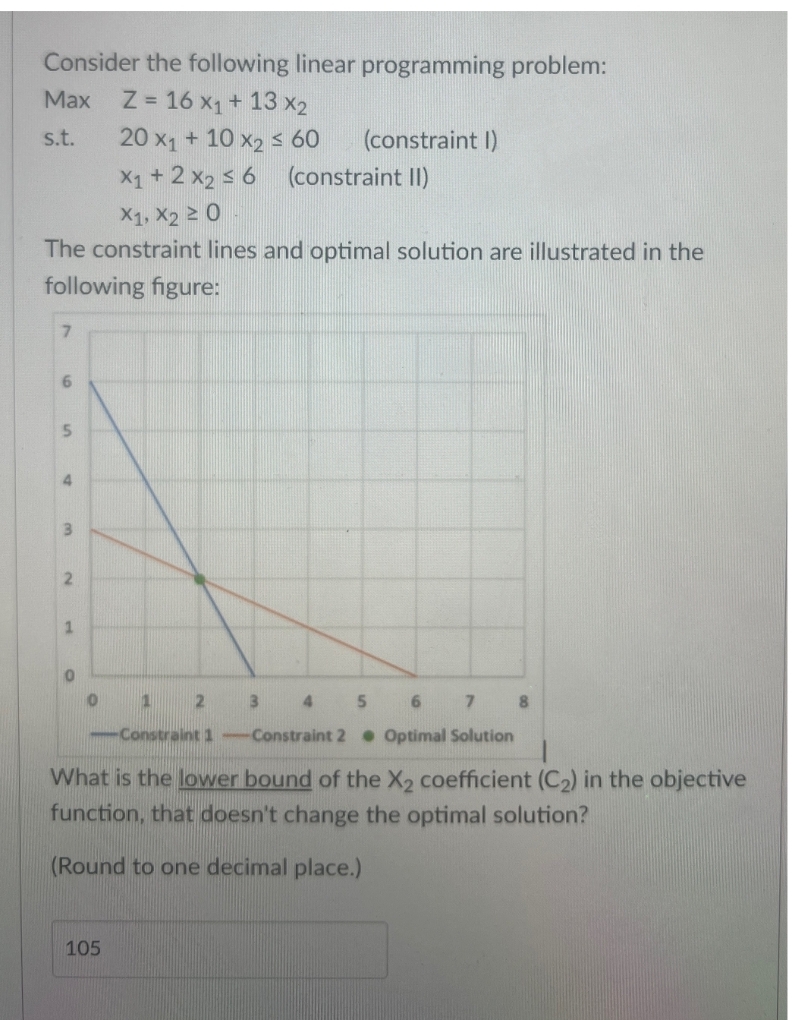
The constraint lines and optimal solution are illustrated in the following figure:
What is the lower bound of the coefficient in the objective function, that doesn't change the optimal solution?
Round to one decimal place.
Step by Step Solution
There are 3 Steps involved in it
1 Expert Approved Answer
Step: 1 Unlock

Question Has Been Solved by an Expert!
Get step-by-step solutions from verified subject matter experts
Step: 2 Unlock
Step: 3 Unlock
 Study Help