







Question: Consider the following program: #include void Function1(void) { int ab.c a = 2; b = 3; c = Function2(3*a, 2*b+3); Function3 (c); } float
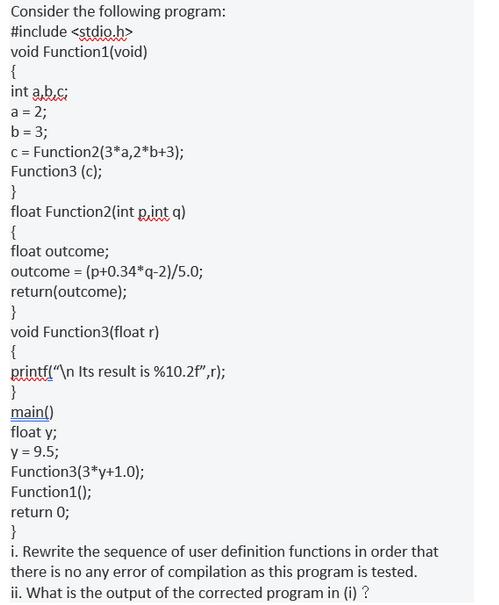
Consider the following program: #include void Function1(void) { int ab.c a = 2; b = 3; c = Function2(3*a, 2*b+3); Function3 (c); } float Function2(int p int q) { float outcome; outcome = (p+0.34*q-2)/5.0; return(outcome); } void Function3(float r) { printf(" Its result is %10.2f",r); } main() float y; y = 9.5; Function3 (3*y+1.0); Function1(); return 0; } i. Rewrite the sequence of user definition functions in order that there is no any error of compilation as this program is tested. ii. What is the output of the corrected program in (i) ?
Step by Step Solution
There are 3 Steps involved in it
The C program provided in the image has several issues related to function declaration definition and the sequence in which they appear Here are the p... View full answer

Get step-by-step solutions from verified subject matter experts
 Study Help