







Question: Consider the following regression: Y; = 10 + 2X; + Ui where n = 100. Suppose you know that o x = 1 (i.e. you
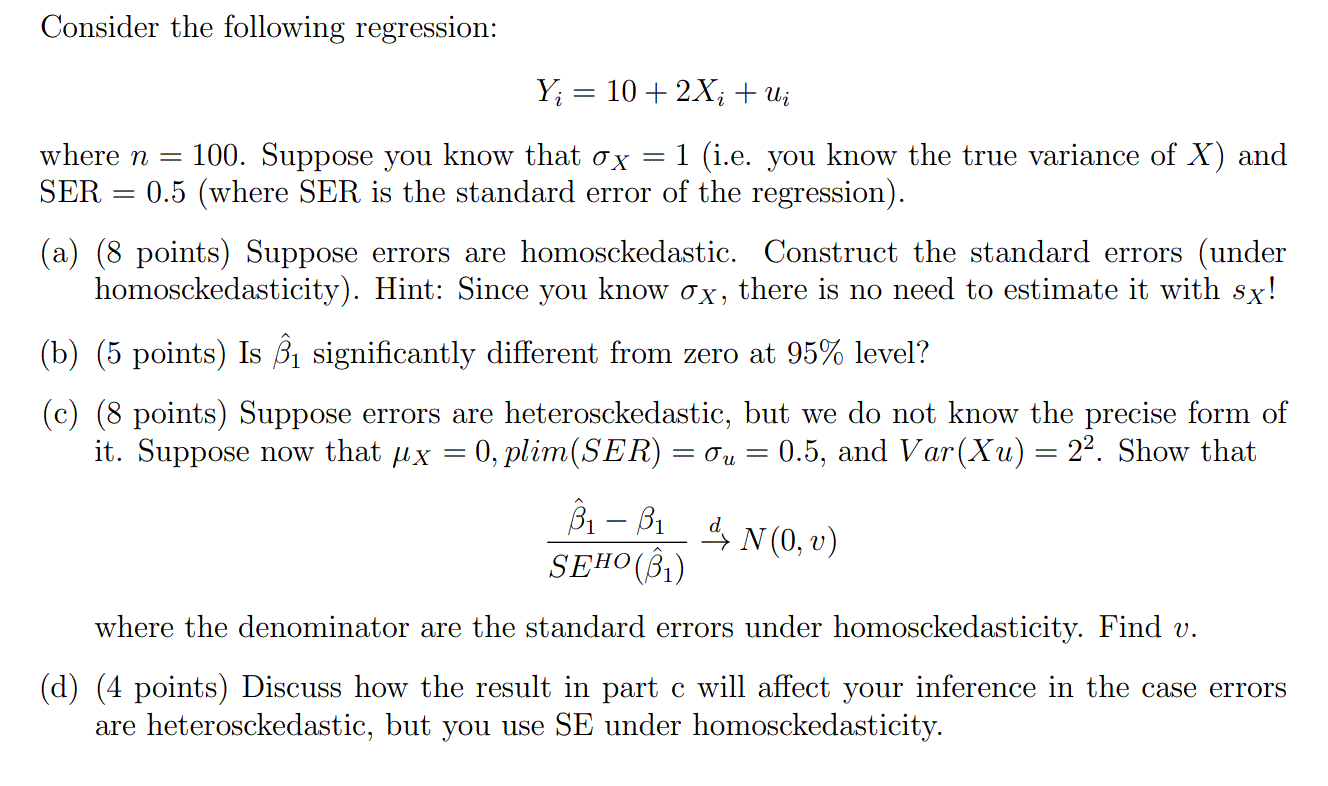
Consider the following regression: Y; = 10 + 2X; + Ui where n = 100. Suppose you know that o x = 1 (i.e. you know the true variance of X) and SER 0.5 (where SER is the standard error of the regression). (a) (8 points) Suppose errors are homosckedastic. Construct the standard errors (under homosckedasticity). Hint: Since you know ox, there is no need to estimate it with sx! (b) (5 points) Is 1 significantly different from zero at 95% level? (c) (8 points) Suppose errors are heterosckedastic, but we do not know the precise form of it. Suppose now that u x = 0, plim(SER) = 0u = 0.5, and Var(Xu) = 22. Show that i Bi d N(0, v) SEHO(1) where the denominator are the standard errors under homosckedasticity. Find v. (d) (4 points) Discuss how the result in part c will affect your inference in the case errors are heterosckedastic, but you use SE under homosckedasticity. Consider the following regression: Y; = 10 + 2X; + Ui where n = 100. Suppose you know that o x = 1 (i.e. you know the true variance of X) and SER 0.5 (where SER is the standard error of the regression). (a) (8 points) Suppose errors are homosckedastic. Construct the standard errors (under homosckedasticity). Hint: Since you know ox, there is no need to estimate it with sx! (b) (5 points) Is 1 significantly different from zero at 95% level? (c) (8 points) Suppose errors are heterosckedastic, but we do not know the precise form of it. Suppose now that u x = 0, plim(SER) = 0u = 0.5, and Var(Xu) = 22. Show that i Bi d N(0, v) SEHO(1) where the denominator are the standard errors under homosckedasticity. Find v. (d) (4 points) Discuss how the result in part c will affect your inference in the case errors are heterosckedastic, but you use SE under homosckedasticity
Step by Step Solution
There are 3 Steps involved in it

Get step-by-step solutions from verified subject matter experts
 Study Help