



Question: Consider the following statements: (1 ) Total costs will equal the sum of xed and variable costs. (2) Total costs will equal the sum of
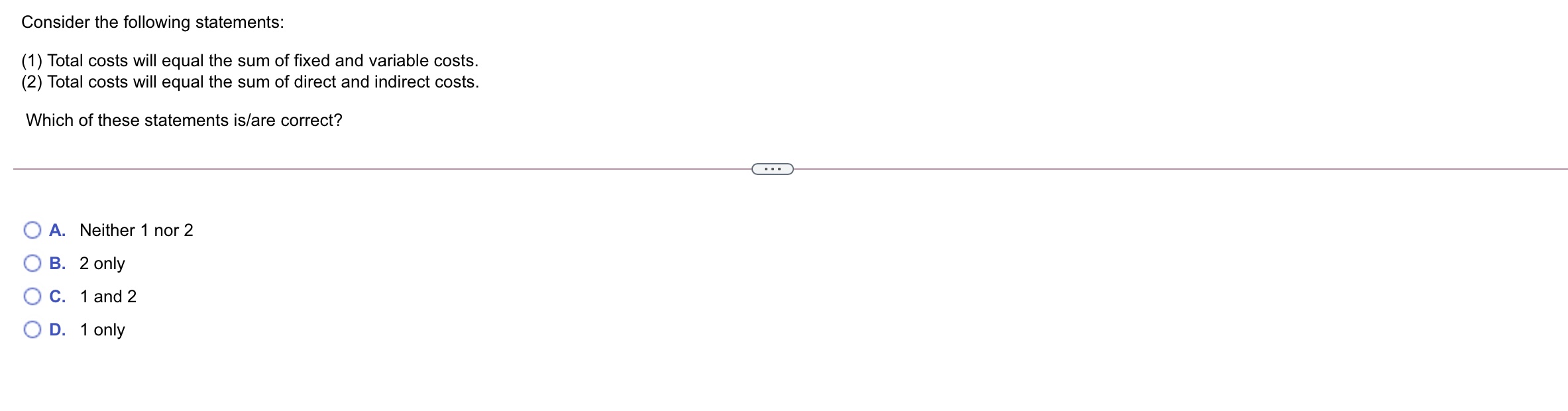
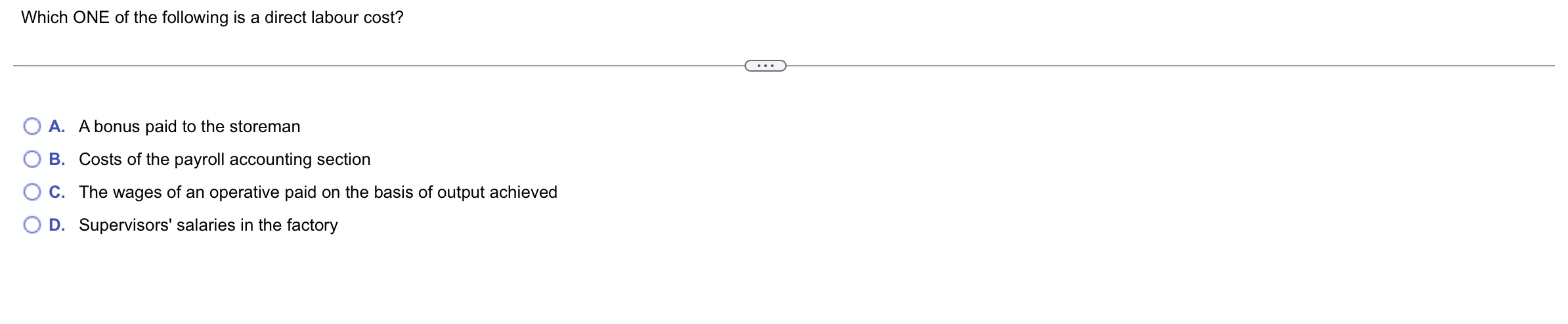

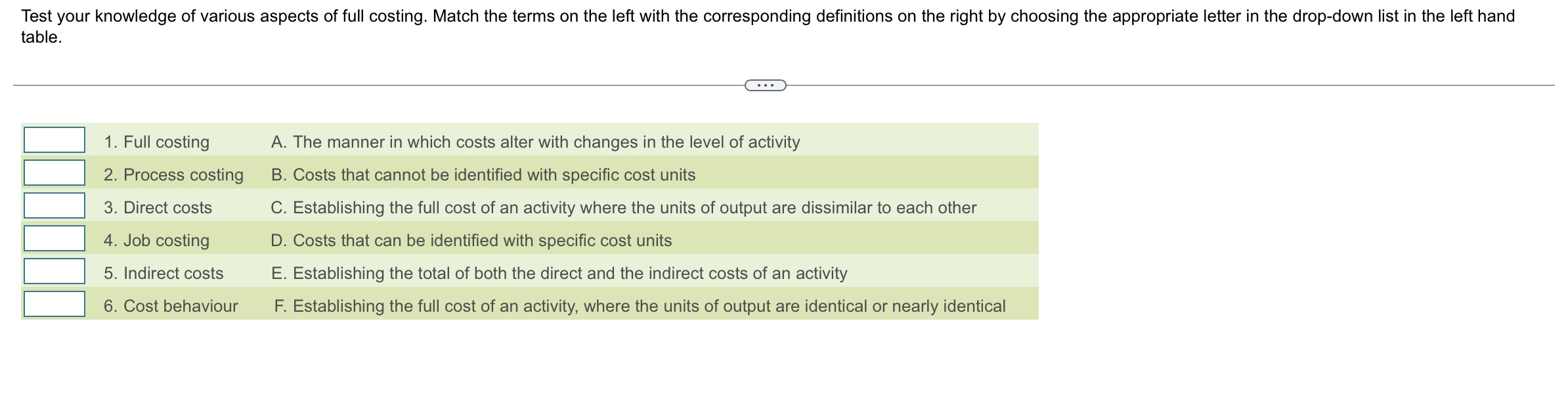
Consider the following statements: (1 ) Total costs will equal the sum of xed and variable costs. (2) Total costs will equal the sum of direct and indirect costs. Which of these statements is/are correct? O A. Neither1 nor2 O B. 2 only 0 C. 1 and 2 O D. 1 only Which ONE of the following is a direct labour cost? O A. Abonus paid to the storeman O B. Costs of the payroll accounting section 0 C. The wages of an operative paid on the basis of output achieved 0 D. Supervisors' salaries in the factory Full costing is often supported on the grounds that it provides a useful guide to costs. A. economic O B. long-run average O C. fixed O D. opportunityTest your knowledge of various aspects of full costing. Match the terms on the left with the corresponding definitions on the right by choosing the appropriate letter in the drop-down list in the left hand table. 1. Full costing A. The manner in which costs alter with changes in the level of activity 2. Process costing B. Costs that cannot be identified with specific cost units 3. Direct costs C. Establishing the full cost of an activity where the units of output are dissimilar to each other 4. Job costing D. Costs that can be identified with specific cost units 5. Indirect costs E. Establishing the total of both the direct and the indirect costs of an activity 6. Cost behaviour F. Establishing the full cost of an activity, where the units of output are identical or nearly identical
Step by Step Solution
There are 3 Steps involved in it

Get step-by-step solutions from verified subject matter experts