







Question: Consider the following two mutually exclusive projects: Year ON Cash Flow . (A) $360,000 35,000 55,000 55,000 430,000 Cash Flow (B) $45,000 23,000 21,000 18,500
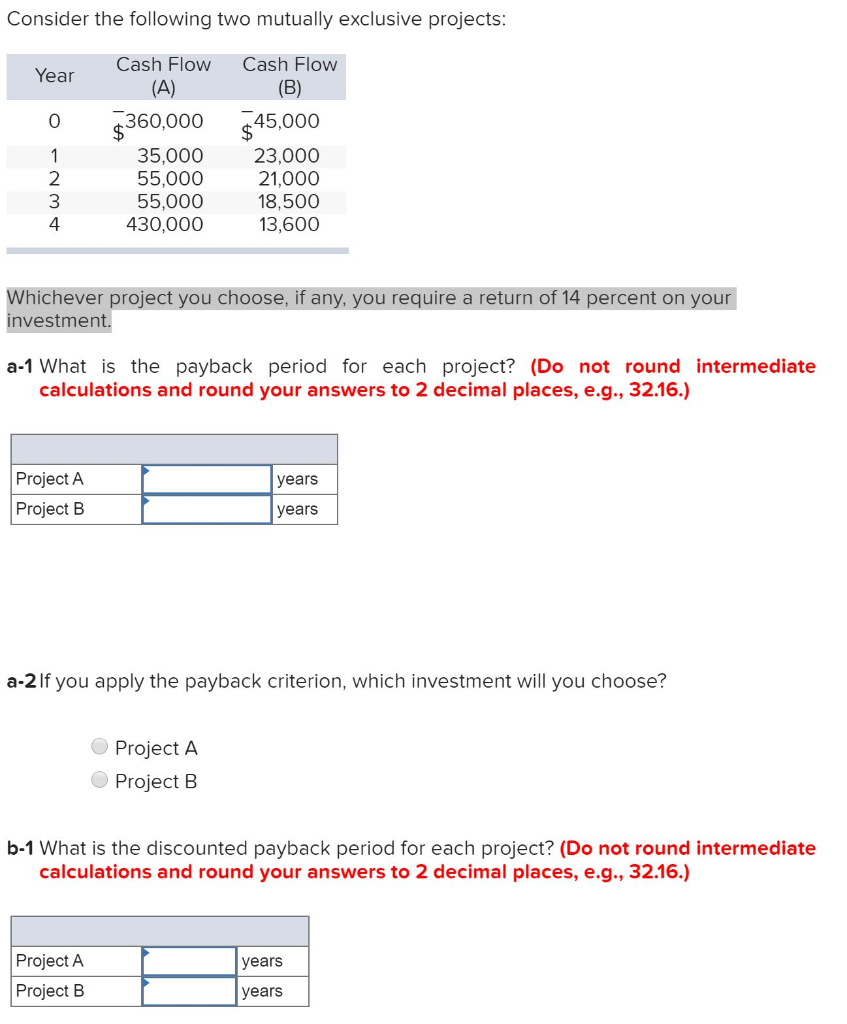
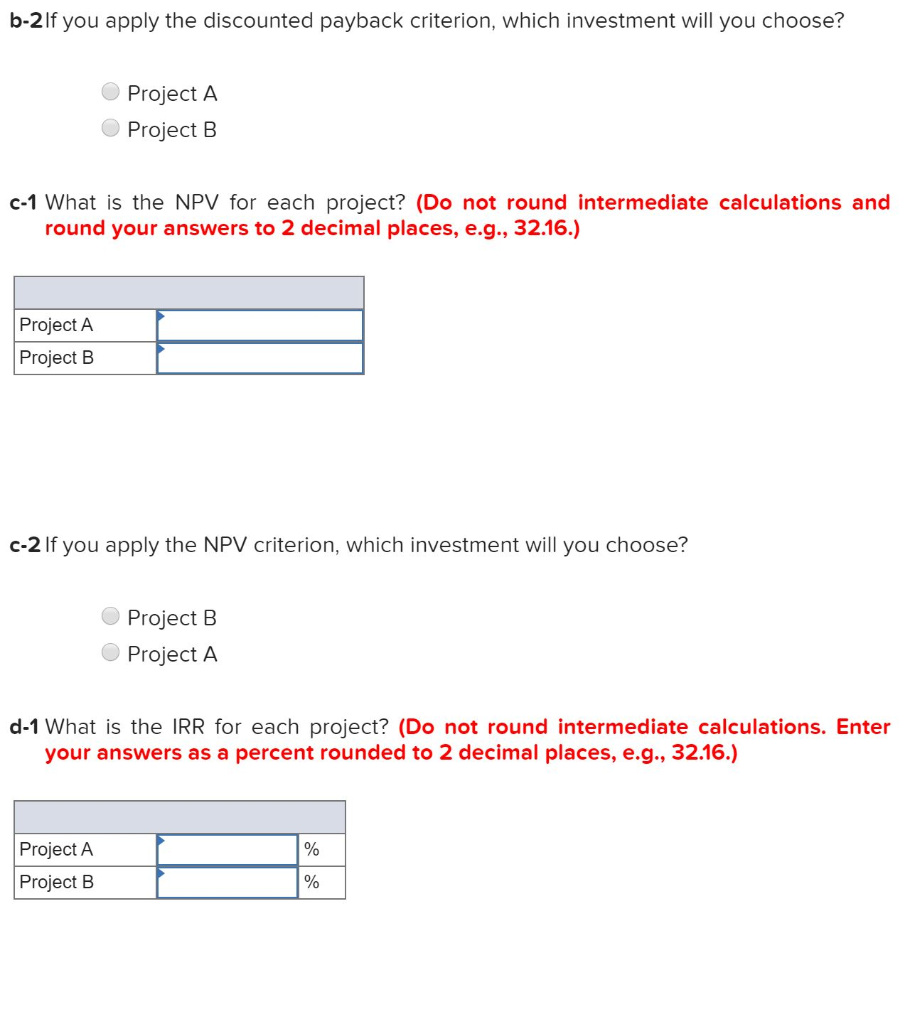
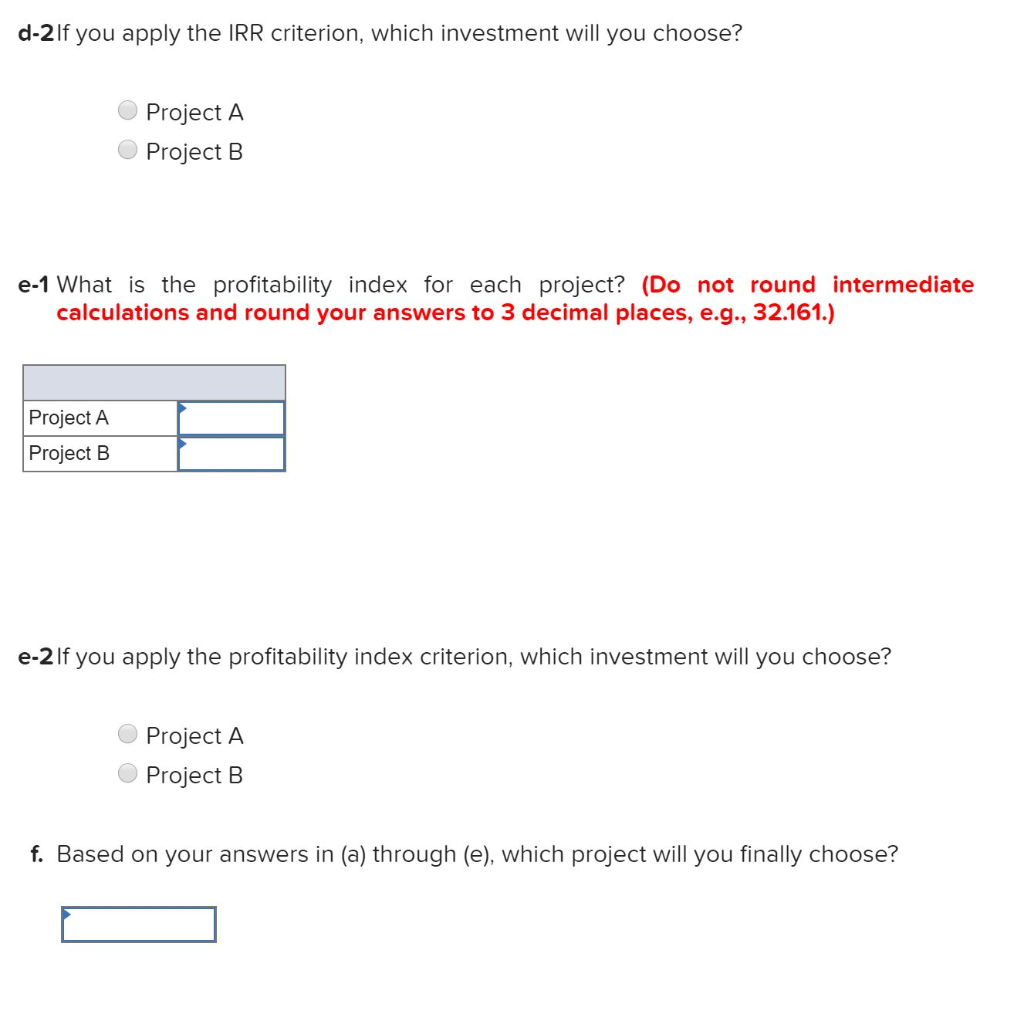
Consider the following two mutually exclusive projects: Year ON Cash Flow . (A) $360,000 35,000 55,000 55,000 430,000 Cash Flow (B) $45,000 23,000 21,000 18,500 13,600 Whichever project you choose, if any, you require a return of 14 percent on your investment. a-1 What is the payback period for each project? (Do not round intermediate calculations and round your answers to 2 decimal places, e.g., 32.16.) Project A Project B years years a-2 If you apply the payback criterion, which investment will you choose? Project A Project B b-1 What is the discounted payback period for each project? (Do not round intermediate calculations and round your answers to 2 decimal places, e.g., 32.16.) Project A Project B years years b-2 If you apply the discounted payback criterion, which investment will you choose? Project A Project B C-1 What is the NPV for each project? (Do not round intermediate calculations and round your answers to 2 decimal places, e.g., 32.16.) Project A Project B A c-2 If you apply the NPV criterion, which investment will you choose? Project B Project A d-1 What is the IRR for each project? (Do not round intermediate calculations. Enter your answers as a percent rounded to 2 decimal places, e.g., 32.16.) Project A Project B d-2If you apply the IRR criterion, which investment will you choose? Project A Project B e-1 What is the profitability index for each project? (Do not round intermediate calculations and round your answers to 3 decimal places, e.g., 32.161.) Project A Project B e-2 If you apply the profitability index criterion, which investment will you choose? Project A Project B f. Based on your answers in (a) through (e), which project will you finally choose
Step by Step Solution
There are 3 Steps involved in it

Get step-by-step solutions from verified subject matter experts
 Study Help