



Question: Consider the representative consumer model where the goods are homogeneous. The inverse market demand curve is p = 10 q, where p is the market
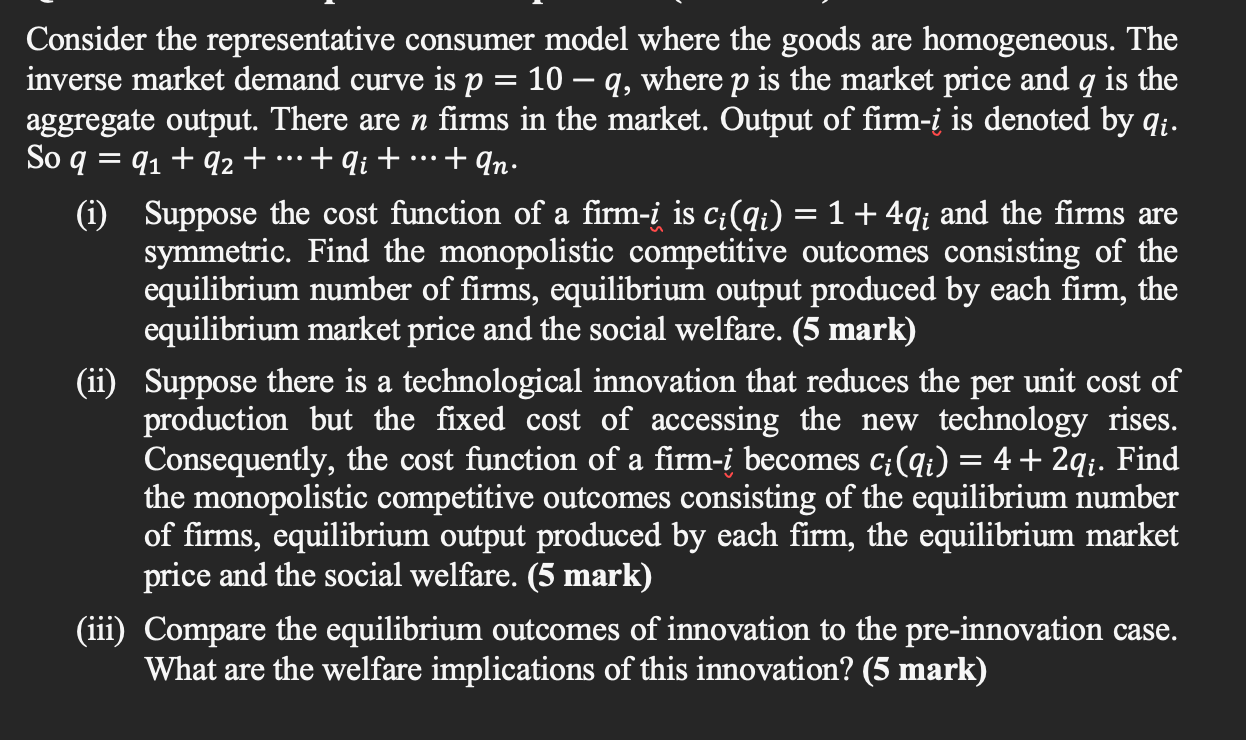
Consider the representative consumer model where the goods are homogeneous. The inverse market demand curve is p = 10 q, where p is the market price and q is the aggregate output. There are n rms in the market. Output of rmi is denoted by q,-. SO q = q1 + (12 + "'+ Qt + "'+ qn- (i) Suppose the cost function of a. rmi is c,;(q,-) = 1 + 4g, and the rms are symmetric. Find the monopolistic competitive outcomes consisting of the equilibrium number of rms, equilibrium output produced by each rm, the equilibrium market price and the social welfare. (5 mark) Suppose there is a technological innovation that reduces the per unit cost of production but the xed cost of accessing the new technology rises. Consequently, the cost function of a. rm1T becomes C1-(qi) = 4 + 2qi. Find the monopolistic competitive outcomes consisting of the equilibrium number of rms, equilibrium output produced by each rm, the equilibrium market price and the social welfare. (5 mark) Compare the equilibrium outcomes of innovation to the preinnovation case. What are the welfare implications of this innovation? (5 mark)
Step by Step Solution
There are 3 Steps involved in it

Get step-by-step solutions from verified subject matter experts