







Question: Consider the simple divide and conquer algorithm for the problem of multiplying two n-digit numbers described in class. This algorithm breaks the problem into FOUR
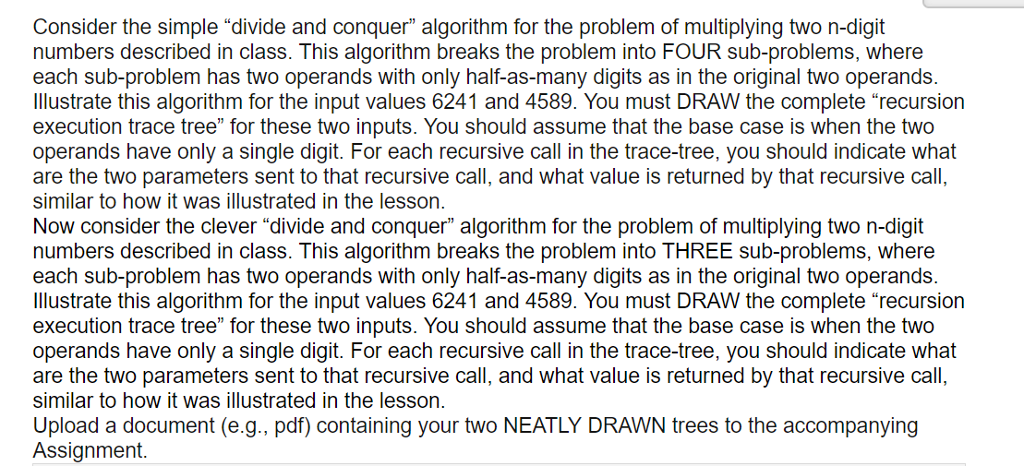
Consider the simple "divide and conquer" algorithm for the problem of multiplying two n-digit numbers described in class. This algorithm breaks the problem into FOUR sub-problems, where each sub-problem has two operands with only half-as-many digits as in the original two operands. Illustrate this algorithm for the input values 6241 and 4589. You must DRAW the complete "recursion execution trace tree" for these two inputs. You should assume that the base case is when the two operands have only a single digit. For each recursive call in the trace-tree, you should indicate what are the two parameters sent to that recursive call, and what value is returned by that recursive call, similar to how it was illustrated in the lesson Now consider the clever "divide and conquer" algorithm for the problem of multiplying two n-digit numbers described in class. This algorithm breaks the problem into THREE sub-problems, where each sub-problem has two operands with only half-as-many digits as in the original two operands Illustrate this algorithm for the input values 6241 and 4589. You must DRAW the complete "recursion execution trace tree" for these two inputs. You should assume that the base case is when the two operands have only a single digit. For each recursive call in the trace-tree, you should indicate what are the two parameters sent to that recursive call, and what value is returned by that recursive call, similar to how it was illustrated in the lesson. Upload a document (e.g., pdf) containing your twO NEATLY DRAWN trees to the accompanying Assignment Consider the simple "divide and conquer" algorithm for the problem of multiplying two n-digit numbers described in class. This algorithm breaks the problem into FOUR sub-problems, where each sub-problem has two operands with only half-as-many digits as in the original two operands. Illustrate this algorithm for the input values 6241 and 4589. You must DRAW the complete "recursion execution trace tree" for these two inputs. You should assume that the base case is when the two operands have only a single digit. For each recursive call in the trace-tree, you should indicate what are the two parameters sent to that recursive call, and what value is returned by that recursive call, similar to how it was illustrated in the lesson Now consider the clever "divide and conquer" algorithm for the problem of multiplying two n-digit numbers described in class. This algorithm breaks the problem into THREE sub-problems, where each sub-problem has two operands with only half-as-many digits as in the original two operands Illustrate this algorithm for the input values 6241 and 4589. You must DRAW the complete "recursion execution trace tree" for these two inputs. You should assume that the base case is when the two operands have only a single digit. For each recursive call in the trace-tree, you should indicate what are the two parameters sent to that recursive call, and what value is returned by that recursive call, similar to how it was illustrated in the lesson. Upload a document (e.g., pdf) containing your twO NEATLY DRAWN trees to the accompanying Assignment
Step by Step Solution
There are 3 Steps involved in it

Get step-by-step solutions from verified subject matter experts
 Study Help