







Question: Consider the two-player, two-action, simultaneous move game described by the payoff matrix below. When Player A plays U and Player B plays R, which one
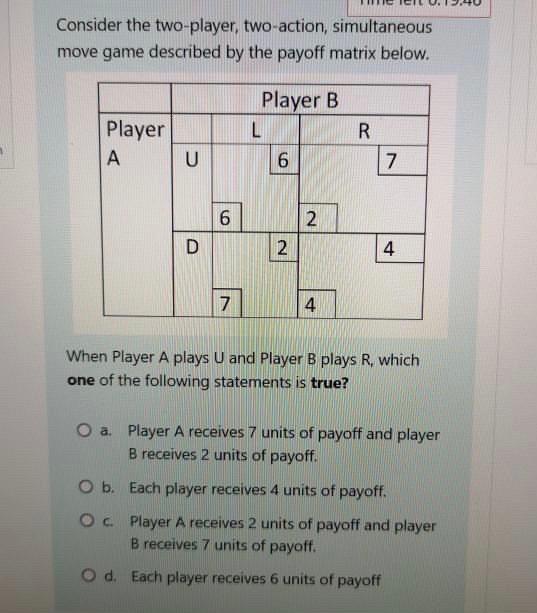
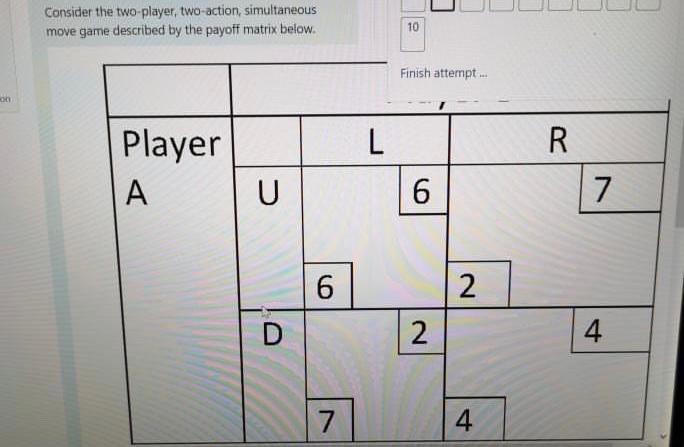
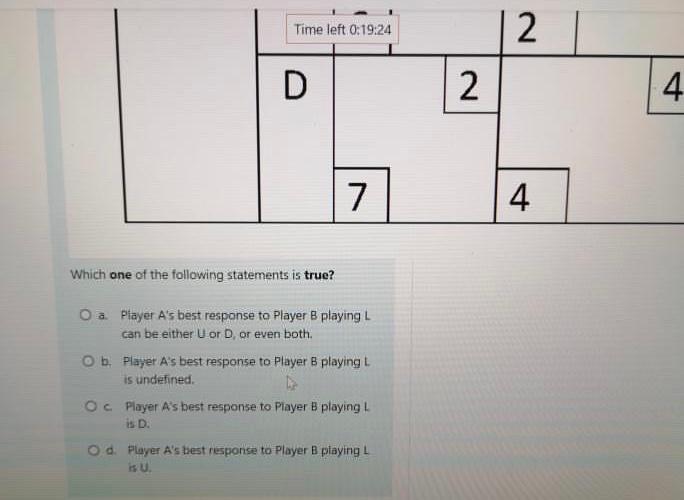
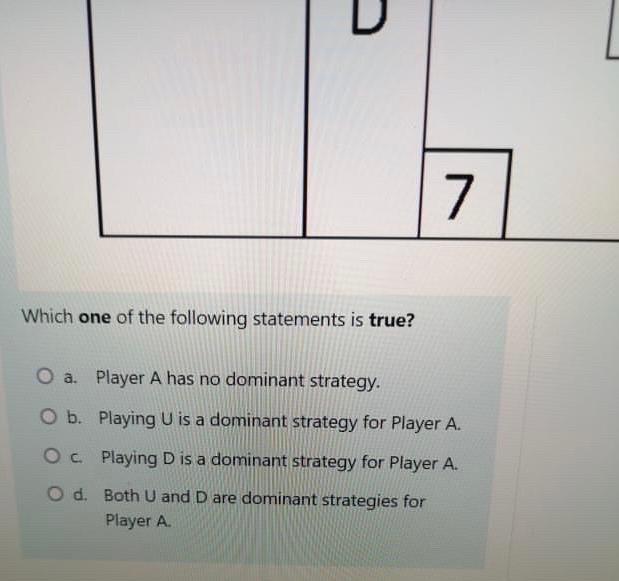
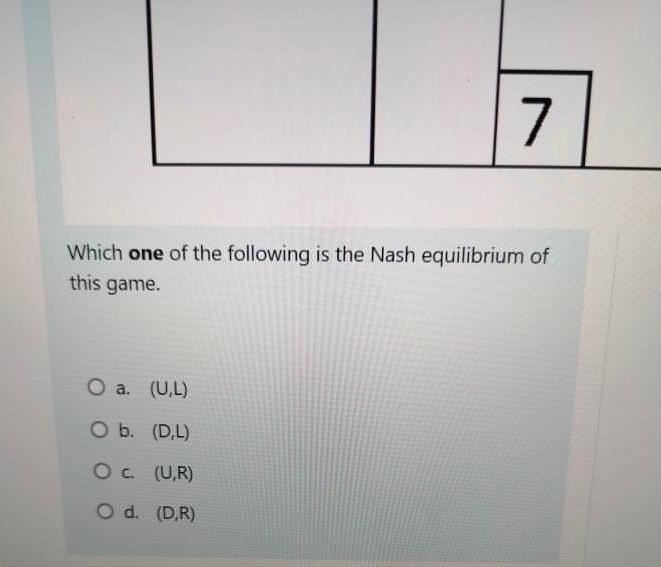
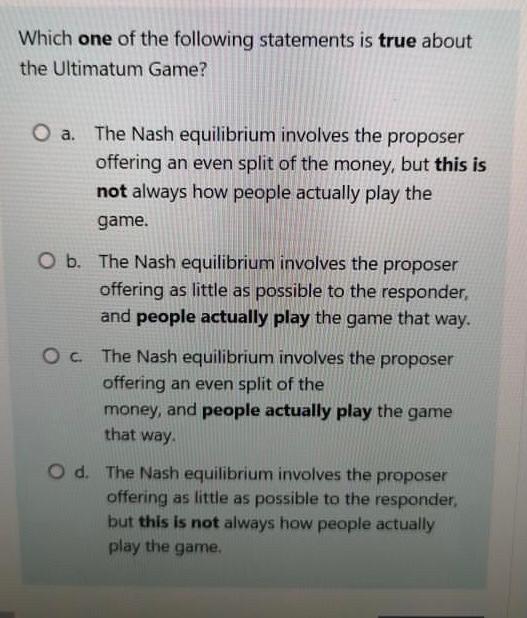
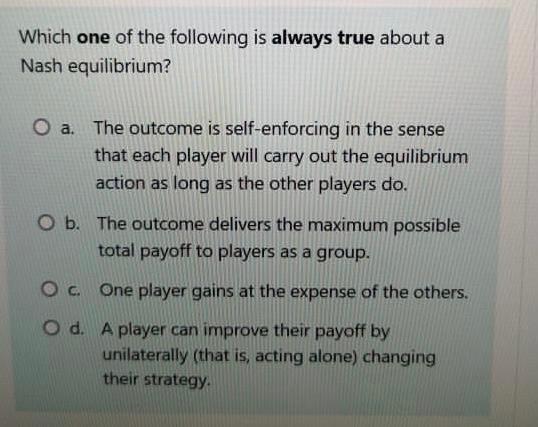
Consider the two-player, two-action, simultaneous move game described by the payoff matrix below. When Player A plays U and Player B plays R, which one of the following statements is true? a. Player A receives 7 units of payoff and player B receives 2 units of payoff. b. Each player receives 4 units of payoff. c. Player A receives 2 units of payoff and player B receives 7 units of payoff. d. Each player receives 6 units of payoff Consider the two-player, two-action, simultaneous move game described by the payoff matrix below. Which one of the following statements is true? a. Playe A 's best response to Player B playing L can be either U or D, or even both. b. Player A's best response to Player B playing L is undefined. c. Player A's best response to Piayer B playing L is D. d. Flayer A's best response to Player B playing L is U. Which one of the following statements is true? a. Player A has no dominant strategy. b. Playing U is a dominant strategy for Player A. c. Playing D is a dominant strategy for Player A. d. Both U and D are dominant strategies for Player A. Which one of the following is the Nash equilibrium of this game. a. (U,L) b. (D,L) c. (U,R) d. (D,R) Which one of the following statements is true about the Ultimatum Game? a. The Nash equilibrium involves the proposer offering an even split of the money, but this is not always how people actually play the game. b. The Nash equilibrium involves the proposer offering as little as possible to the responder, and people actually play the game that way. c. The Nash equilibrium involves the proposer offering an even split of the money, and people actually play the game that way. d. The Nash equilibrium involves the proposer offering as little as possible to the responder, but this is not always how people actually play the game. Which one of the following is always true about a Nash equilibrium? a. The outcome is self-enforcing in the sense that each player will carry out the equilibrium action as long as the other players do. b. The outcome delivers the maximum possible total payoff to players as a group. c. One player gains at the expense of the others. d. A player can improve their payoff by unilaterally (that is, acting alone) changing their strategy. Consider the two-player, two-action, simultaneous move game described by the payoff matrix below. When Player A plays U and Player B plays R, which one of the following statements is true? a. Player A receives 7 units of payoff and player B receives 2 units of payoff. b. Each player receives 4 units of payoff. c. Player A receives 2 units of payoff and player B receives 7 units of payoff. d. Each player receives 6 units of payoff Consider the two-player, two-action, simultaneous move game described by the payoff matrix below. Which one of the following statements is true? a. Playe A 's best response to Player B playing L can be either U or D, or even both. b. Player A's best response to Player B playing L is undefined. c. Player A's best response to Piayer B playing L is D. d. Flayer A's best response to Player B playing L is U. Which one of the following statements is true? a. Player A has no dominant strategy. b. Playing U is a dominant strategy for Player A. c. Playing D is a dominant strategy for Player A. d. Both U and D are dominant strategies for Player A. Which one of the following is the Nash equilibrium of this game. a. (U,L) b. (D,L) c. (U,R) d. (D,R) Which one of the following statements is true about the Ultimatum Game? a. The Nash equilibrium involves the proposer offering an even split of the money, but this is not always how people actually play the game. b. The Nash equilibrium involves the proposer offering as little as possible to the responder, and people actually play the game that way. c. The Nash equilibrium involves the proposer offering an even split of the money, and people actually play the game that way. d. The Nash equilibrium involves the proposer offering as little as possible to the responder, but this is not always how people actually play the game. Which one of the following is always true about a Nash equilibrium? a. The outcome is self-enforcing in the sense that each player will carry out the equilibrium action as long as the other players do. b. The outcome delivers the maximum possible total payoff to players as a group. c. One player gains at the expense of the others. d. A player can improve their payoff by unilaterally (that is, acting alone) changing their strategy
Step by Step Solution
There are 3 Steps involved in it

Get step-by-step solutions from verified subject matter experts
 Study Help