



Question: Consider two 30-year maturity bonds. Bond A has a coupon rate of 4%, while bond B has a coupon rate of 12%. Both bonds pay
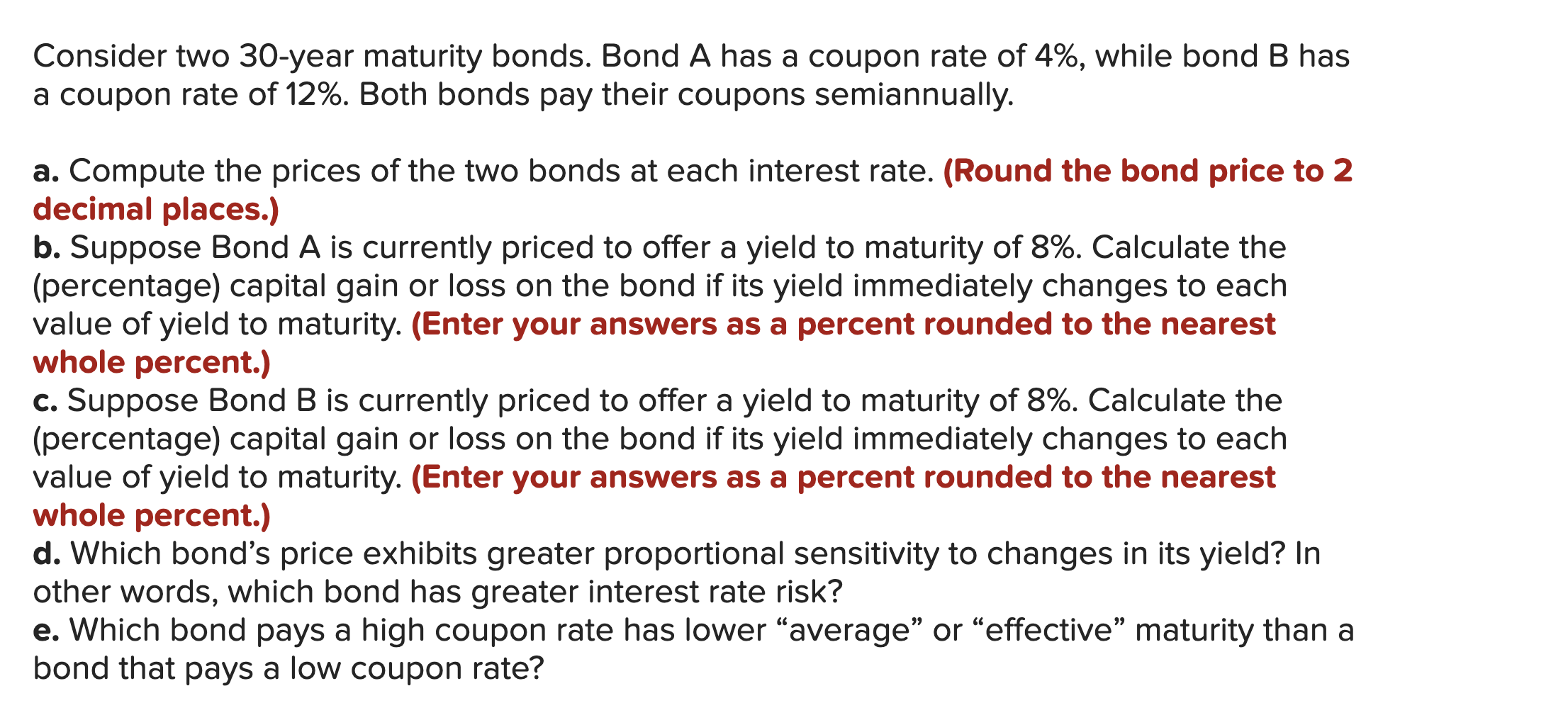
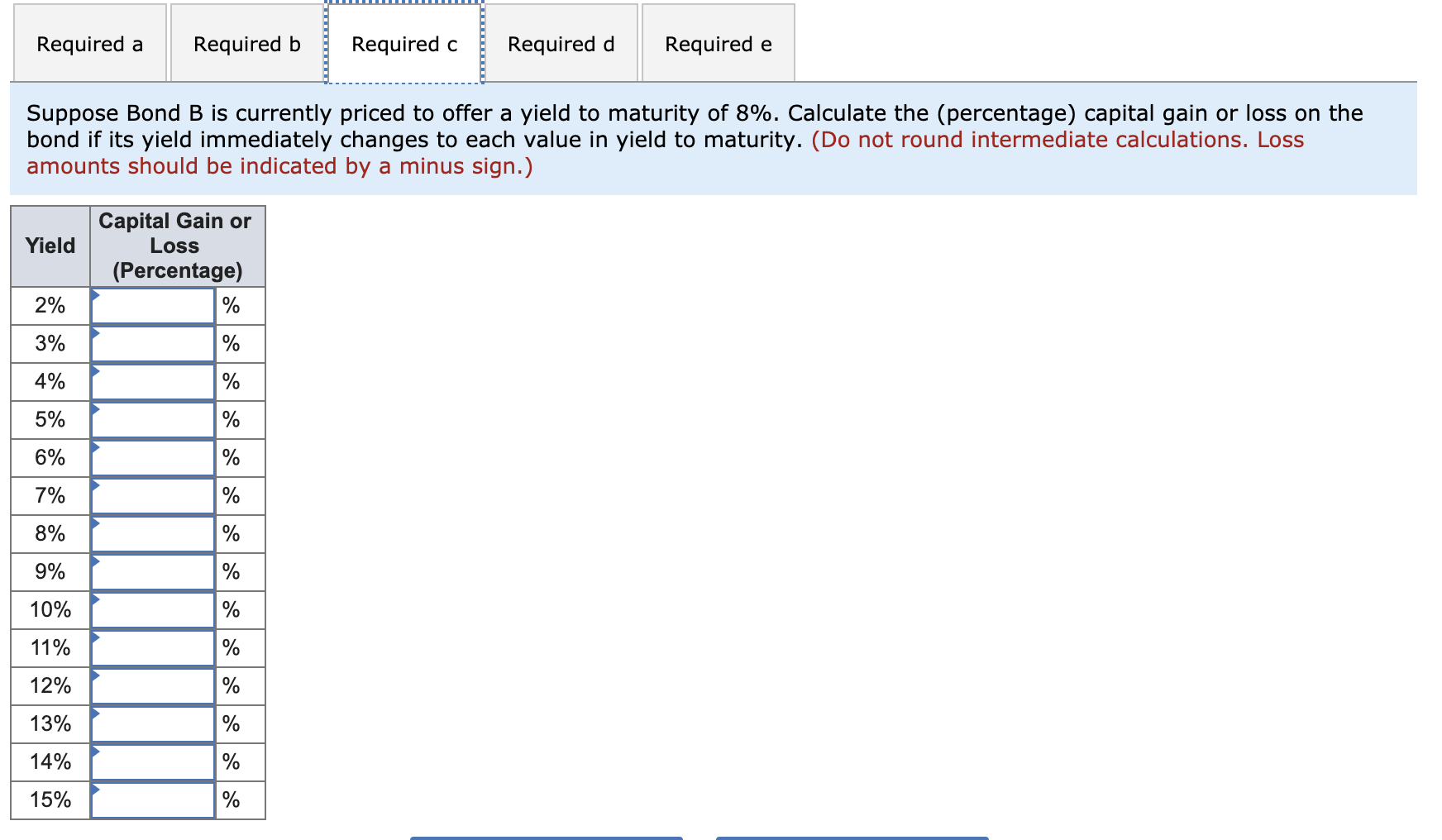
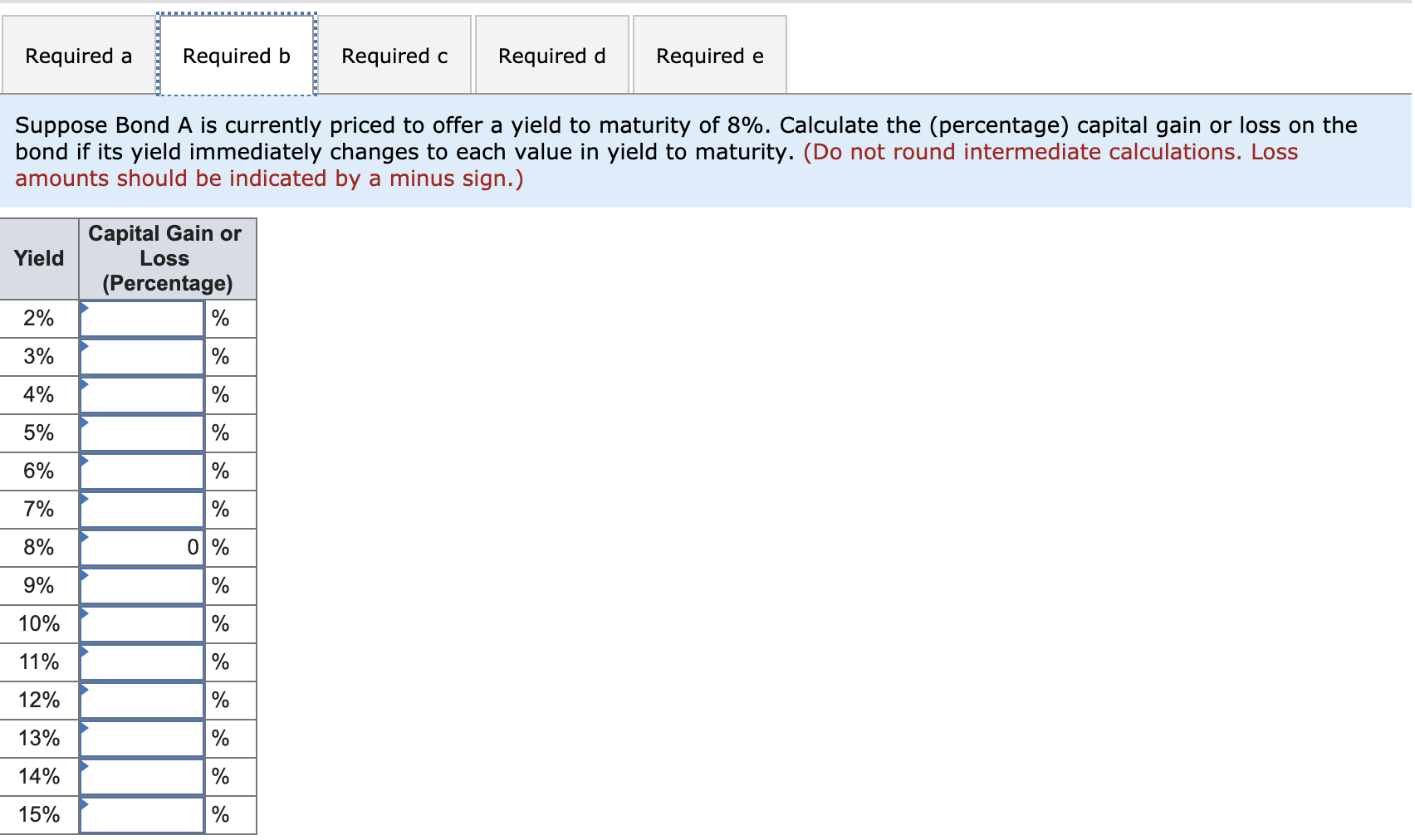
Consider two 30-year maturity bonds. Bond A has a coupon rate of 4%, while bond B has a coupon rate of 12%. Both bonds pay their coupons semiannually. a. Compute the prices of the two bonds at each interest rate. (Round the bond price to 2 decimal places.) b. Suppose Bond A is currently priced to offer a yield to maturity of 8%. Calculate the (percentage) capital gain or loss on the bond if its yield immediately changes to each value of yield to maturity. (Enter your answers as a percent rounded to the nearest whole percent.) c. Suppose Bond B is currently priced to offer a yield to maturity of 8%. Calculate the (percentage) capital gain or loss on the bond if its yield immediately changes to each value of yield to maturity. (Enter your answers as a percent rounded to the nearest whole percent.) d. Which bond's price exhibits greater proportional sensitivity to changes in its yield? In other words, which bond has greater interest rate risk? e. Which bond pays a high coupon rate has lower average or effective maturity than a bond that pays a low coupon rate? Required a Required b Required c. Required d Required e Suppose Bond B is currently priced to offer a yield to maturity of 8%. Calculate the (percentage) capital gain or loss on the bond if its yield immediately changes to each value in yield to maturity. (Do not round intermediate calculations. Loss amounts should be indicated by a minus sign.) Yield Capital Gain or Loss (Percentage) % % 2% 3% 4% 5% % 6% % 7% % 8% 9% % % 10% 11% 12% % 13% 14% 15% % Required a Required b Required c Required d Required e Suppose Bond A is currently priced to offer a yield to maturity of 8%. Calculate the (percentage) capital gain or loss on the bond if its yield immediately changes to each value in yield to maturity. (Do not round intermediate calculations. Loss amounts should be indicated by a minus sign.) Yield 2% 3% Capital Gain or Loss (Percentage) % % % % % 4% 5% 6% 7% 8% 9% 10% 0 % % % % % % 11% 12% 13% 14% % 15% % Consider two 30-year maturity bonds. Bond A has a coupon rate of 4%, while bond B has a coupon rate of 12%. Both bonds pay their coupons semiannually. a. Compute the prices of the two bonds at each interest rate. (Round the bond price to 2 decimal places.) b. Suppose Bond A is currently priced to offer a yield to maturity of 8%. Calculate the (percentage) capital gain or loss on the bond if its yield immediately changes to each value of yield to maturity. (Enter your answers as a percent rounded to the nearest whole percent.) c. Suppose Bond B is currently priced to offer a yield to maturity of 8%. Calculate the (percentage) capital gain or loss on the bond if its yield immediately changes to each value of yield to maturity. (Enter your answers as a percent rounded to the nearest whole percent.) d. Which bond's price exhibits greater proportional sensitivity to changes in its yield? In other words, which bond has greater interest rate risk? e. Which bond pays a high coupon rate has lower average or effective maturity than a bond that pays a low coupon rate? Required a Required b Required c. Required d Required e Suppose Bond B is currently priced to offer a yield to maturity of 8%. Calculate the (percentage) capital gain or loss on the bond if its yield immediately changes to each value in yield to maturity. (Do not round intermediate calculations. Loss amounts should be indicated by a minus sign.) Yield Capital Gain or Loss (Percentage) % % 2% 3% 4% 5% % 6% % 7% % 8% 9% % % 10% 11% 12% % 13% 14% 15% % Required a Required b Required c Required d Required e Suppose Bond A is currently priced to offer a yield to maturity of 8%. Calculate the (percentage) capital gain or loss on the bond if its yield immediately changes to each value in yield to maturity. (Do not round intermediate calculations. Loss amounts should be indicated by a minus sign.) Yield 2% 3% Capital Gain or Loss (Percentage) % % % % % 4% 5% 6% 7% 8% 9% 10% 0 % % % % % % 11% 12% 13% 14% % 15% %
Step by Step Solution
There are 3 Steps involved in it

Get step-by-step solutions from verified subject matter experts