







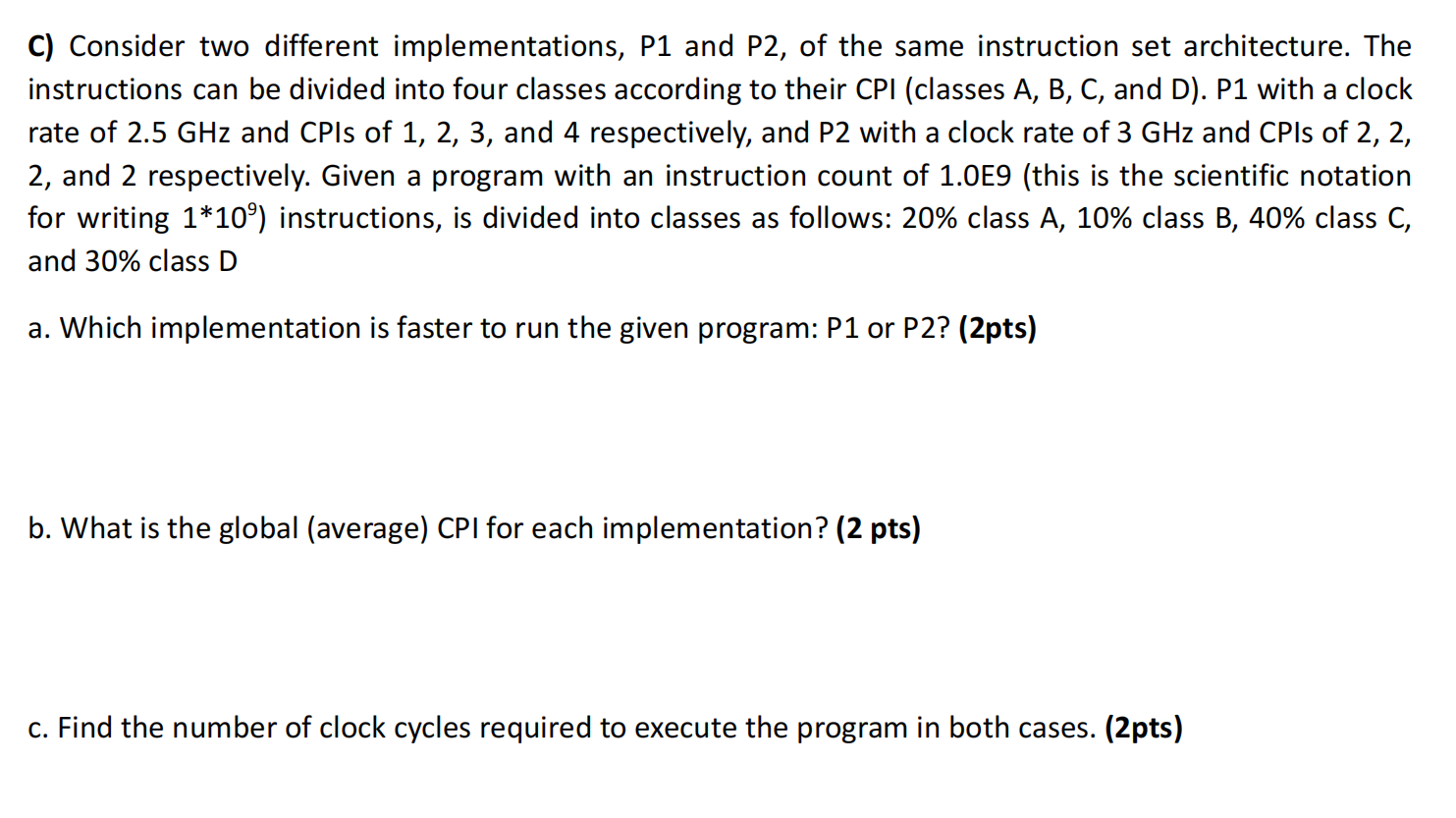
Question: Consider two different implementations, P 1 and P 2 , of the same instruction set architecture. The instructions can be divided into four classes according
Consider two different implementations, P and P of the same instruction set architecture. The
instructions can be divided into four classes according to their CPI classes A B C and D P with a clock
rate of GHz and CPIs of and respectively, and P with a clock rate of GHz and CPIs of
and respectively. Given a program with an instruction count of Ethis is the scientific notation
for writing
instructions, is divided into classes as follows: class A class B class C
and class D
a Which implementation is faster to run the given program: P or Ppts
b What is the global average CPI for each implementation? pts
c Find the number of clock cycles required to execute the program in both cases. ptsC Consider two different implementations, P and P of the same instruction set architecture. The
instructions can be divided into four classes according to their CPI classes A B C and D P with a clock
rate of and I of and respectively, and with a clock rate of and CPIs of
and respectively. Given a program with an instruction count of Ethis is the scientific notation
for writing instructions, is divided into classes as follows: class A class B class C
and class D
a Which implementation is faster to run the given program: P or Ppts
b What is the global average CPI for each implementation? pts
c Find the number of clock cycles required to execute the program in both cases. pts
Step by Step Solution
There are 3 Steps involved in it
1 Expert Approved Answer
Step: 1 Unlock

Question Has Been Solved by an Expert!
Get step-by-step solutions from verified subject matter experts
Step: 2 Unlock
Step: 3 Unlock
 Study Help