







Question: Consumer Reports tested 166 different point-and-shoot digital cameras. Based upon factors such as the number of megapixels, weight (oz), image quality, and ease of use,
Consumer Reports tested 166 different point-and-shoot digital cameras. Based upon factors such as the number of megapixels, weight (oz), image quality, and ease of use, they developed an overall score for each camera tested. The overall score ranges from 0 to 100, with higher scores indicating better overall test results. Selecting a camera with many options can be a difficult process, and price is certainly a key issue for most consumers. By spending more, will a consumer really get a superior camera? And, do cameras that have more megapixels, a factor often considered to be a good measure of picture quality, cost more than cameras with fewer megapixels. Data file named Cameras contains detailed information on the brand, average retail price ($), number of megapixels, weight (oz.), and the overall scores for the cameras.
a.Using overall score as the dependent variable, develop an estimated regression equation given price, megapixels, and weight.
b.What is the "goodness of fit" of your model?
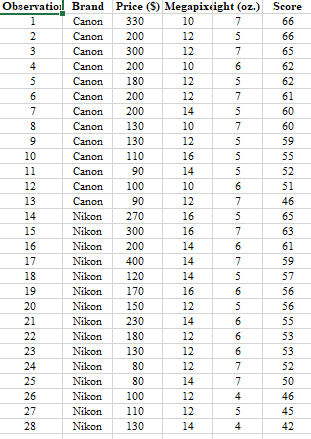
Observation Brand Price ($) Megapixelght (oz.)| Score Canon 330 10 7 66 2 Canon 200 12 5 66 3 Canon 300 12 65 Canon 200 10 6 62 Canon 180 12 62 Canon 200 12 61 Canon 200 14 60 Canon 130 10 7 60 Canon 130 12 5 59 10 Canon 110 16 55 11 Canon 90 14 52 12 Canon 100 10 51 13 Canon 90 12 7 46 14 Nikon 270 16 5 65 15 Nikon 300 16 7 63 16 Nikon 200 14 6 61 17 Nikon 400 14 7 59 18 Nikon 120 14 57 19 Nikon 170 16 6 56 20 Nikon 150 12 56 21 Nikon 230 14 6 55 22 Nikon 180 12 6 53 23 Nikon 130 12 53 24 Nikon 80 12 7 52 25 Nikon 80 14 7 50 26 Nikon 100 12 4 46 27 Nikon 110 12 5 45 28 Nikon 130 14 42
Step by Step Solution
There are 3 Steps involved in it

Get step-by-step solutions from verified subject matter experts
 Study Help