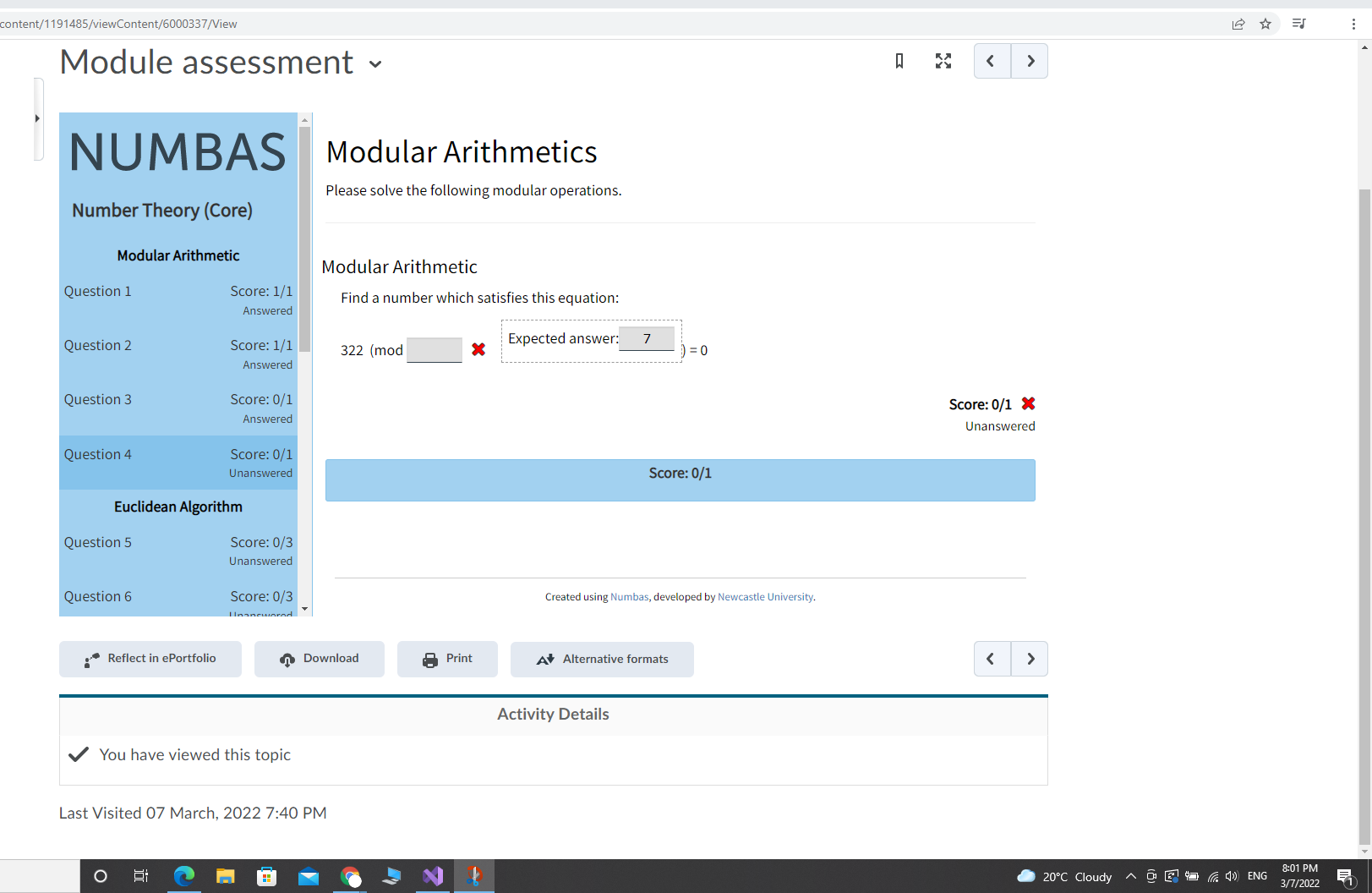
Question: content/1191485/viewContent/6000337/View Module assessment > NUMBAS Modular Arithmetics Please solve the following modular operations. Number Theory (Core) Modular Arithmetic Modular Arithmetic Question 1 Score: 1/1 Find
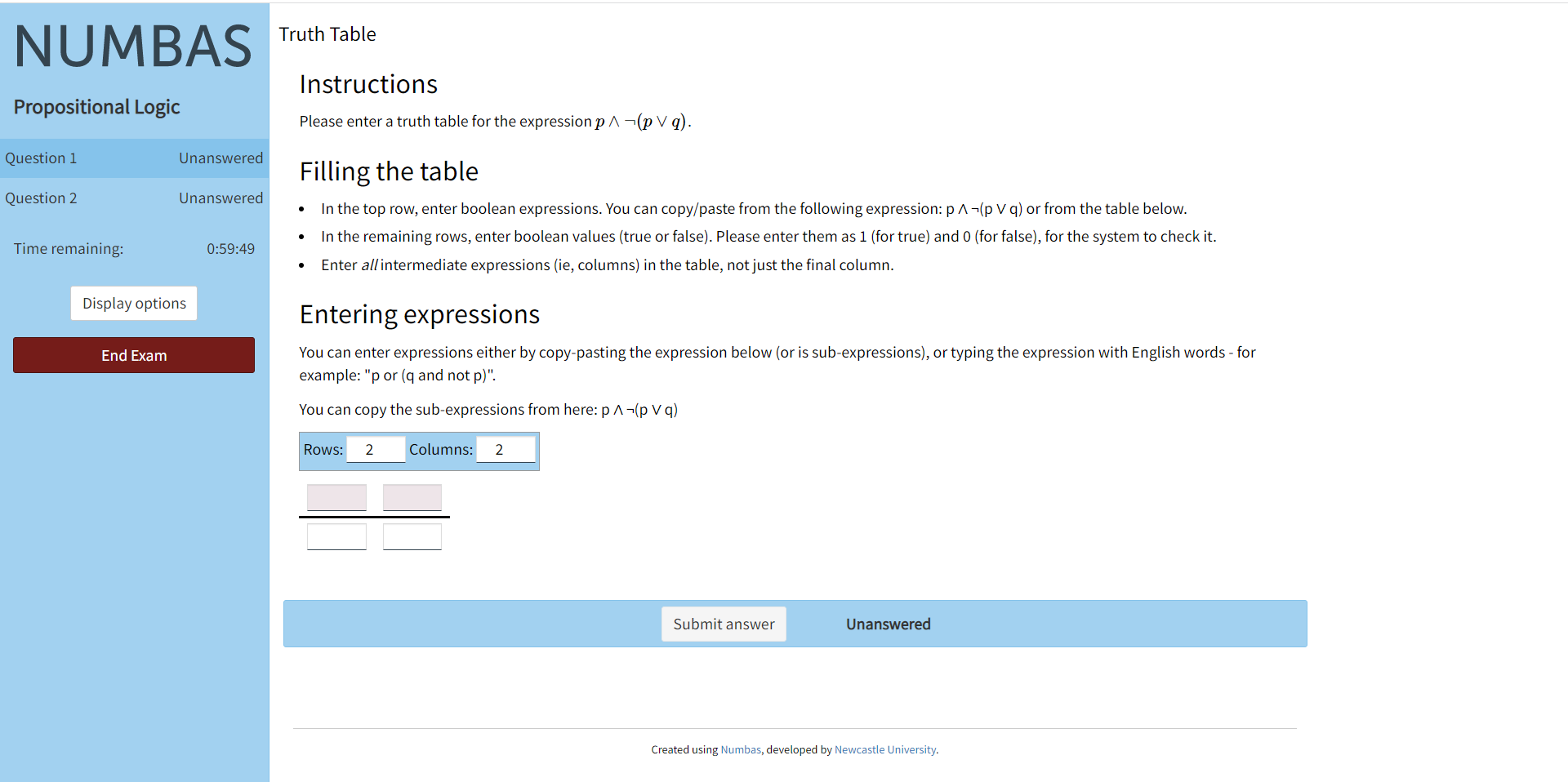
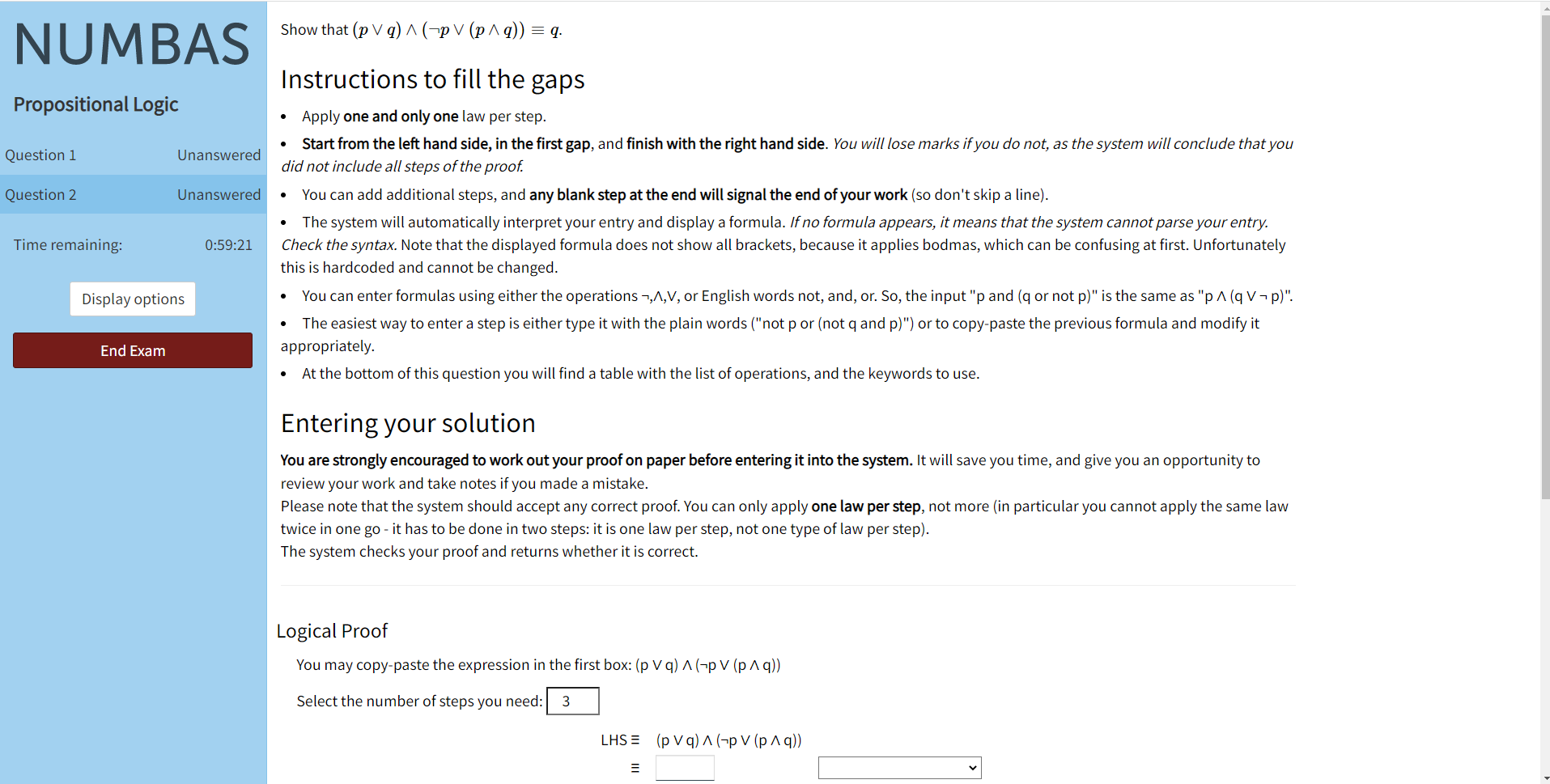
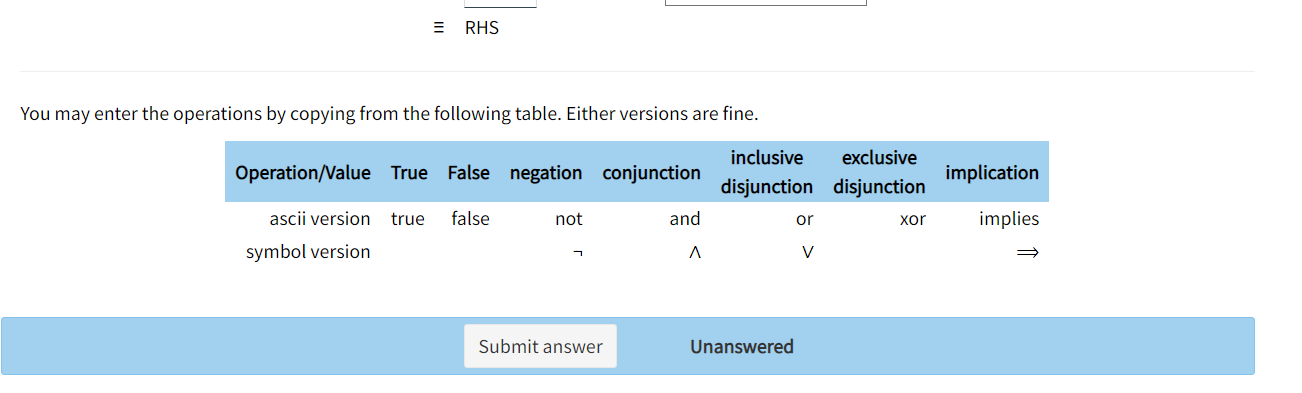
content/1191485/viewContent/6000337/View Module assessment > NUMBAS Modular Arithmetics Please solve the following modular operations. Number Theory (Core) Modular Arithmetic Modular Arithmetic Question 1 Score: 1/1 Find a number which satisfies this equation: Answered Question 2 Score: 1/1 Expected answer: 7 322 (mod =0 Answered Question 3 Score: 0/1 Score: 0/1 X Answered Unanswered Question 4 Score: 0/1 Unanswered Score: 0/1 Euclidean Algorithm Question 5 Score: 0/3 Unanswered Question 6 Score: 0/3 Created using Numbas, developed by Newcastle University. Reflect in ePortfolio Download Print A Alternative formats Activity Details You have viewed this topic Last Visited 07 March, 2022 7:40 PM O 20'C Cloudy ~ 9 7 () ENG 8:01 PM 3/7/2022NUMBAS Truth Table Instructions Propositional Logic Please enter a truth table for the expression p A -(p V q). Question 1 Unanswered Filling the table Question 2 Unanswered . In the top row, enter boolean expressions. You can copy/paste from the following expression: p A -(p V q) or from the table below. In the remaining rows, enter boolean values (true or false). Please enter them as 1 (for true) and 0 (for false), for the system to check it. Time remaining: 0:59:49 Enter all intermediate expressions (ie, columns) in the table, not just the final column. Display options Entering expressions End Exam You can enter expressions either by copy-pasting the expression below (or is sub-expressions), or typing the expression with English words - for example: "p or (q and not p)". You can copy the sub-expressions from here: p A -(p V q) Rows: 2 Columns: 2 Submit answer Unanswered Created using Numbas, developed by Newcastle University.NUMBAS Show that (p V q) A (-PV (p q)) = q. Instructions to fill the gaps Propositional Logic . Apply one and only one law per step. Question 1 Unanswered . Start from the left hand side, in the first gap, and finish with the right hand side. You will lose marks if you do not, as the system will conclude that you did not include all steps of the proof. Question 2 Unanswered . You can add additional steps, and any blank step at the end will signal the end of your work (so don't skip a line). The system will automatically interpret your entry and display a formula. If no formula appears, it means that the system cannot parse your entry. Time remaining: 0:59:21 Check the syntax. Note that the displayed formula does not show all brackets, because it applies bodmas, which can be confusing at first. Unfortunately this is hardcoded and cannot be changed. Display options You can enter formulas using either the operations -,A, V, or English words not, and, or. So, the input "p and (q or not p)" is the same as "p A (q V - p)". . The easiest way to enter a step is either type it with the plain words ("not p or (not q and p)") or to copy-paste the previous formula and modify it End Exam appropriately. . At the bottom of this question you will find a table with the list of operations, and the keywords to use. Entering your solution You are strongly encouraged to work out your proof on paper before entering it into the system. It will save you time, and give you an opportunity to review your work and take notes if you made a mistake. Please note that the system should accept any correct proof. You can only apply one law per step, not more (in particular you cannot apply the same law twice in one go - it has to be done in two steps: it is one law per step, not one type of law per step). The system checks your proof and returns whether it is correct. Logical Proof You may copy-paste the expression in the first box: (p V q) A (-p V (p / q)) Select the number of steps you need: 3 LHS= (p Vq) A (-PV (PAq))E RHS You may enter the operations by copying from the following table. Either versions are fine. inclusive exclusive Operation/Value True False negation conjunction implication disjunction disjunction ascii version true false not and or xor implies symbol version A
Step by Step Solution
There are 3 Steps involved in it
1 Expert Approved Answer
Step: 1 Unlock
Question Has Been Solved by an Expert!
Get step-by-step solutions from verified subject matter experts
Step: 2 Unlock
Step: 3 Unlock
Students Have Also Explored These Related Mathematics Questions!









 Study Help