





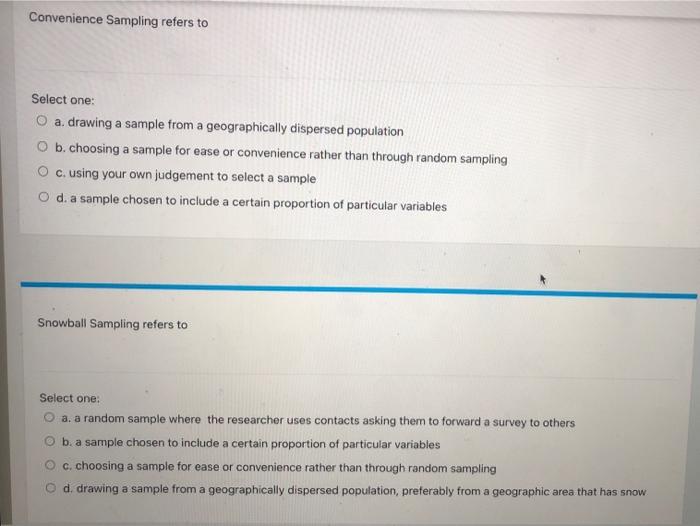
Question: Convenience Sampling refers to Select one: a drawing a sample from a geographically dispersed population b. choosing a sample for ease or convenience rather than
Convenience Sampling refers to Select one: a
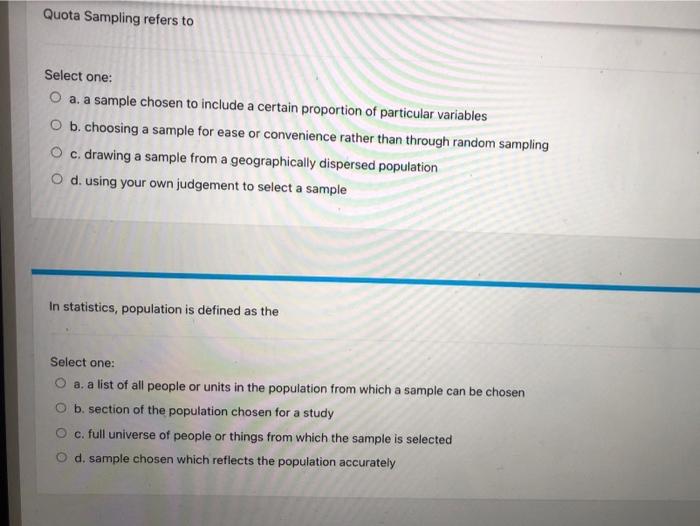
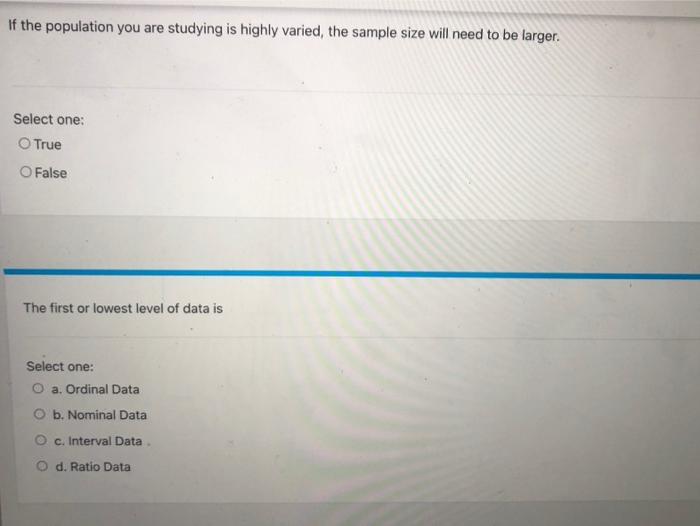
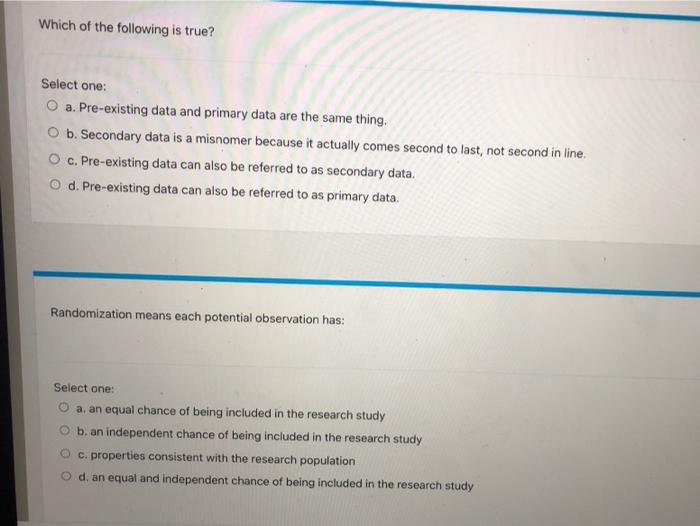
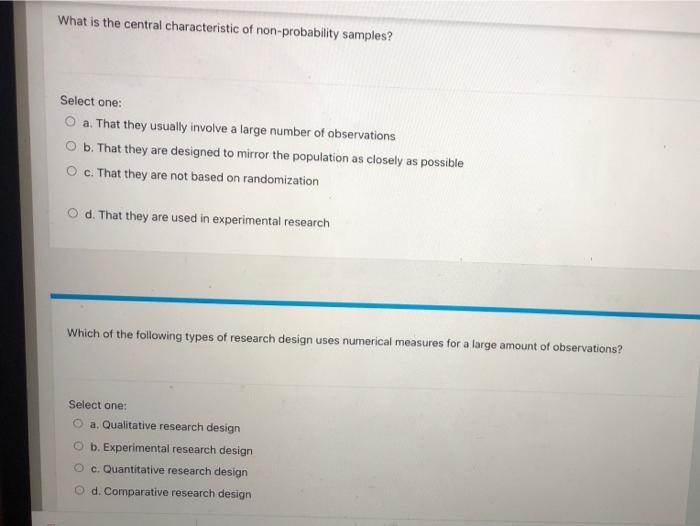
Convenience Sampling refers to Select one: a drawing a sample from a geographically dispersed population b. choosing a sample for ease or convenience rather than through random sampling O c. using your own judgement to select a sample O d. a sample chosen to include a certain proportion of particular variables Snowball Sampling refers to Select one: a. a random sample where the researcher uses contacts asking them to forward a survey to others b. a sample chosen to include a certain proportion of particular variables c. choosing a sample for ease or convenience rather than through random sampling Od drawing a sample from a geographically dispersed population, preferably from a geographic area that has snow Quota Sampling refers to Select one: O a. a sample chosen to include a certain proportion of particular variables O b. choosing a sample for ease or convenience rather than through random sampling O c. drawing a sample from a geographically dispersed population O d. using your own judgement to select a sample In statistics, population is defined as the Select one: a. a list of all people or units in the population from which a sample can be chosen b. section of the population chosen for a study O c. full universe of people or things from which the sample is selected O d. sample chosen which reflects the population accurately If the population you are studying is highly varied, the sample size will need to be larger. Select one: True O False The first or lowest level of data is Select one: O a. Ordinal Data b. Nominal Data c. Interval Data O d. Ratio Data Which of the following is true? Select one: a. Pre-existing data and primary data are the same thing, b. Secondary data is a misnomer because it actually comes second to last, not second in line. c. Pre-existing data can also be referred to as secondary data. d. Pre-existing data can also be referred to as primary data. Randomization means each potential observation has: Select one: a, an equal chance of being included in the research study b. an independent chance of being included in the research study c. properties consistent with the research population Od, an equal and independent chance of being included in the research study What is the central characteristic of non-probability samples? Select one: O a. That they usually involve a large number of observations O b. That they are designed to mirror the population as closely as possible O c. That they are not based on randomization d. That they are used in experimental research Which of the following types of research design uses numerical measures for a large amount of observations? Select one: a. Qualitative research design O b. Experimental research design c. Quantitative research design d. Comparative research design
Step by Step Solution

There are 3 Steps involved in it

1 Expert Approved Answer
Step: 1 Unlock blur-text-image

Question Has Been Solved by an Expert!

Get step-by-step solutions from verified subject matter experts

Step: 2 Unlock
Step: 3 Unlock

Students Have Also Explored These Related General Management Questions!