







Question: Copy and Paste the questions below into the submit box before answering them. Q13. Which states of matter are difficult to compress? Explain why they
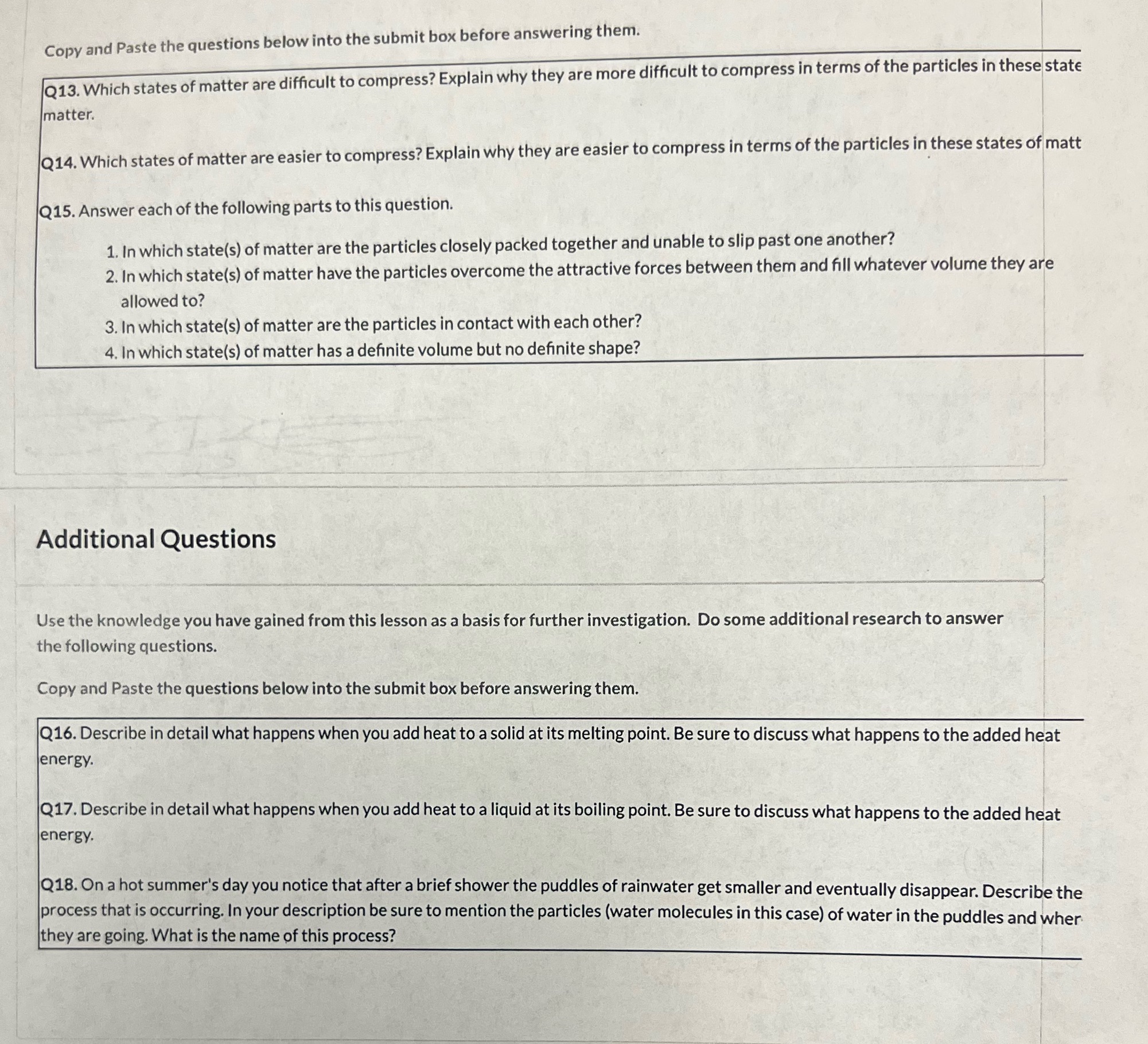
Copy and Paste the questions below into the submit box before answering them. Q13. Which states of matter are difficult to compress? Explain why they are more difficult to compress in terms of the particles in these state matter. Q14. Which states of matter are easier to compress? Explain why they are easier to compress in terms of the particles in these states of matt Q15. Answer each of the following parts to this question. 1. In which state(s) of matter are the particles closely packed together and unable to slip past one another? 2. In which state(s) of matter have the particles overcome the attractive forces between them and fill whatever volume they are allowed to? 3. In which state(s) of matter are the particles in contact with each other? 4. In which state(s) of matter has a definite volume but no definite shape? Additional Questions Use the knowledge you have gained from this lesson as a basis for further investigation. Do some additional research to answer the following questions. Copy and Paste the questions below into the submit box before answering them. Q16. Describe in detail what happens when you add heat to a solid at its melting point. Be sure to discuss what happens to the added heat energy. Q17. Describe in detail what happens when you add heat to a liquid at its boiling point. Be sure to discuss what happens to the added heat energy. Q18. On a hot summer's day you notice that after a brief shower the puddles of rainwater get smaller and eventually disappear. Describe the process that is occurring. In your description be sure to mention the particles (water molecules in this case) of water in the puddles and wher they are going. What is the name of this process
Step by Step Solution
There are 3 Steps involved in it

Get step-by-step solutions from verified subject matter experts
 Study Help