







Question: Correct and fill in the correct answer to Excel spreadsheet below ICAR Format: The ICAR must be in the Excel spreadsheet format (not Word or
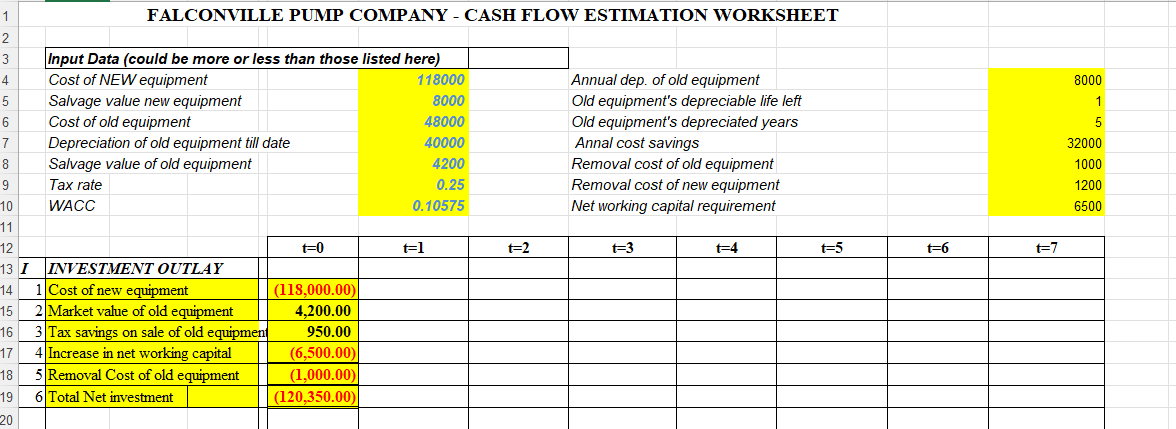
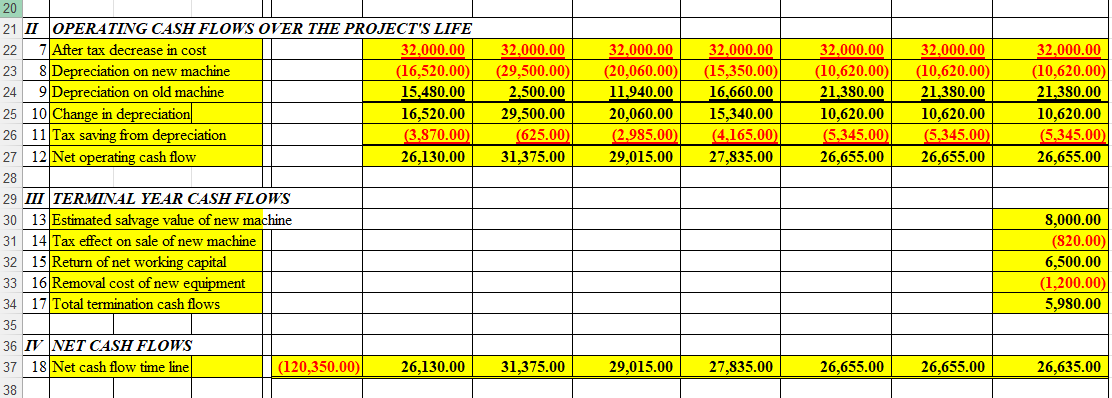
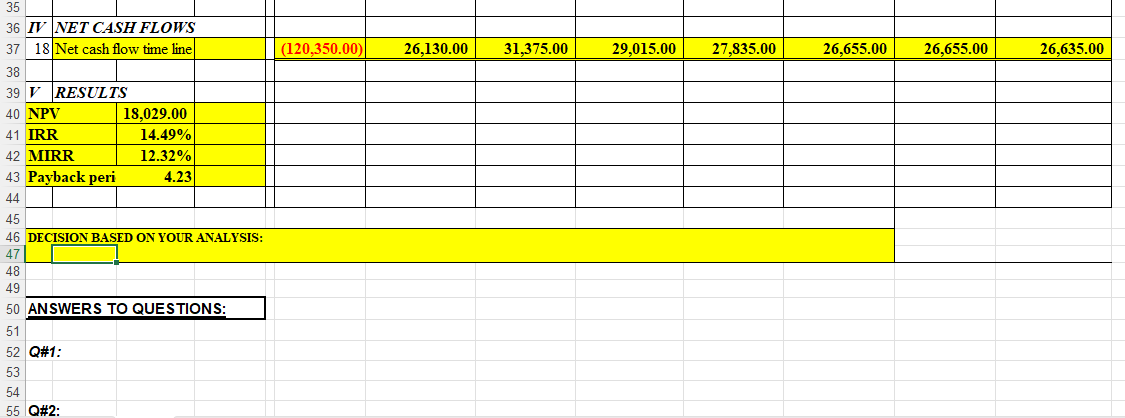
Correct and fill in the correct answer to Excel spreadsheet below
ICAR Format: The ICAR must be in the Excel spreadsheet format (not Word or pdf format)with all work (e.g., Excel formulas and equations used) clearly shown for all computed numbers in the cells.
Written report for the case analysis (attached below) by the due specified.
1.The equipment has a delivered cost of $115,000. An additional $3,000 is required to install and test the new system. 2. The new pumping system is classified by the IRS as 7-year property with the same 7-year estimated service life. For assets classified by the IRS as 7-year property, the Modified Accelerated Cost Recovery System (MACRS) permits the company to depreciate the asset over 8 years at the following rates: Year 1 = 14%; Year 2 = 25%; Year 3 = 17%; Year 4 = 13%; Year 5 = 9%; Year 6 = 9%; Year 7 = 9%; Year 8 = 4%. At the end of its estimated service life of 7 years, the salvage value is expected to be $8,000, with removal costs of $1,200. 3. The existing pumping system was purchased at $48,000 five years ago and has been depreciated on a straight-line basis over its economic life of 6 years. If the existing system is removed from the well and crated for pickup, it can be sold for $4,200 before tax. It will cost $1,000 to remove the system and crate it. 4. At the time of replacement (t=0), the firm will need to increase its net working capital requirements by $6,500 to support inventories. 5. The new pumping system offers lower maintenance costs and frees personnel who would otherwise have to monitor the system. In addition, it reduces product wastage because of a higher cooling efficiency. In total, it is estimated that the yearly savings will amount to $32,000 if the new pumping system is used. 6. FPC's assets are financed by debt and common equity and has a target debt ratio of 30 percent. Its debt carries an interest rate of 6 percent. The firm has paid $2.00 of dividend per share this year (D0) and expects a constant dividend growth rate of 5 percent per year in the coming years. The firm's current stock price, P0, is $28.00. The firm uses its overall weighted average cost of capital in evaluating average risk projects, and the replacement project is perceived to be of average risk. 7. The firm's federal-plus-state tax rate is 25 percent, and this rate is projected to remain fairly constant into the future.
QUESTIONS (Please provide answers to the following four questions on the attached Cash Flow Estimation Worksheet. You should show all your work with Excel formulas/equations for all computed numbers for Questions 1, 2 & 3, and concise and direct answers for Question #4 on the attached Cash Flow Estimation Worksheet and answers to tables at the bottom of your spreadsheet, whenever applicable. NO WORK SHOWN, NO POINTS.)
1. Compute the firm's weighted average cost of capital given the info/data in the case. What other approaches/methods can be used to measure the firm's cost of common equity and thus its WACC? To that end, what additional info/data would you need? (Hint: A firm's weighted average cost of capital is equal to ???? = ????(????)(1 - t) + ????????, where ???? and ???? are the weights of debt and equity in the capital structure; ????and ????are the respective costs of debt and equity; and t is the corporate tax rate; Do no round up your WACC figure.) 2. Develop a capital budgeting schedule using the attached Cash Flow Estimation Worksheet (Excel spreadsheet) that should list all relevant cash flow items and amounts related to the replacement project over the 7-year expected life of the new pumping system. (Reference Reading: "Cash Flow Analysis Example (RIC Project)", one of required Readings for the course.) 3. Based on the capital budgeting schedule, evaluate the replacement project by computing NPV, IRR, MIRR, and Payback Period. Would you recommend to accept or reject the replacement project based solely on your DCF analysis so far? 4. Before you make the final accept/reject decision, what other factors and approaches would you consider further? Discuss also how to PRACTICALLY take into account those factors and approaches in the capital budgeting decision process, whenever applicable.
Put the information above on excel spreadsheet below:

Step by Step Solution
There are 3 Steps involved in it

Get step-by-step solutions from verified subject matter experts
 Study Help