Question: Could someone help me making a conclusion and recommendation for this text that I made? Report Introduction Talking about university feeling in the remote learning
Could someone help me making a conclusion and recommendation for this text that I made?
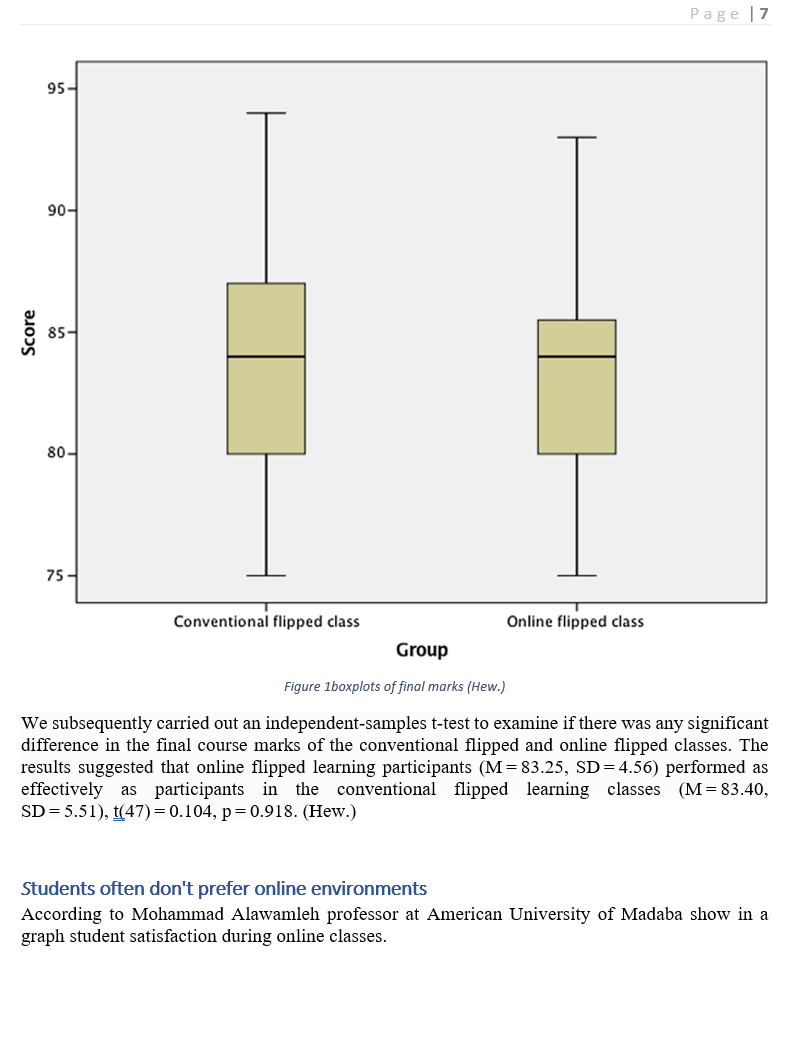
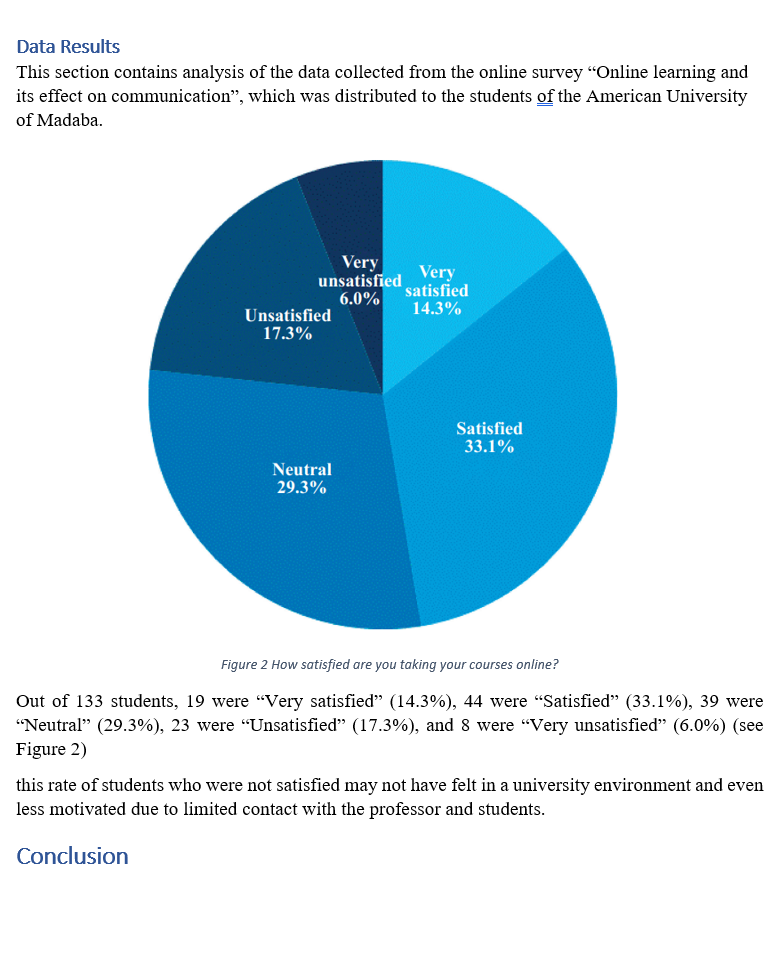
Report Introduction Talking about university feeling in the remote learning environment or even in the hybrid teaching model seems challenging for many Universities. With the extension of the pandemic, as online classes become routine, and it is not uncommon to find educators who have difficulty maintaining or awakening the engagement of their classes through the internet. What does it mean to create affective bonds in the University environment? And why is this important for student development? It is essential to have as a starting point the idea that learning does not only happen in the classroom in terms of content exposure. Thinking about knowledge is understanding that the University is a space for socialization and exchange of experiences that allows the development of students through the community. It is in this environment that students spend part of the day and that is why it is essential to create emotional bonds so that this learning takes place in a welcoming space. This integration allows the development of a sense of collectivity, empathy, interaction with people, different values, and ideas, in addition to valuing individualities to think collectively. The university environment allows for the creation of affective bonds between students and those around them, and not just professors or colleagues, but with the entire university community. An employee of the bookstore, coordination, administration, believing that we are all educators, and that is why it is essential to think about an environment of trust. To explore this, call the student by name, look him in the eye, be interested in his interests and family life, include him in decision- making processes at the university, this allows the student to feel comfortable to explore their potential and talk about feelings, dreams also of difficulties. How can the link with the university be intentionally encouraged by educators? It demands efforts to think of alternatives to develop more affective bonds in the school community that are meaningful to students. There are times when the dynamic university itself provides this by itself, as is the case of interaction in the classroom or at recess even if it is online, for example, but making the student think that he is part of a whole and that this directly implies in the learning process, it requires a continuous exercise by the host educator and the construction of a comfortable environment, together with the incorporation of an investigative attitude, which promotes the understanding of students as subjects of multiple intelligences and with different potentialities so that they can offer a space for the construction of autonomous and collective knowledge at the same time. Therefore, thinking about a moment to share the experiences of students is as important as thinking about the practice of their skills through the development of activities that arouse students' interest Page 16 to cultivate the feeling of belonging to the space and involve them in the construction and maintenance of an environment healthy university. And this can be thought of in the planning of classes and activities collectively, in the distribution of responsibilities, in the involvement of students in projects that bring benefits to everyone, not just for themselves and for their friends, and to think that building bonds it comes a lot from limits, responsibilities and an ethical thought about the collectivity. And how can this happen in remote education, considering all the difficulties in face-to- face interaction that we have been experiencing? It is undeniable that technological changes have resulted in changes and have raised important debates in the educational field about the possibility of rethinking pedagogical practices. But remote learning required a sudden adaptation, and we had to adapt with the tools offered at the time. This pandemic moment, which prevents physical interaction, makes it difficult to think about the social development that comes from contact, but it does not prevent us from thinking of alternatives for interaction, even online, and the use of classes as a moment of welcoming during isolation. This may be the only time the student comes into contact with other people, so it is worth thinking about the activities as a way of integrating and building a welcoming feeling to the space, even if it is virtual. Propose games, dynamics, games, participation with the camera on, or through chat, the use of digital tools, holding exhibitions or cultural fairs through audiovisual presentation so that students of all grades can interact with each other, make the most attractive classes with images, and debates that are part of the students' daily lives, questioning them for greater participation in class or even calling the student to create a class together with the professor. These are some suggestions for dealing with this interaction in remote learning, but it is worth remembering that thinking about this adequacy does not disregard the technical-scientific competence of the teacher, but the creation of an affective bond is related to the construction of a favorable environment, where this is understood. movement as necessary for the production of knowledge, especially in this moment of distancing when we are being called to be more flexible. Graphs showing the difference in grades of online encouraged students and non- incentivized normal classroom students Page 7 95- 90- Score 85- 80- 75- Conventional flipped class Online flipped class Group Figure 1boxplots of final marks (Hew.) We subsequently carried out an independent-samples t-test to examine if there was any significant difference in the final course marks of the conventional flipped and online flipped classes. The results suggested that online flipped learning participants (M=83.25, SD=4.56) performed as effectively as participants in the conventional flipped learning classes (M=83.40, SD=5.51), t(47)= 0.104, p=0.918. (Hew.) Students often don't prefer online environments According to Mohammad Alawamleh professor at American University of Madaba show in a graph student satisfaction during online classes. Data Results This section contains analysis of the data collected from the online survey Online learning and its effect on communication, which was distributed to the students of the American University of Madaba. Very unsatisfied Very 6.0% satisfied 14.3% Unsatisfied 17.3% Satisfied 33.1% Neutral 29.3% Figure 2 How satisfied are you taking your courses online? Out of 133 students, 19 were Very satisfied (14.3%), 44 were Satisfied (33.1%), 39 were "Neutral (29.3%), 23 were "Unsatisfied (17.3%), and 8 were Very unsatisfied (6.0%) (see Figure 2) this rate of students who were not satisfied may not have felt in a university environment and even less motivated due to limited contact with the professor and students. Conclusion




