







Question: Could you complete the first chart with the info on the second picture? Requirements 1. Determine the cost of goods sold and ending inventory amounts
 Could you complete the first chart with the info on the second picture?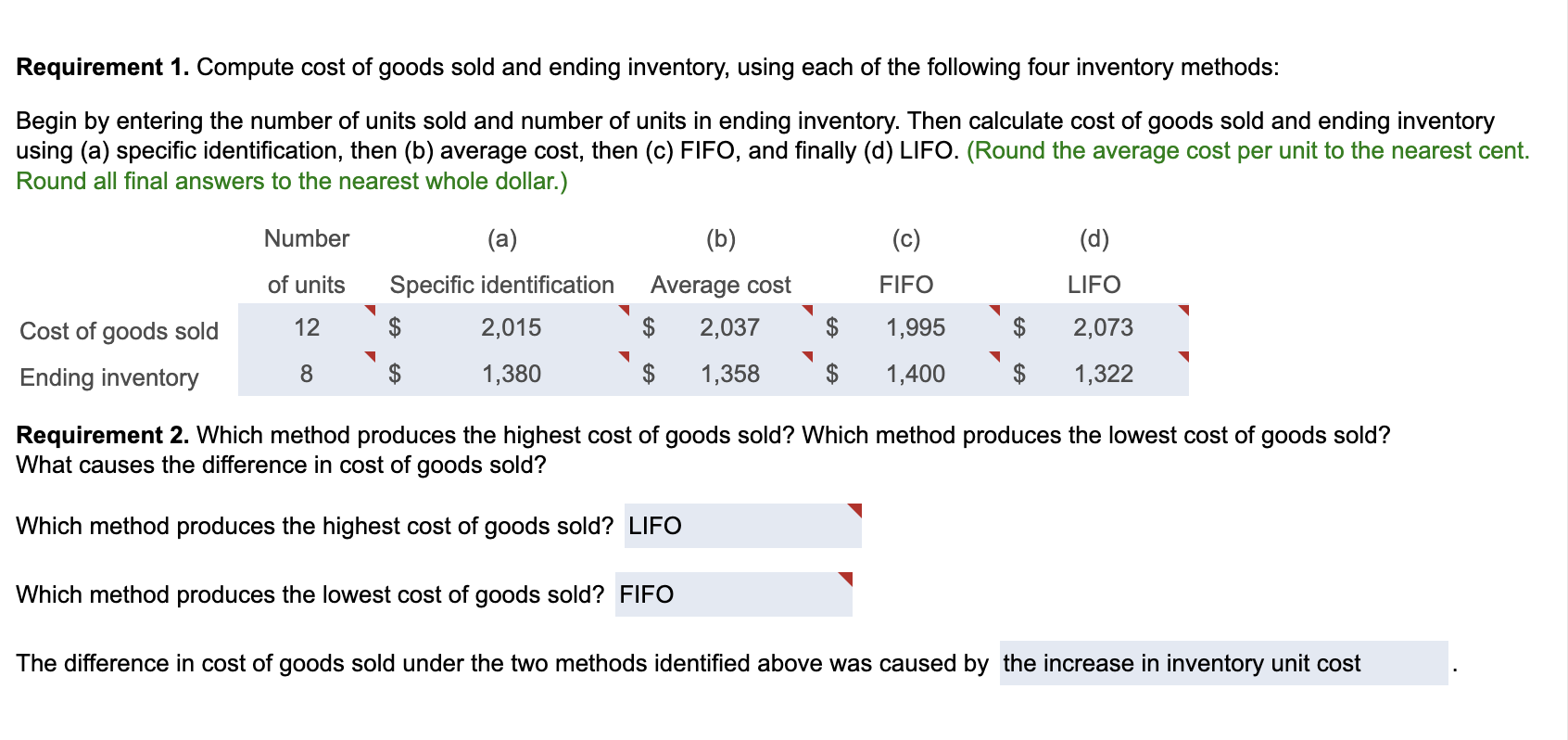
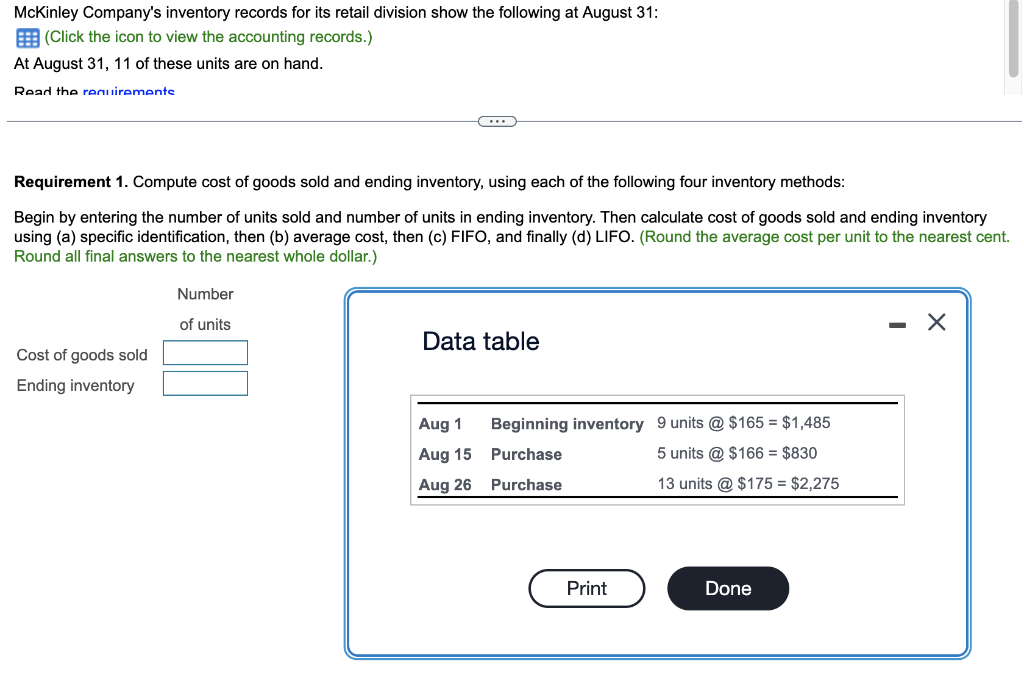
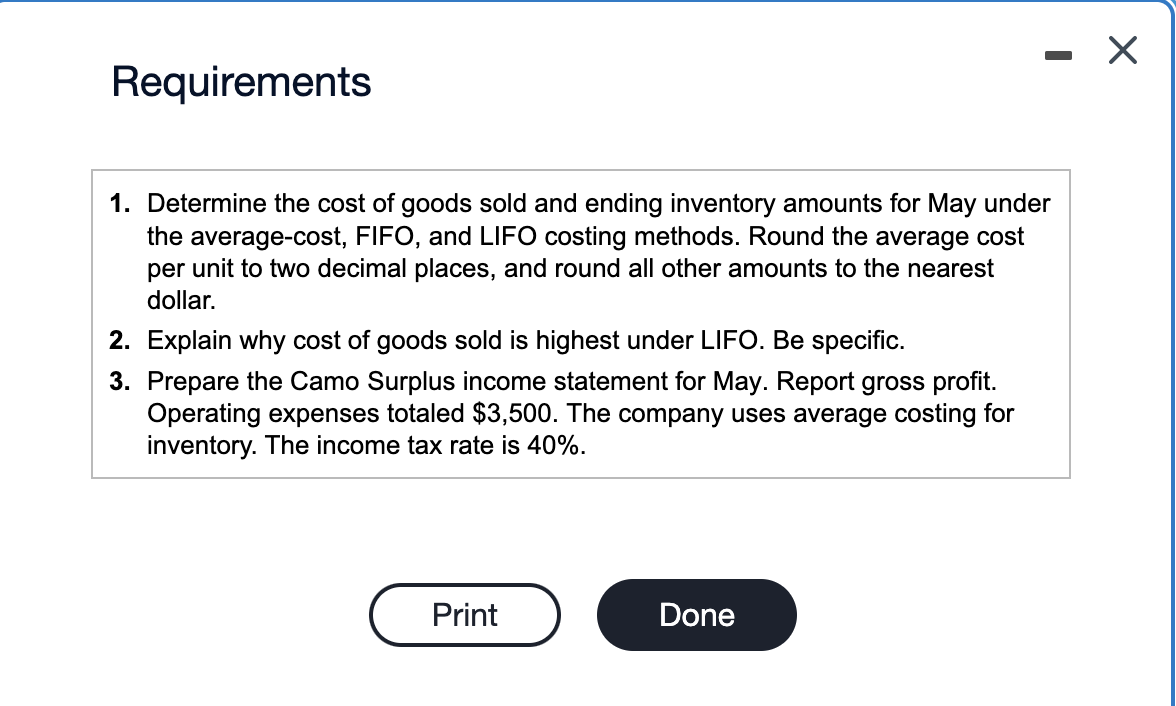
Requirements 1. Determine the cost of goods sold and ending inventory amounts for May under the average-cost, FIFO, and LIFO costing methods. Round the average cost per unit to two decimal places, and round all other amounts to the nearest dollar. 2. Explain why cost of goods sold is highest under LIFO. Be specific. 3. Prepare the Camo Surplus income statement for May. Report gross profit. Operating expenses totaled $3,500. The company uses average costing for inventory. The income tax rate is 40%. Requirement 1. Compute cost of goods sold and ending inventory, using each of the following four inventory methods: Begin by entering the number of units sold and number of units in ending inventory. Then calculate cost of goods sold and ending inventory using (a) specific identification, then (b) average cost, then (c) FIFO, and finally (d) LIFO. (Round the average cost per unit to the nearest cent. Round all final answers to the nearest whole dollar.) Cc Er Requirement 2. Which method produces the highest cost of goods sold? Which method produces the lowest cost of goods sold? What causes the difference in cost of goods sold? Which method produces the highest cost of goods sold? Which method produces the lowest cost of goods sold? The difference in cost of goods sold under the two methods identified above was caused by McKinley Company's inventory records for its retail division show the following at August 31: (Click the icon to view the accounting records.) At August 31,11 of these units are on hand. Reat the renuirompnte Requirement 1. Compute cost of goods sold and ending inventory, using each of the following four inventory methods: Begin by entering the number of units sold and number of units in ending inventory. Then calculate cost of goods sold and ending inventory using (a) specific identification, then (b) average cost, then (c) FIFO, and finally (d) LIFO. (Round the average cost per unit to the nearest cent. Round all final answers to the nearest whole dollar.) Requirements 1. Determine the cost of goods sold and ending inventory amounts for May under the average-cost, FIFO, and LIFO costing methods. Round the average cost per unit to two decimal places, and round all other amounts to the nearest dollar. 2. Explain why cost of goods sold is highest under LIFO. Be specific. 3. Prepare the Camo Surplus income statement for May. Report gross profit. Operating expenses totaled $3,500. The company uses average costing for inventory. The income tax rate is 40%. Requirement 1. Compute cost of goods sold and ending inventory, using each of the following four inventory methods: Begin by entering the number of units sold and number of units in ending inventory. Then calculate cost of goods sold and ending inventory using (a) specific identification, then (b) average cost, then (c) FIFO, and finally (d) LIFO. (Round the average cost per unit to the nearest cent. Round all final answers to the nearest whole dollar.) Cc Er Requirement 2. Which method produces the highest cost of goods sold? Which method produces the lowest cost of goods sold? What causes the difference in cost of goods sold? Which method produces the highest cost of goods sold? Which method produces the lowest cost of goods sold? The difference in cost of goods sold under the two methods identified above was caused by McKinley Company's inventory records for its retail division show the following at August 31: (Click the icon to view the accounting records.) At August 31,11 of these units are on hand. Reat the renuirompnte Requirement 1. Compute cost of goods sold and ending inventory, using each of the following four inventory methods: Begin by entering the number of units sold and number of units in ending inventory. Then calculate cost of goods sold and ending inventory using (a) specific identification, then (b) average cost, then (c) FIFO, and finally (d) LIFO. (Round the average cost per unit to the nearest cent. Round all final answers to the nearest whole dollar.)
Step by Step Solution
There are 3 Steps involved in it

Get step-by-step solutions from verified subject matter experts
 Study Help