


Question: Could you explain step to step how you got the answer for 1,2,3 v2.cengagenow.com B C Home CengageNOWv2 | Online teaching and learning resource from

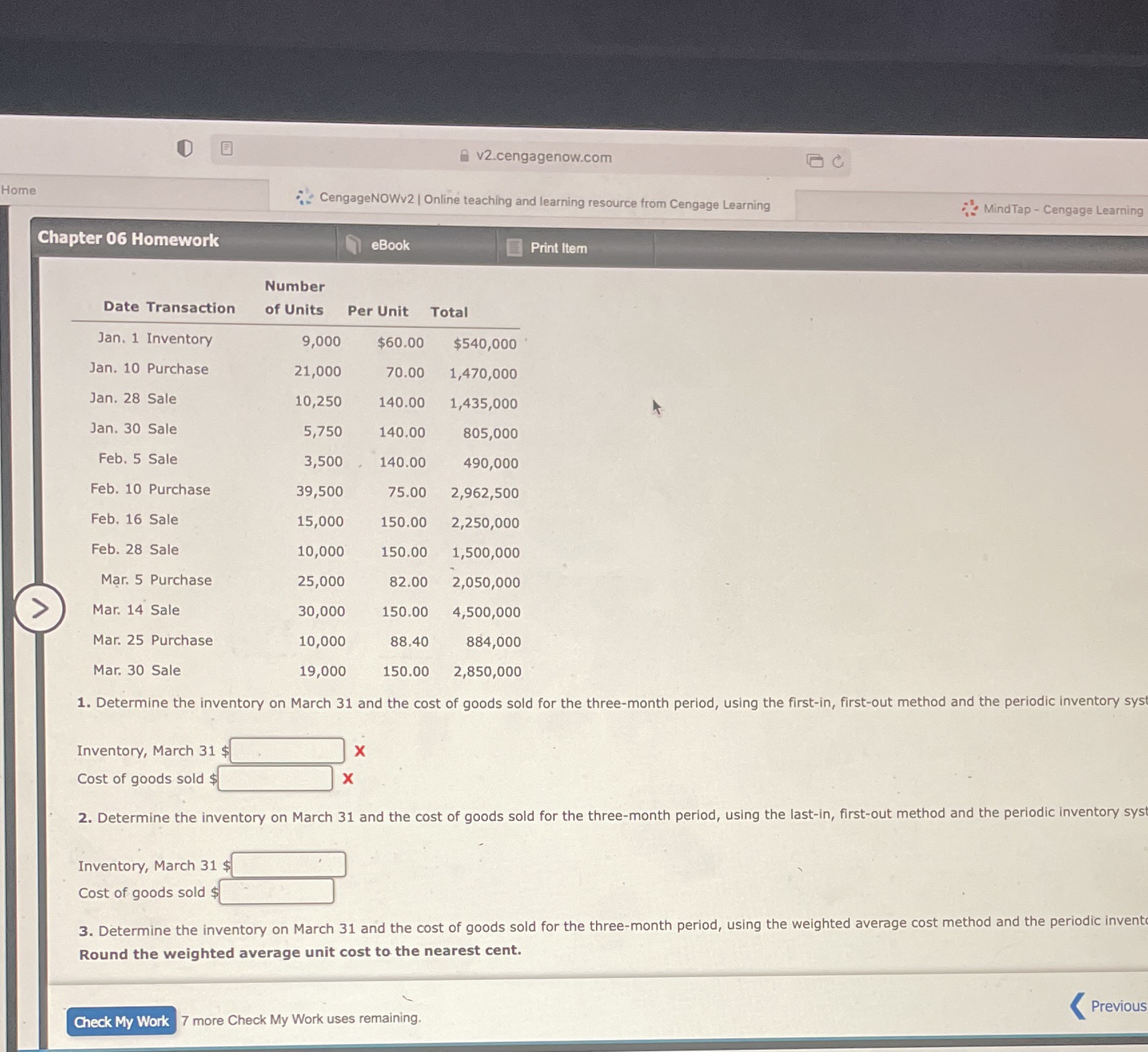
Could you explain step to step how you got the answer for 1,2,3
Could you explain step to step how you got the
v2.cengagenow.com B C Home CengageNOWv2 | Online teaching and learning resource from Cengage Learning MindTap - Cengage Learning Chapter 06 Homework eBook Print Item Number Date Transaction of Units Per Unit Total Jan. 1 Inventory 9,000 $60.00 $540,000 Jan. 10 Purchase 21,000 70.00 1,470,000 Jan. 28 Sale 10,250 140.00 1,435,000 Jan. 30 Sale 5,750 140.00 805,000 Feb. 5 Sale 3,500 140.00 490,000 Feb. 10 Purchase 39,500 75.00 2,962,500 Feb. 16 Sale 15,000 150.00 2,250,000 Feb. 28 Sale 10,000 150.00 1,500,000 Mar. 5 Purchase 25,000 82.00 2,050,000 Mar. 14 Sale 30,000 150.00 4,500,000 Mar. 25 Purchase 10,000 88.40 884,000 Mar. 30 Sale 19,000 150.00 2,850,000 1. Determine the inventory on March 31 and the cost of goods sold for the three-month period, using the first-in, first-out method and the periodic inventory sys Inventory, March 31 $ Cost of goods sold $ 2. Determine the inventory on March 31 and the cost of goods sold for the three-month period, using the last-in, first-out method and the periodic inventory sys Inventory, March 31 $ Cost of goods sold $ 3. Determine the inventory on March 31 and the cost of goods sold for the three-month period, using the weighted average cost method and the periodic invent Round the weighted average unit cost to the nearest cent. Previous Check My Work 7 more Check My Work uses remaining

Step by Step Solution

There are 3 Steps involved in it

1 Expert Approved Answer
Step: 1 Unlock blur-text-image

Question Has Been Solved by an Expert!

Get step-by-step solutions from verified subject matter experts

Step: 2 Unlock
Step: 3 Unlock

Students Have Also Explored These Related Accounting Questions!