







Question: COULD YOU HELP ME ANSWER THOSES? THX! QUESTION 1 3 points FIRST NATIONAL BANK Liabilities Assets $100 $100 Reserves Deposits 0 Loans The T account
COULD YOU HELP ME ANSWER THOSES? THX!
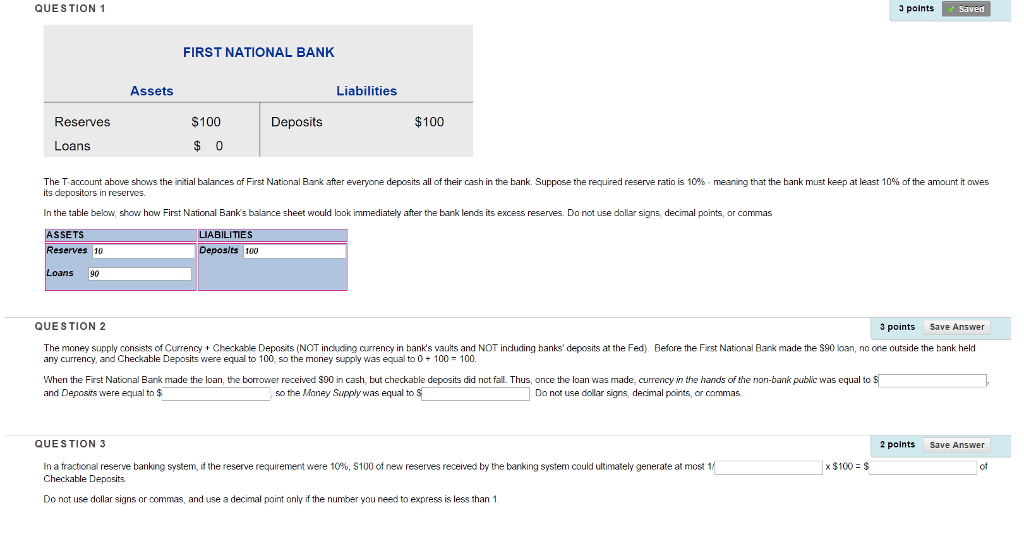
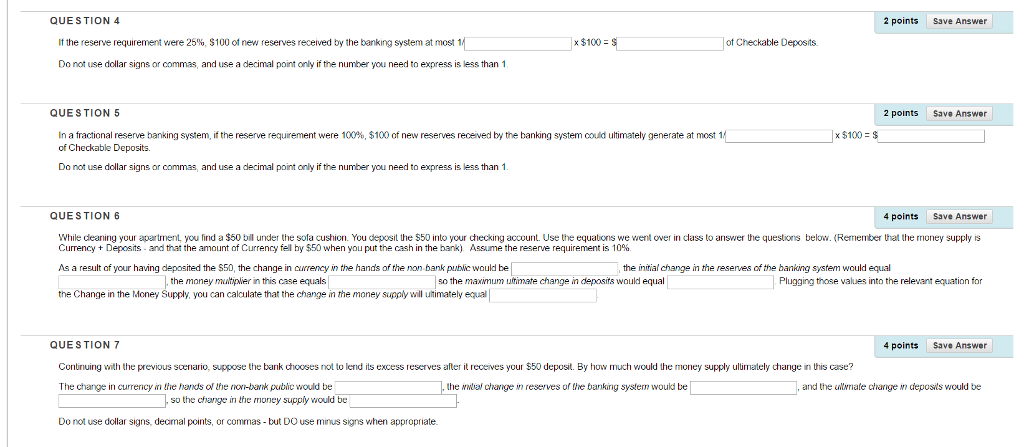
QUESTION 1 3 points FIRST NATIONAL BANK Liabilities Assets $100 $100 Reserves Deposits 0 Loans The T account above shows the al balances of First National Bank after everyone deposits all of their cash in the bank Suppose the required reserve ratio is 10%-meaning that the bank must keep at least 10% of the amount it owes its depositors in reserves. In the table below show how First National Bank's balance sheet would look immediately after the bank lends its excess reserves. Do not use dollar signs, decimal points, or commas ASSETS LIABILITIES Deposits 100 QUESTION 2 3 points Save Answer The money supply consists of Currency t Checkable Deposits (NOT induding currency in banks vaults and NOT induding banks' deposits at the Fed). Before the First National Bank made the $90 loan, no one outside the bank held any currency, and Checkable Deposits were equal to 100, so the money supply was equal to 0 100 100. When the First National Bank made the loan the borrower received $90 in cash, but checkable deposits did not fall. Thu once the loan was made. in the hands of the non-bank public was equal to S Do not use dollar signs, decimal points, or commas. and Deposits vere equal to so the Money Supply was equal to S QUESTION 3 2 points Save Answer x $100 In a fractional reserve banking system, if he reserve requirement were 10%, S100 of new reserves received by the banking system could ultimately generate at most Checkable Deposits. Do not use dollar signs or commas, and use a decimal point only if the number you need to express is less than 1
Step by Step Solution
There are 3 Steps involved in it

Get step-by-step solutions from verified subject matter experts
 Study Help