Question: course: warehousing managemnet answer as soon as possible please answer all three questions, and dont copy other peoples andwers please. i've also uploaded pictures if
course: warehousing managemnet
answer as soon as possible
please answer all three questions, and dont copy other peoples andwers please. i've also uploaded pictures if this case study from my laptop, in case it becomes hard to read.
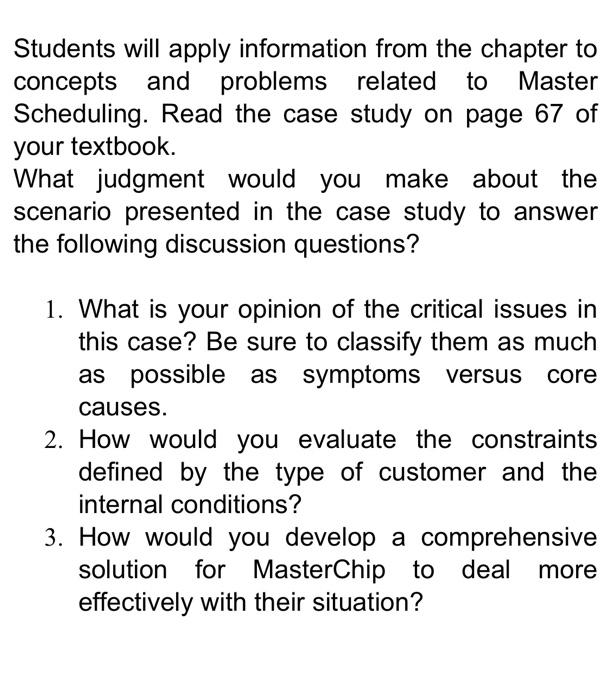
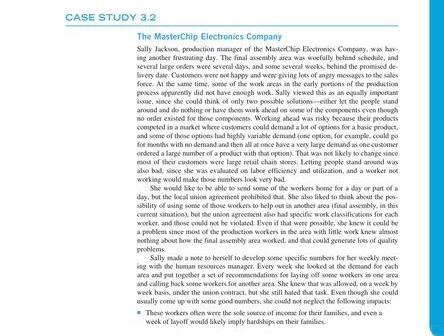
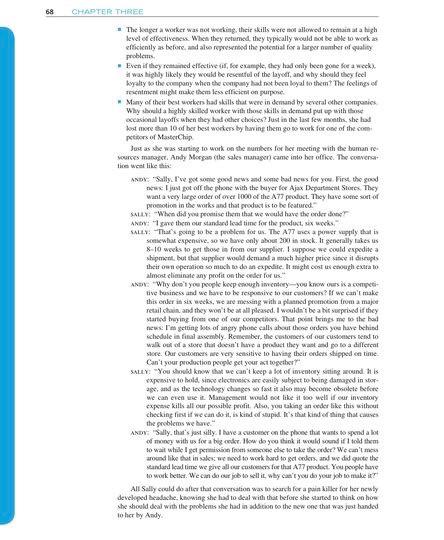
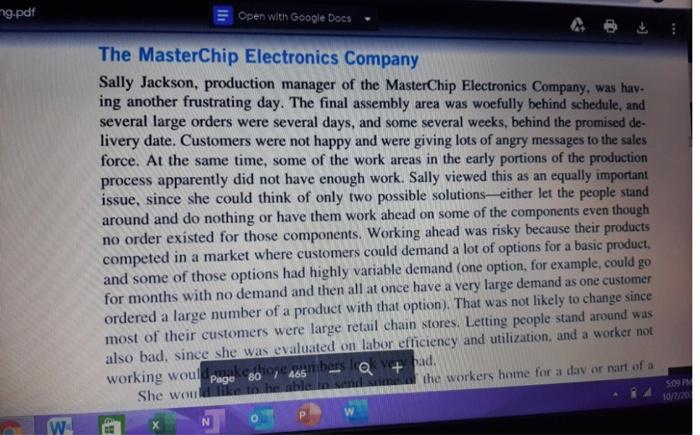
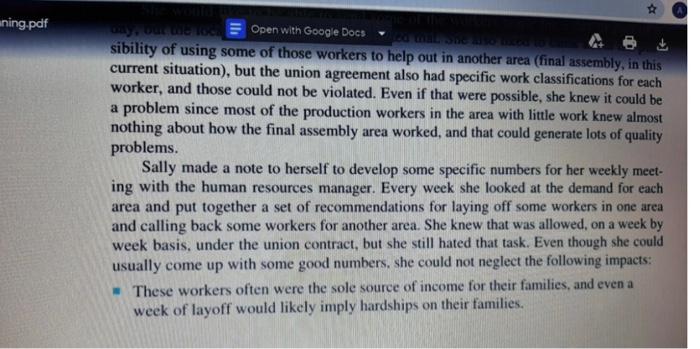
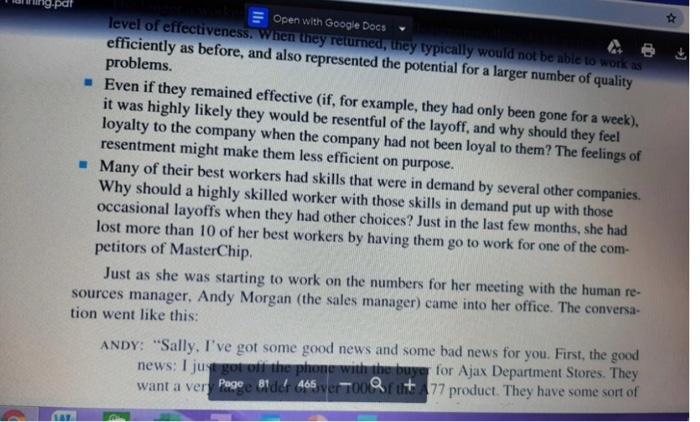
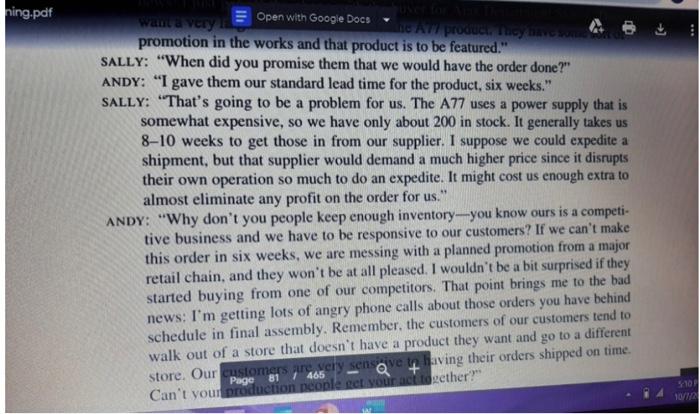
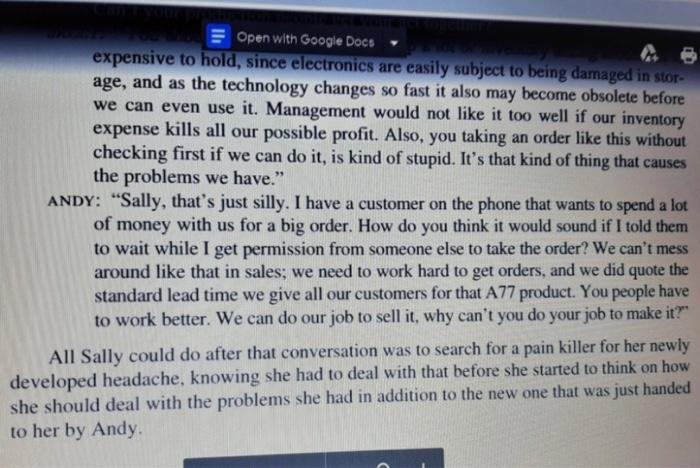
Students will apply information from the chapter to concepts and problems related to Master Scheduling. Read the case study on page 67 of your textbook. What judgment would you make about the scenario presented in the case study to answer the following discussion questions? 1. What is your opinion of the critical issues in this case? Be sure to classify them as much as possible as symptoms versus core causes. 2. How would you evaluate the constraints defined by the type of customer and the internal conditions? 3. How would you develop a comprehensive solution for MasterChip to deal more effectively with their situation? The MasterChip Electronics Company anvind and do nothing or have them work ahisad en xonte of the coeppecits even thewgh endered a large mimber of a product with than eqcionk. That was noo hekely to change yince working would make those manters look very bod. Sbe woild tike to be able wo whed wome of the workens tome for a dy cr pirt of a mosting stors bow the final assemby acs wonked. and that ceuld genenue loss of quality moblems. asally come wo with some pood nambers the coulf not neghet the following imports: week of toyoff would hikely inply hardshipris at their fattifee. RP THEREE - The wager a worker was not ncekitg, their skills were mol allowed to tertain at a tigh level of effectivenes. Whes they retemed they typically would sor be atte to woek as efficiently as before. and alw rovesented the potential for a hitger nomber of cualicy problerw. - Even if they reatand effective dis, foe erample, they had only been gote foe a weckl. 14 was tighly likely they would be resentel of the layedi, and why shoeld tley feel kyalty to the company when the congasy fad not becu boyal to them? The foelings of residment might mule theri less efficical on purpene. - Miny of their best woiberi had skills that were in deriuna by several ceher corrugorics lod more than 10 of ber best works by having them so so work for wese of the wom. petikers of Maserchip Jes as she was startitg to work on the zumbers for her meeting with the baman reveurees maroger. Andy Merpan (the sales muaseri came into bsr office. The ceverno tiee weet like this. ANDV: 'Sally. I've got wome sond news and seme fud news for yoe. First the good want a wery lacpe onder of onet to00 of the A 77 peodioct. They lave sothe weet of proesotion in the works and that grodust is to be featured." selar; - Whed did you fectise them that we would have the onder isoner ANiov: T T gane them our standard lead time for the pooduct vix wovks," sonswhar espensive. so we lave enly aboon 200 is a mock. It generally takes us 8-10 woeks 10 get those in from our vipplier. t sappose we could expedite a atmont eliminate any profit on the veser for us." tive tusiness and we bane to be recpesive to eur coolomers? If we kan't make thits enker it six betks, we are mesing with a plasind promoson from a majee retail chain and they won't to a at pleared. I wouldn's be a bit sorprised if they news. T't getling bes of angry phose calls about thene orden you have behiod chadole is final ascembly. Remember, the contomers of our custoetsers tend to wall od of a deve thai theirit have a peosuch thcy wast and go to a differcal slock. Cur curtomers alt very retasitive to havang their enders shipped en timeCan'1 your profoction perefte get your ast together?" stler: "You shoubd know than we san't keep a lot of imenory siting acound th is sxpcmive 10 hold since electraeics aec canily sabjcct to heing damagod in storager, and as the icilardogy chatger wo fast in also may become omolele before expetse kilk all our ponsible peofit. Alvo, you taking an oder fike this without the groblems we hare. ANm': "Silly, that's fast rilly. I have a sutoeser on the phoee this wants bo spend a bist eandad leal time we gine all our cunveser for that A77 prodoct. You poinle buve to work better. We can do avir job to sell it, why cat'tyed do your job to make it?' Alt Sally could dhafler that cenveriation was to wearch for a pain killer for her ncwly develiped beadsche; kevoning she has to deal with thar before she sarted to toink on how she shoetd deal with the peobiems we had in adseone wo the new ene that was jert banded io her by Andy. The MasterChip Electronics Company Sally Jackson, production manager of the MasterChip Electronics Company, was having another frustrating day. The final assembly area was woefully behind schedule, and several large orders were several days, and some several weeks, behind the promised delivery date. Customers were not happy and were giving lots of angry messages to the sales force. At the same time, some of the work areas in the early portions of the production process apparently did not have enough work. Sally viewed this as an equally important issue, since she could think of only two possible solutions-either let the people stand around and do nothing or have them work ahead on some of the components even though no order existed for those components. Working ahead was risky because their products competed in a market where customers could demand a lot of options for a basic product, and some of those options had highly variable demand (one option, for example, could go for months with no demand and then all at once have a very large demand as one customer ordered a large number of a product with that option). That was not likely to change since most of their customers were large retail chain stores. Letting people stand around was also bad, since she was evaluated on labor efficiency and utilization, and a worker not working woul ipage 80 , 465 - Q thad. sibility of using some of those workers to help out in another area (final assembly, in this current situation), but the union agreement also had specific work classifications for each worker, and those could not be violated. Even if that were possible, she knew it could be a problem since most of the production workers in the area with little work knew almost nothing about how the final assembly area worked, and that could generate lots of quality problems. Sally made a note to herself to develop some specific numbers for her weekly meeting with the human resources manager. Every week she looked at the demand for each area and put together a set of recommendations for laying off some workers in one area and calling back some workers for another area. She knew that was allowed, on a week by week basis, under the union contract, but she still hated that task. Even though she could usually come up with some good numbers, she could not neglect the following impacts: - These workers often were the sole source of income for their families, and even a week of layoff would likely imply hardships on their families. Open with Goople Docs . efficiently as before, and also represented the potential for a larger number of quality problems. - Even if they remained effective (if, for example, they had only been gone for a week). it was highly likely they would be resentful of the layoff, and why should they feel loyalty to the company when the company had not been loyal to them? The feelings of resentment might make them less efficient on purpose. - Many of their best workers had skills that were in demand by several other companies. Why should a highly skilled worker with those skills in demand put up with those occasional layoffs when they had other choices? Just in the last few months, she had lost more than 10 of her best workers by having them go to work for one of the competitors of MasterChip. Just as she was starting to work on the numbers for her meeting with the human resources manager, Andy Morgan (the sales manager) came into her office. The conversation went like this: ANDY: "Sally, I've got some good news and some bad news for you. First, the good news: I juy for Ajax Department Stores. They want a ver promotion in the works and that product is to be featured." SALLY: "When did you promise them that we would have the order done?" ANDY: "I gave them our standard lead time for the product, six weeks." SALLY: "That's going to be a problem for us. The A77 uses a power supply that is somewhat expensive, so we have only about 200 in stock. It generally takes us 8 -10 weeks to get those in from our supplier. I suppose we could expedite a shipment, but that supplier would demand a much higher price since it disrupts their own operation so much to do an expedite. It might cost us enough extra to almost eliminate any profit on the order for us." ANDY: "Why don't you people keep enough inventory - you know ours is a competitive business and we have to be responsive to our customers? If we can't make this order in six weeks, we are messing with a planned promotion from a major retail chain, and they won't be at all pleased. I wouldn't be a bit surprised if they started buying from one of our competitors. That point brings me to the bad news: I'm getting lots of angry phone calls about those orders you have behind schedule in final assembly. Remember, the customers of our customers tend to walk out of a store that doesn't have a product they want and go to a different store. Our cysomern 81465 very sen Qve+ having their orders shipped on time. Can't yournoduction neonle ectyour act together?" expensive to hold, since electronics are easily subject to being damaged in storage, and as the technology changes so fast it also may become obsolete before we can even use it. Management would not like it too well if our inventory expense kills all our possible profit. Also, you taking an order like this without checking first if we can do it, is kind of stupid. It's that kind of thing that causes the problems we have." ANDY: "Sally, that's just silly. I have a customer on the phone that wants to spend a lot of money with us for a big order. How do you think it would sound if I told them to wait while I get permission from someone else to take the order? We can't mess around like that in sales; we need to work hard to get orders, and we did quote the standard lead time we give all our customers for that A77 product. You people have to work better. We can do our job to sell it, why can't you do your job to make it?' All Sally could do after that conversation was to search for a pain killer for her newly developed headache, knowing she had to deal with that before she started to think on how she should deal with the problems she had in addition to the new one that was just handed o her by Andy









 Study Help