



Question: Courts may refuse to enforce a contract or any part thereof if its terms are unconscionable, generally meaning that in its commercial setting and purpose
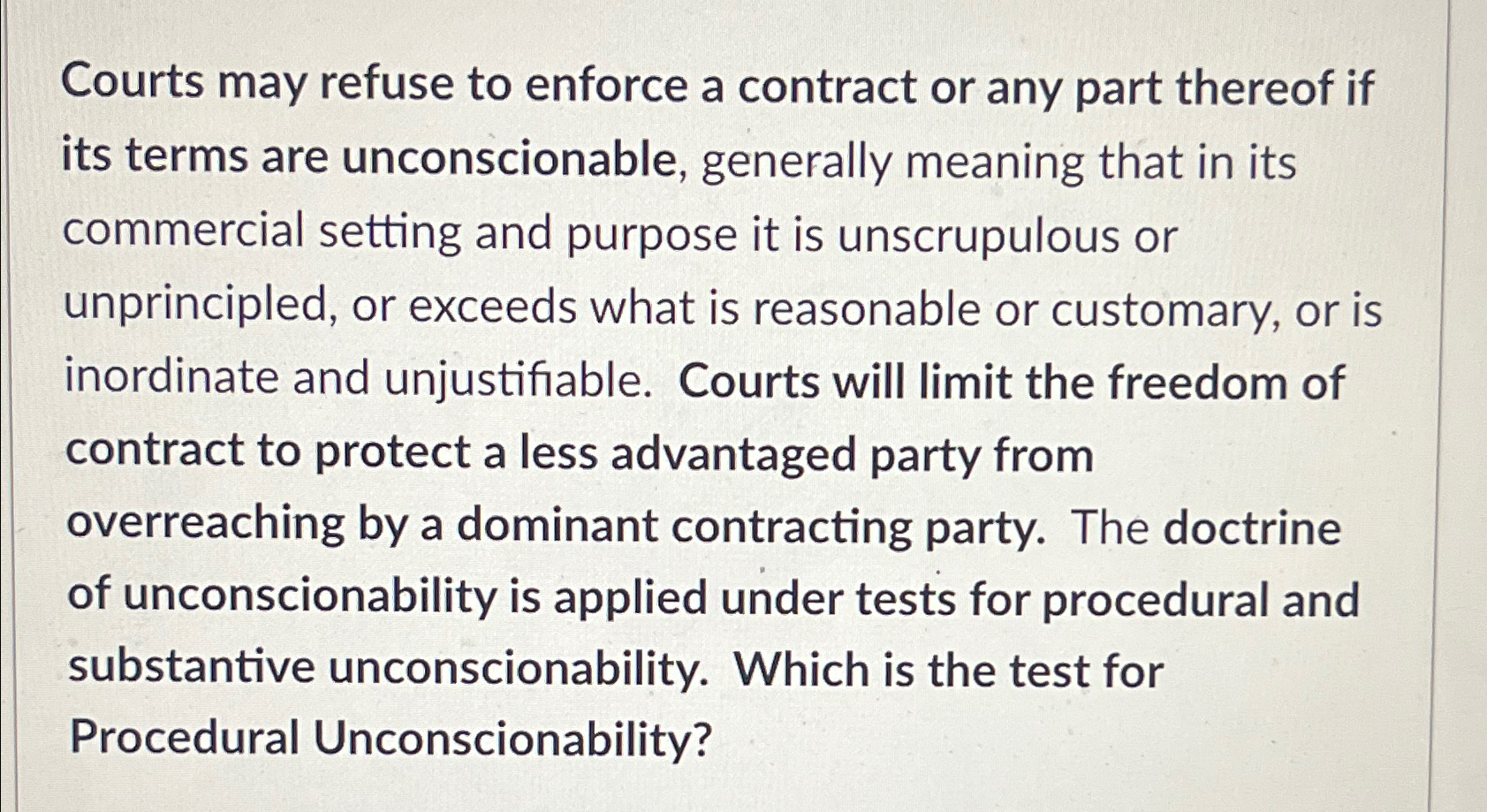
Courts may refuse to enforce a contract or any part thereof if its terms are unconscionable, generally meaning that in its commercial setting and purpose it is unscrupulous or unprincipled, or exceeds what is reasonable or customary, or is inordinate and unjustifiable. Courts will limit the freedom of contract to protect a less advantaged party from overreaching by a dominant contracting party. The doctrine of unconscionability is applied under tests for procedural and substantive unconscionability. Which is the test for Procedural Unconscionability?
Step by Step Solution
There are 3 Steps involved in it
1 Expert Approved Answer
Step: 1 Unlock

Question Has Been Solved by an Expert!
Get step-by-step solutions from verified subject matter experts
Step: 2 Unlock
Step: 3 Unlock