







Question: Crane makes two products, Simple and Complex. As their names suggest, Simple is the more basic product, and Complex comes with all the bells and
Crane makes two products, Simple and Complex. As their names suggest, Simple is the more basic product, and Complex comes with all the bells and whistles. The company has always allocated overhead costs to products based on machine hours. Last year, the company implemented an activity-based costing system, and managers determined the following activity pools and rates based on total overhead of $ 2,200,000:
| Rate | |||
|---|---|---|---|
| Assembly | $ 0.80 per direct labor hour | ||
| Fabrication | $ 15 per machine hour | ||
| Setups | $ 20 per batch | ||
| Bonding | $ 152,000 direct to Complex |
Only the Complex product requires bonding, so all the costs of bonding should be allocated to Complex. The following data relate to both products.
| Simple | Complex | |||
|---|---|---|---|---|
| Units produced | 100,000 | 40,000 | ||
| Direct labor hours | 220,000 | 140,000 | ||
| Machine hours | 80,000 | 30,000 | ||
| Batches | 1,500 | 4,000 |
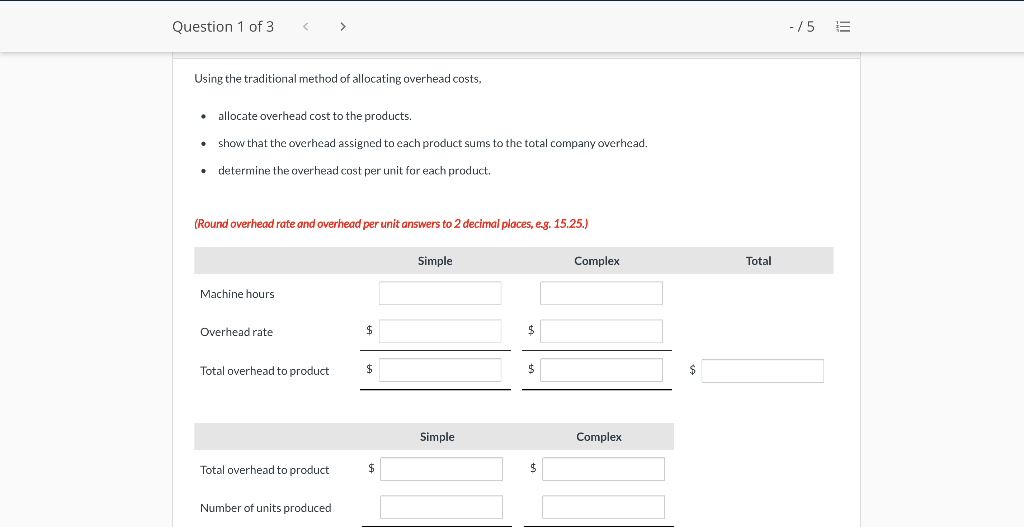
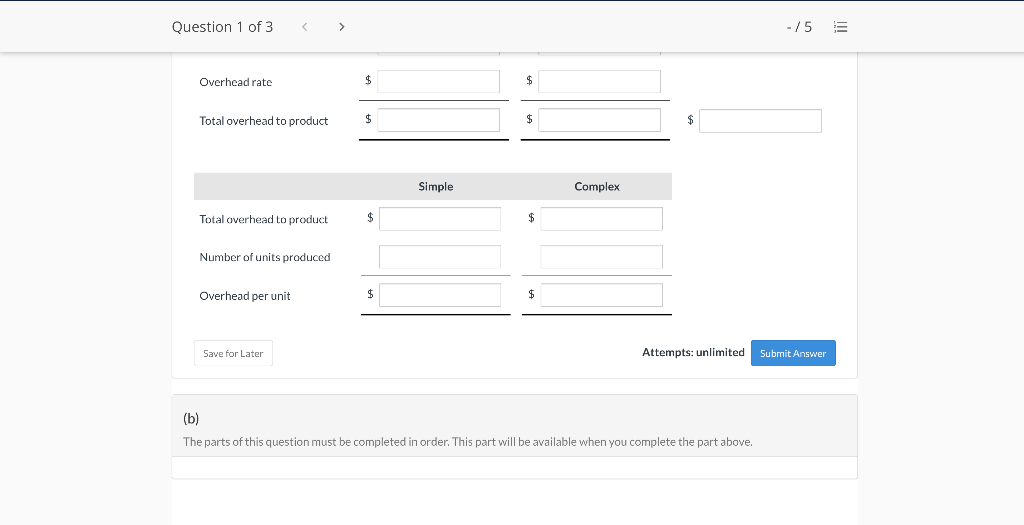
Question 1 of 3 - 75 Using the traditional method of allocating overhead costs, allocate overhead cost to the products. show that the overhead assigned to each product sums to the total company overhead. determine the overhead cost per unit for each product. (Round overhead rate and overhead per unit answers to 2 decimal places, e.g. 15.25.) Simple Complex Total Machine hours Overhead rate $ $ Total overhead to product $ Simple Complex Total overhead to product Number of units produced Question 1 of 3 -/5 E Overhead ratc $ Total overhead to product $ Simple Complex Total overhead to product $ $ Number of units produced Overhead per unit $ Save for Later Attempts: unlimited Submit Answer (b) The parts of this question must be completed in order. This part will be available when you complete the part above
Step by Step Solution
There are 3 Steps involved in it

Get step-by-step solutions from verified subject matter experts
 Study Help