







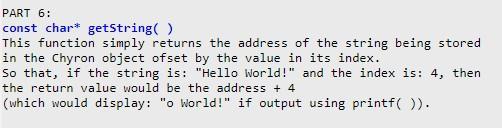
Question: Main program Output Create a C++ structure called a Chyron that can store up to and including 100 characters as a C string (a char
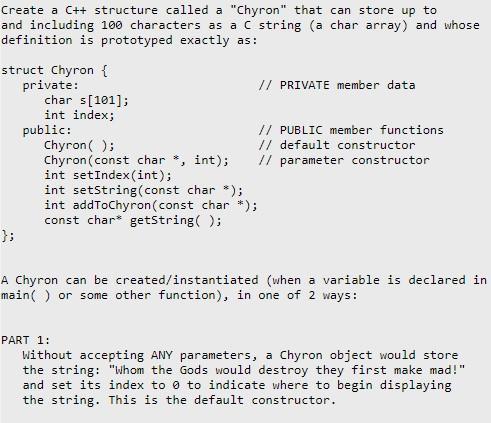
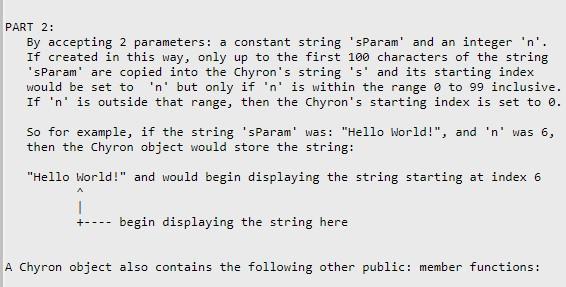
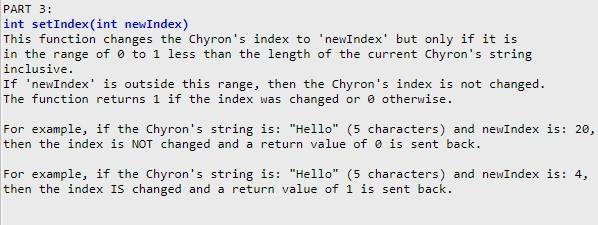
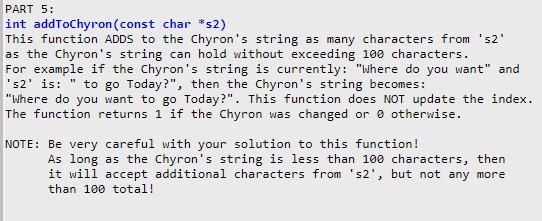
![s[101]; int index; public: Chyron(); Chyron (const char *, int); int setIndex](https://dsd5zvtm8ll6.cloudfront.net/si.experts.images/questions/2023/09/64f17e29efa35_1693548072505.jpg)
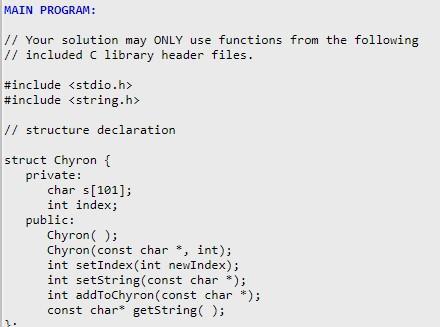
Main program
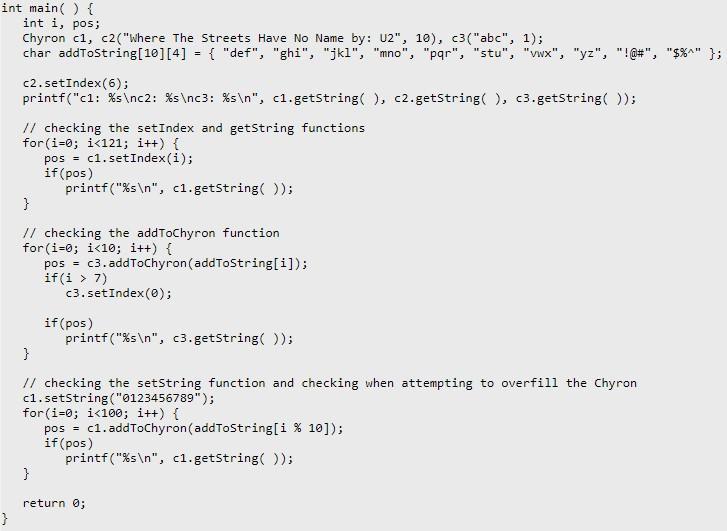
Output
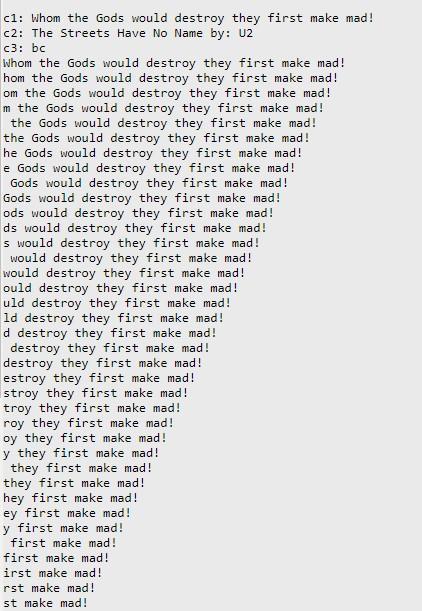
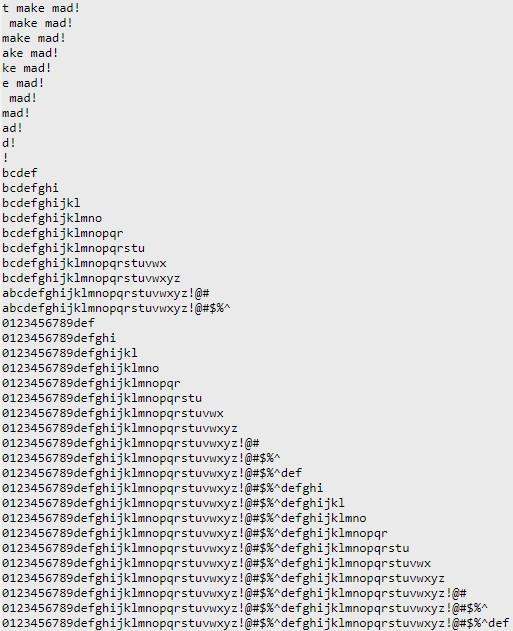
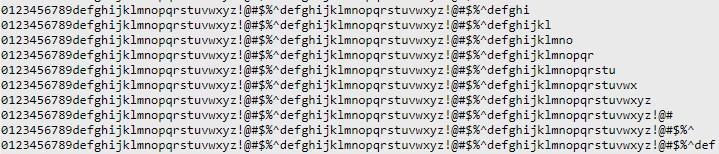
Create a C++ structure called a "Chyron" that can store up to and including 100 characters as a C string (a char array) and whose definition is prototyped exactly as: struct Chyron { private: }; char s[101]; int index; public: Chyron(); Chyron (const char *, int); int setIndex (int); int setString(const char *); int addToChyron (const char *); const char* getString(); // PRIVATE member data // PUBLIC member functions // default constructor // parameter constructor A Chyron can be created/instantiated (when a variable is declared in main() or some other function), in one of 2 ways: PART 1: Without accepting ANY parameters, a Chyron object would store the string: "Whom the Gods would destroy they first make mad!" and set its index to 0 to indicate where to begin displaying the string. This is the default constructor.
Step by Step Solution
3.41 Rating (164 Votes )
There are 3 Steps involved in it

Get step-by-step solutions from verified subject matter experts
 Study Help