







Question: Create a final written report on AI in Logistics on the basis of written draft report following the suggestions to create a report. Draft report
Create a final written report on AI in Logistics on the basis of written draft report following the suggestions to create a report.
Draft report and suggestions are:
Draft Report
Introduction
Artificial Intelligence (AI) has become a pivotal force in reshaping industries, and logistics is no exception. Inefficiencies in logistics operations, such as poor route planning, inventory mismanagement, and delivery delays, have long plagued the industry, costing companies billions annually. For instance, McKinsey & Company estimates that inefficiencies in supply chain management cost businesses nearly $2 trillion each year globally (McKinsey & Company, 2023). These inefficiencies lead to significant losses in revenue, decreased customer satisfaction, and increased operational costs. As companies strive to meet the growing demands of global markets and enhance their competitiveness, there is a critical need for innovative solutions that can streamline logistics processes. This proposal aims to explore how AI can optimize supply chain operations, reduce costs, and enhance delivery efficiency, offering a comprehensive solution to current logistical challenges. By leveraging advanced AI technologies, logistics companies can transform their operations, achieve substantial cost savings, and improve service delivery, ultimately gaining a competitive edge in the market.
The logistics industry, a complex network of processes involving the movement, storage, and flow of goods, has traditionally relied on human labor and manual processes. However, with the increasing demand for efficiency, accuracy, and speed in supply chain operations, the integration of AI has become essential. AI technologies offer innovative solutions to longstanding challenges, enabling logistics companies to optimize operations, reduce costs, and enhance customer satisfaction. This proposal delves into the profound implications of AI in logistics, examining its advantages, disadvantages, best utilization practices, best theory to apply to get more efficiency in logistics, and overall importance in revolutionizing the sector.
Theories and their application:
Artificial Intelligence (AI) technology in the field of logistics leverages sophisticated algorithms and machine learning techniques to streamline supply chain operations. Acting as a digital partner to warehouses, transportation networks, and inventory control processes, AI enhances efficiency and productivity. Some of the significant benefits of AI in logistics include timely notifications of shipment delays, accurate data analysis for informed decision-making, anticipation of inventory requirements, cost savings through route optimization, and valuable insights for resource allocation. Additionally, AI aids in modernizing operations by adapting to industry trends, automating routine tasks, ensuring punctual deliveries, and improving overall logistical performance.
Examples:
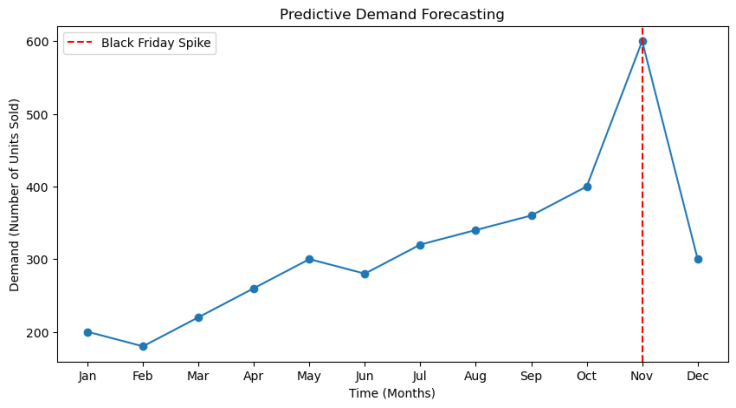
- Predictive Demand Forecasting: AI analyzes historical sales data, seasonality, and external factors (like weather or holidays) to predict demand. Imagine a graph showing spikes during Black Friday sales or dips during summer vacations.

Step by Step Solution
There are 3 Steps involved in it

Get step-by-step solutions from verified subject matter experts
 Study Help