





Question: create a reply to this post noting whether your organism likely eats their organism, or theirs eats yours (different trophic levels), or theirs is a

create a reply to this post noting whether your organism likely eats their organism, or theirs eats yours (different trophic levels), or theirs is a competitor to yours (same trophic level). Reply to two classmates with different organisms than you. In each reply, describe how your organisms are likely to interact (i.e., who eats whom, under what conditions might they be competitors for the same food or habitat, or might they work together in symbiosis?). my organism was Springtail Collembola
create a reply to this post noting whether your
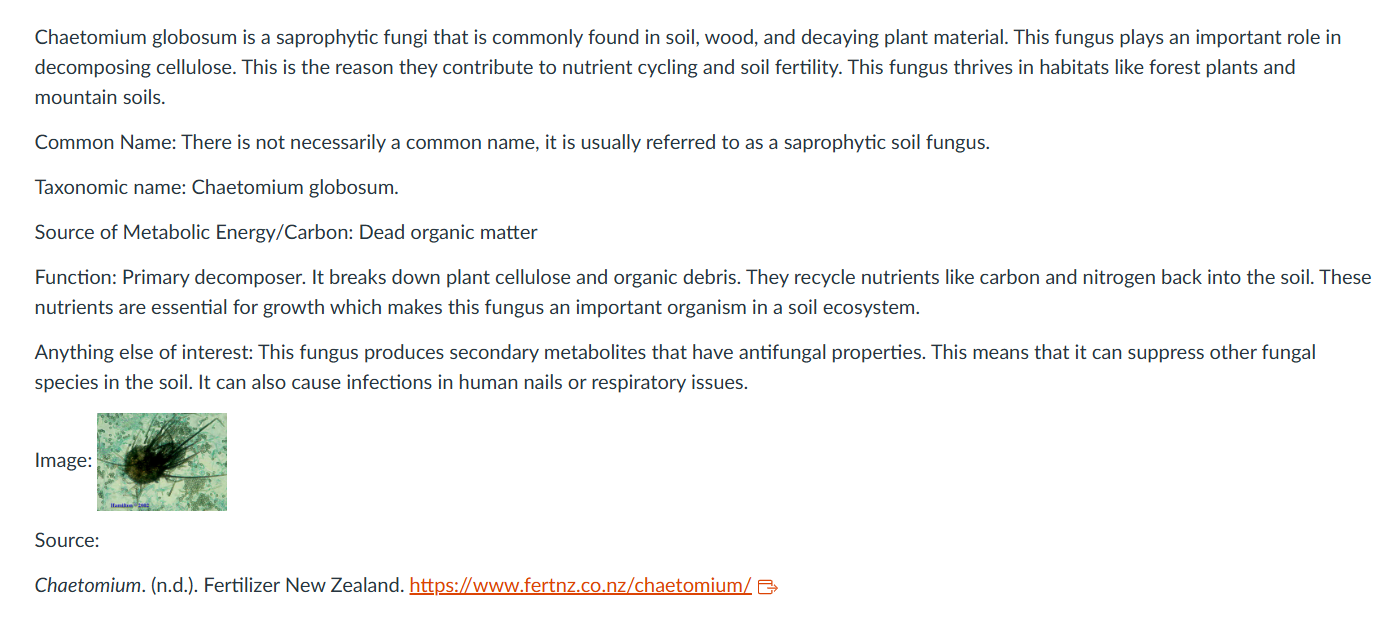
Chaetomium globosum is a saprophytic fungi that is commonly found in soil, wood, and decaying plant material. This fungus plays an important role in decomposing cellulose. This is the reason they contribute to nutrient cycling and soil fertility. This fungus thrives in habitats like forest plants and mountain soils. Common Name: There is not necessarily a common name, it is usually referred to as a saprophytic soil fungus. Taxonomic name: Chaetomium globosum. Source of Metabolic Energy/Carbon: Dead organic matter Function: Primary decomposer. It breaks down plant cellulose and organic debris. They recycle nutrients like carbon and nitrogen back into the soil. These nutrients are essential for growth which makes this fungus an important organism in a soil ecosystem. Anything else of interest: This fungus produces secondary metabolites that have antifungal properties. This means that it can suppress other fungal species in the soil. It can also cause infections in human nails or respiratory issues. Image: Source: Chaetomium. (n.d.). Fertilizer New Zealand. https: //www.fertnz.co.nz/chaetomium/ Fs

Step by Step Solution

There are 3 Steps involved in it

1 Expert Approved Answer
Step: 1 Unlock blur-text-image

Question Has Been Solved by an Expert!

Get step-by-step solutions from verified subject matter experts

Step: 2 Unlock
Step: 3 Unlock

Students Have Also Explored These Related Accounting Questions!