







Question: Create these methods without importing anything and without using arraycopy(). public static int [] [] removeDuplicates(int [][] array) It takes as input a two-dimensional array
![int [] [] removeDuplicates(int [][] array) It takes as input a two-dimensional](https://dsd5zvtm8ll6.cloudfront.net/si.experts.images/questions/2024/09/66f2e3e954b59_08866f2e3e8b1e0f.jpg)
 Create these methods without importing anything and without using arraycopy().
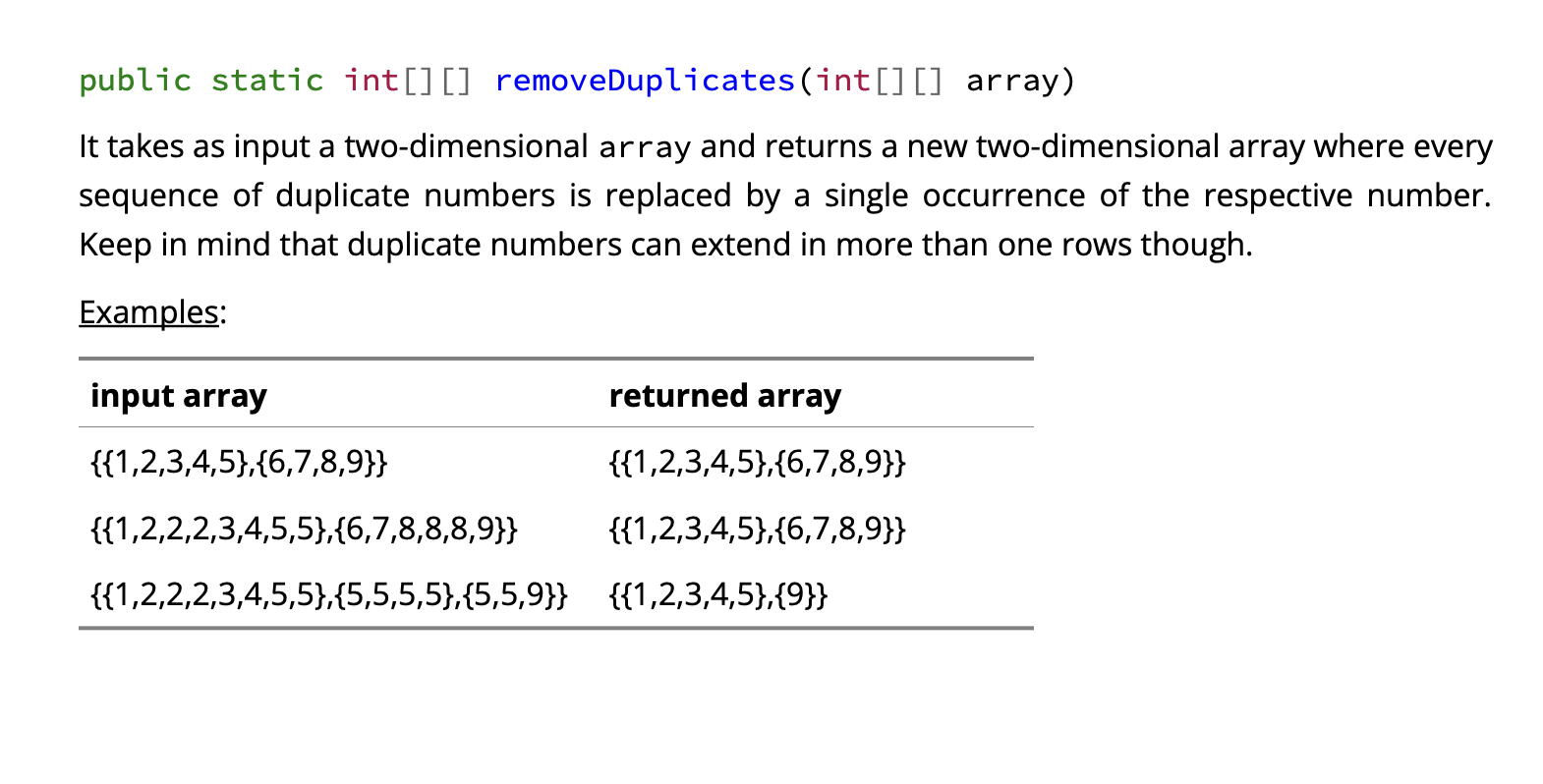
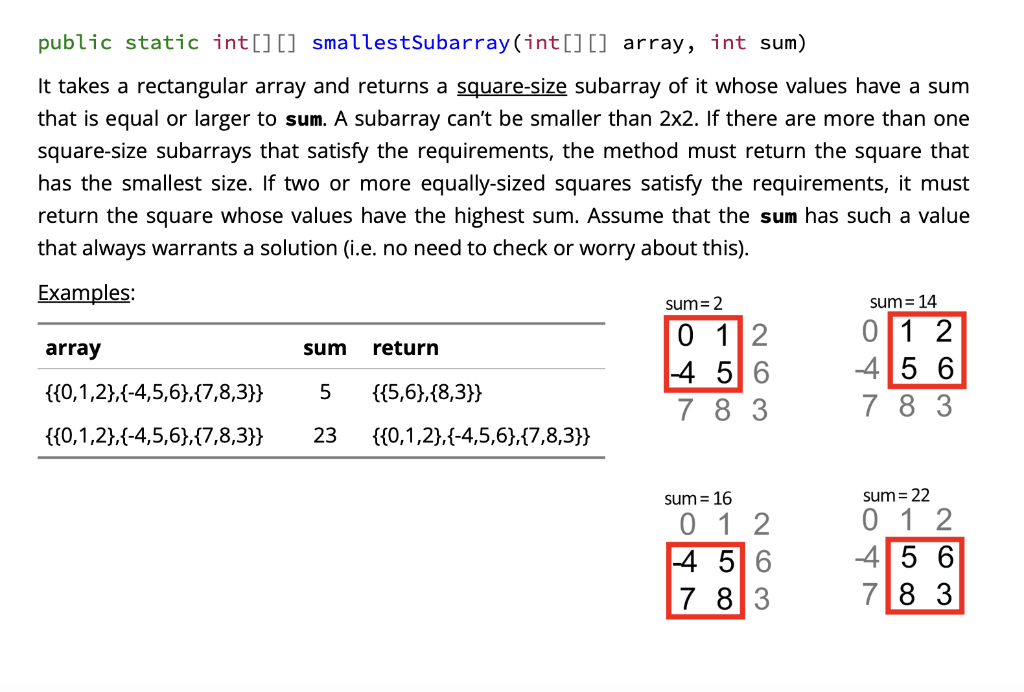
public static int [] [] removeDuplicates(int [][] array) It takes as input a two-dimensional array and returns a new two-dimensional array where every sequence of duplicate numbers is replaced by a single occurrence of the respective number. Keep in mind that duplicate numbers can extend in more than one rows though. public static void replaceElement(int[] [] array, int elem, int [] newElem) It takes a two-dimensional array and modifies it in-place (i.e. the method doesn't return anything). Every occurrence of elem is replaced by the items contained in newElem. The modification must happen in-place, i.e. the memory address of the whole array must remain the same; but the memory addresses of its rows can change of course. public static int [] [] smallestSubarray(int[] [] array, int sum) It takes a rectangular array and returns a square-size subarray of it whose values have a sum that is equal or larger to sum. A subarray can't be smaller than 22. If there are more than one square-size subarrays that satisfy the requirements, the method must return the square that has the smallest size. If two or more equally-sized squares satisfy the requirements, it must return the square whose values have the highest sum. Assume that the sum has such a value that always warrants a solution (i.e. no need to check or worry about this)
Step by Step Solution
There are 3 Steps involved in it

Get step-by-step solutions from verified subject matter experts
 Study Help