







Question: Create : Your Proformas should include a beginning point at 06/30/14 with a 6-month stub-year (BE SURE TO TAKE NOTE THE EXERCISE HAS A STUB
Create : Your Proformas should include a beginning point at 06/30/14 with a 6-month stub-year (BE SURE TO TAKE NOTE THE EXERCISE HAS A STUB YEAR - this impacts your pro-forma calculations) , then YE 12/31/14, 12/31/15, 12/31/16, 12/31/17, 12/31/18, & 12/31/19
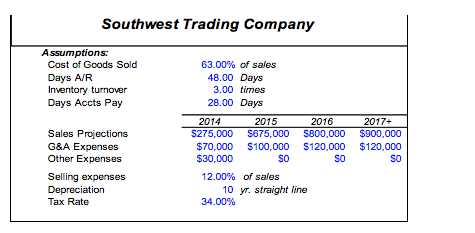
*** USING THESE CATEGORIES***
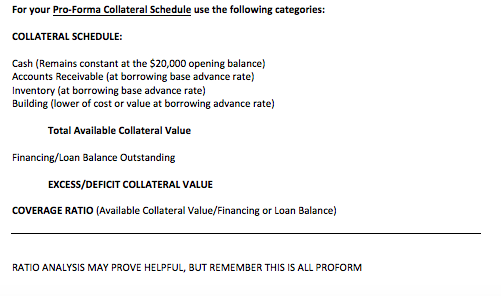
Southwest Trading Company Assumptions: Cost of Goods Sold Days A/R Inventory turnover Days Accts Pay Sales Projections G&A Expenses Other Expenses Selling expenses Depreciation Tax Rate 63.00% of sales 48.00 Days 3.00 times 28.00 Days 2014 2015 2016 2017+ $275,000 $675,000 $800,000 $900,000 $70,000 $100,000 $120,000 $120,000 $30,000 SO SO SO 12.00% of sales 10 yr. straight line 34.00% For your Pro-Forma Collateral Schedule use the following categories: COLLATERAL SCHEDULE: Cash (Remains constant at the $20,000 opening balance) Accounts Receivable (at borrowing base advance rate) Inventory (at borrowing base advance rate) Building (lower of cost or value at borrowing advance rate) Total Available Collateral Value Financing/Loan Balance Outstanding EXCESS/DEFICIT COLLATERAL VALUE COVERAGE RATIO (Available Collateral Value/Financing or Loan Balance) RATIO ANALYSIS MAY PROVE HELPFUL, BUT REMEMBER THIS IS ALL PROFORM Southwest Trading Company Assumptions: Cost of Goods Sold Days A/R Inventory turnover Days Accts Pay Sales Projections G&A Expenses Other Expenses Selling expenses Depreciation Tax Rate 63.00% of sales 48.00 Days 3.00 times 28.00 Days 2014 2015 2016 2017+ $275,000 $675,000 $800,000 $900,000 $70,000 $100,000 $120,000 $120,000 $30,000 SO SO SO 12.00% of sales 10 yr. straight line 34.00% For your Pro-Forma Collateral Schedule use the following categories: COLLATERAL SCHEDULE: Cash (Remains constant at the $20,000 opening balance) Accounts Receivable (at borrowing base advance rate) Inventory (at borrowing base advance rate) Building (lower of cost or value at borrowing advance rate) Total Available Collateral Value Financing/Loan Balance Outstanding EXCESS/DEFICIT COLLATERAL VALUE COVERAGE RATIO (Available Collateral Value/Financing or Loan Balance) RATIO ANALYSIS MAY PROVE HELPFUL, BUT REMEMBER THIS IS ALL PROFORM
Step by Step Solution
There are 3 Steps involved in it

Get step-by-step solutions from verified subject matter experts
 Study Help