







Question: Criterion 1: Define the problem a. Clearly describe the most critical strategic problem facing Hlau Online. b. Justify your choice of the most critical problem
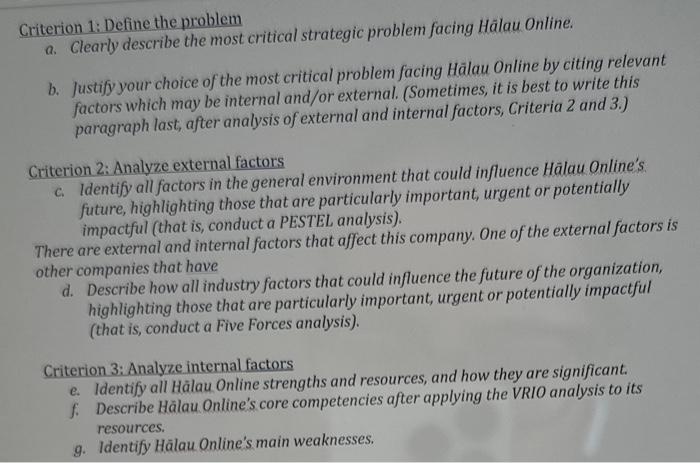
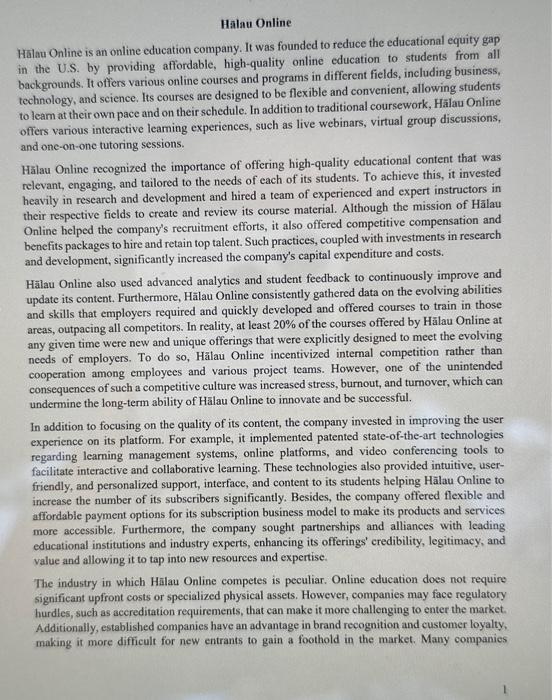
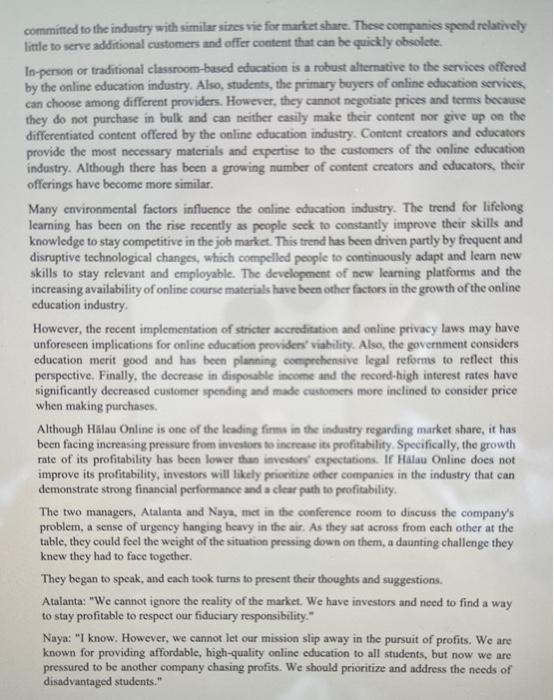
Criterion 1: Define the problem a. Clearly describe the most critical strategic problem facing Hlau Online. b. Justify your choice of the most critical problem facing Hlau Online by citing relevant factors which may be internal and/or external. (Sometimes, it is best to write this paragraph last, after analysis of external and internal factors, Criteria 2 and 3.) Criterion 2: Analyze external factors c. Identify all factors in the general environment that could influence Hlau Online's. future, highlighting those that are particularly important, urgent or potentially impactful (that is, conduct a PESTEL analysis). There are external and internal factors that affect this company. One of the external factors is d. Describe how all industry factors that could influence the future of the organization, other companies that have highlighting those that are particularly important, urgent or potentially impactful (that is, conduct a Five Forces analysis). Criterion 3: Analyze internal factors e. Identify all Hlau Online strengths and resources, and how they are significant. f. Describe Hlau Online's core competencies after applying the VRIO analysis to its resources. g. Identify Hlau Online's main weaknesses. Hlau Online Halau Online is an online education company. It was founded to reduce the educational equity gap in the U.S. by providing affordable, high-quality online education to students from all backgrounds. It offers various online courses and programs in different fields, including business, technology, and science. Its courses are designed to be flexible and convenient, allowing students to leam at their own pace and on their schedule. In addition to traditional coursework, Hlau Online offers various interactive leaming experiences, such as live webinars, virtual group discussions, and onc-on-one tutoring sessions. Hlau Online recognized the importance of offering high-quality educational content that was relevant, engaging, and tailored to the needs of each of its students. To achieve this, it invested heavily in research and development and hired a team of experienced and expert instructors in their respective fields to create and review its course material. Although the mission of Hlau Online helped the company's recruitment efforts, it also offered competitive compensation and benefits packages to hire and retain top talent. Such practices, coupled with investments in research and development, significantly increased the company's capital expenditure and costs. Hlau Online also used advanced analytics and student feedback to continuously improve and update its content. Furthermore, Hlau Online consistently gathered data on the evolving abilities and skills that employers required and quickly developed and offered courses to train in those areas, outpacing all competitors. In reality, at least 20% of the courses offered by Hlau Online at any given time were new and unique offerings that were explicitly designed to meet the evolving needs of employers. To do so, Hlau Online incentivized internal competition rather than cooperation among employees and various project teams. However, one of the unintended consequences of such a competitive culture was increased stress, burnout, and turnover, which can undermine the long-term ability of Hlau Online to innovate and be successful. In addition to focusing on the quality of its content, the company invested in improving the user experience on its platform. For example, it implemented patented state-of-the-art technologies regarding learning management systems, online platforms, and video conferencing tools to facilitate interactive and collaborative learning. These technologies also provided intuitive, userfriendly, and personalized support, interface, and content to its students helping Hlau Online to increase the number of its subseribers significantly. Besides, the company offered flexible and affordable payment options for its subscription business model to make its products and services more accessible. Furthermore, the company sought partnerships and alliances with leading educational institutions and industry experts, enhancing its offerings' credibility, legitimacy, and value and allowing it to tap into new resources and expertise. The industry in which Hlau Online competes is peculiar. Online education does not require significant upfront costs or specialized physical assets. However, companies may face regulatory hurdles, such as accreditation requirements, that can make it more challenging to enter the market. Additionally, established companies have an advantage in brand recognition and customer loyalty, making it more difficult for new entrants to gain a foothold in the market. Many companies committed to the industry with similar sizes vie for market share. These companies spend relatively little to serve additional customers and offer content that can be quickly obsolete. In-person or traditional classroom-based education is a robust alternative to the services offered by the online oducation industry. Also, students, the primary buyers of online edacation servioes, can choose among different providers. However, they cannot negotiate prices and terms because they do not purchase in bulk and can neither easily make their content nor give up on the differentiated content offered by the online education industry. Content creators and educators provide the most necessary materials and expertise to the customers of the online education industry. Although there has been a growing number of content creators and educators, their offerings have become more similar. Many environmental factors influence the online education industry. The trend for lifelong leaming has been on the rise recently as people seck to constantly improve their skills and knowledge to stay competitive in the job market. This trend has been driven partly by frequent and disruptive technological changes, which compelled people to continuously adapt and learn new skills to stay relevant and employable. The development of new learning platforms and the increasing availability of online course materials have been other factors in the growth of the online education industry. However, the recent implementation of stricter accroditation and online privacy laws may have unforesen implications for online education providen' viability. Also, the government considers education merit good and has been plannitg comprehensive legal reforms to reflect this perspective. Finally, the decrease in disposable income and the record-high interest rates have significantly decreased customer spending and made customers more inclined to consider price when making purchases. Although Halau Online is one of the leading firms in the induatry regarding market share, it has been facing inereasing pressure from investors to increase its profitability. Specifically, the growth rate of its profitability has been lower than imveston' expectations. If Halau Online does not improve its profitability, investors will likely prionitine other companies in the industry that can demonstrate strong financial performanee and a clear path to profitability. The two managen, Atalanta and Naya, met in the conference room to discuss the company's problem, a sense of urgency hanging heavy in the air. As they sat across from each other at the table, they could feel the weight of the situation pressing down on them, a daunting challenge they knew they had to face together. They began to speak, and cach took turns to present their thoughts and suggestions. Atalanta: "We cannot ignore the reality of the market. We have investors and need to find a way to stay profitable to respect our fiduciary responsibility." Naya: "I know, However, we cannot let our mission slip away in the pursuit of profits. We are known for providing affordable, high-quality online education to all students, but now we are pressured to be another company chasing profits. We should prioritize and address the needs of disadvantaged students." Criterion 1: Define the problem a. Clearly describe the most critical strategic problem facing Hlau Online. b. Justify your choice of the most critical problem facing Hlau Online by citing relevant factors which may be internal and/or external. (Sometimes, it is best to write this paragraph last, after analysis of external and internal factors, Criteria 2 and 3.) Criterion 2: Analyze external factors c. Identify all factors in the general environment that could influence Hlau Online's. future, highlighting those that are particularly important, urgent or potentially impactful (that is, conduct a PESTEL analysis). There are external and internal factors that affect this company. One of the external factors is d. Describe how all industry factors that could influence the future of the organization, other companies that have highlighting those that are particularly important, urgent or potentially impactful (that is, conduct a Five Forces analysis). Criterion 3: Analyze internal factors e. Identify all Hlau Online strengths and resources, and how they are significant. f. Describe Hlau Online's core competencies after applying the VRIO analysis to its resources. g. Identify Hlau Online's main weaknesses. Hlau Online Halau Online is an online education company. It was founded to reduce the educational equity gap in the U.S. by providing affordable, high-quality online education to students from all backgrounds. It offers various online courses and programs in different fields, including business, technology, and science. Its courses are designed to be flexible and convenient, allowing students to leam at their own pace and on their schedule. In addition to traditional coursework, Hlau Online offers various interactive leaming experiences, such as live webinars, virtual group discussions, and onc-on-one tutoring sessions. Hlau Online recognized the importance of offering high-quality educational content that was relevant, engaging, and tailored to the needs of each of its students. To achieve this, it invested heavily in research and development and hired a team of experienced and expert instructors in their respective fields to create and review its course material. Although the mission of Hlau Online helped the company's recruitment efforts, it also offered competitive compensation and benefits packages to hire and retain top talent. Such practices, coupled with investments in research and development, significantly increased the company's capital expenditure and costs. Hlau Online also used advanced analytics and student feedback to continuously improve and update its content. Furthermore, Hlau Online consistently gathered data on the evolving abilities and skills that employers required and quickly developed and offered courses to train in those areas, outpacing all competitors. In reality, at least 20% of the courses offered by Hlau Online at any given time were new and unique offerings that were explicitly designed to meet the evolving needs of employers. To do so, Hlau Online incentivized internal competition rather than cooperation among employees and various project teams. However, one of the unintended consequences of such a competitive culture was increased stress, burnout, and turnover, which can undermine the long-term ability of Hlau Online to innovate and be successful. In addition to focusing on the quality of its content, the company invested in improving the user experience on its platform. For example, it implemented patented state-of-the-art technologies regarding learning management systems, online platforms, and video conferencing tools to facilitate interactive and collaborative learning. These technologies also provided intuitive, userfriendly, and personalized support, interface, and content to its students helping Hlau Online to increase the number of its subseribers significantly. Besides, the company offered flexible and affordable payment options for its subscription business model to make its products and services more accessible. Furthermore, the company sought partnerships and alliances with leading educational institutions and industry experts, enhancing its offerings' credibility, legitimacy, and value and allowing it to tap into new resources and expertise. The industry in which Hlau Online competes is peculiar. Online education does not require significant upfront costs or specialized physical assets. However, companies may face regulatory hurdles, such as accreditation requirements, that can make it more challenging to enter the market. Additionally, established companies have an advantage in brand recognition and customer loyalty, making it more difficult for new entrants to gain a foothold in the market. Many companies committed to the industry with similar sizes vie for market share. These companies spend relatively little to serve additional customers and offer content that can be quickly obsolete. In-person or traditional classroom-based education is a robust alternative to the services offered by the online oducation industry. Also, students, the primary buyers of online edacation servioes, can choose among different providers. However, they cannot negotiate prices and terms because they do not purchase in bulk and can neither easily make their content nor give up on the differentiated content offered by the online education industry. Content creators and educators provide the most necessary materials and expertise to the customers of the online education industry. Although there has been a growing number of content creators and educators, their offerings have become more similar. Many environmental factors influence the online education industry. The trend for lifelong leaming has been on the rise recently as people seck to constantly improve their skills and knowledge to stay competitive in the job market. This trend has been driven partly by frequent and disruptive technological changes, which compelled people to continuously adapt and learn new skills to stay relevant and employable. The development of new learning platforms and the increasing availability of online course materials have been other factors in the growth of the online education industry. However, the recent implementation of stricter accroditation and online privacy laws may have unforesen implications for online education providen' viability. Also, the government considers education merit good and has been plannitg comprehensive legal reforms to reflect this perspective. Finally, the decrease in disposable income and the record-high interest rates have significantly decreased customer spending and made customers more inclined to consider price when making purchases. Although Halau Online is one of the leading firms in the induatry regarding market share, it has been facing inereasing pressure from investors to increase its profitability. Specifically, the growth rate of its profitability has been lower than imveston' expectations. If Halau Online does not improve its profitability, investors will likely prionitine other companies in the industry that can demonstrate strong financial performanee and a clear path to profitability. The two managen, Atalanta and Naya, met in the conference room to discuss the company's problem, a sense of urgency hanging heavy in the air. As they sat across from each other at the table, they could feel the weight of the situation pressing down on them, a daunting challenge they knew they had to face together. They began to speak, and cach took turns to present their thoughts and suggestions. Atalanta: "We cannot ignore the reality of the market. We have investors and need to find a way to stay profitable to respect our fiduciary responsibility." Naya: "I know, However, we cannot let our mission slip away in the pursuit of profits. We are known for providing affordable, high-quality online education to all students, but now we are pressured to be another company chasing profits. We should prioritize and address the needs of disadvantaged students
Step by Step Solution
There are 3 Steps involved in it

Get step-by-step solutions from verified subject matter experts
 Study Help