







Question: CU eBook Problem 15-02 Given the following information concerning a convertible bond: Coupon: 7 percent ($70 per $1,000 bond) Exercise price: $27 Maturity date: 20
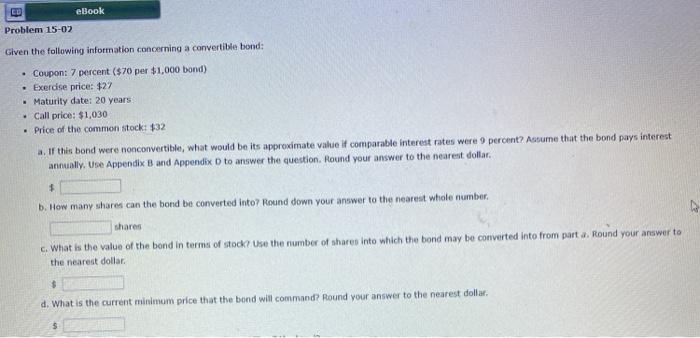
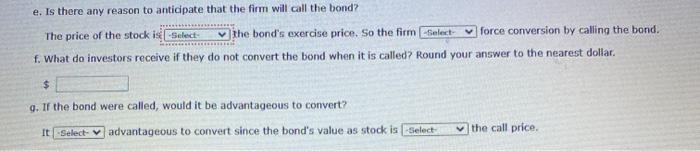
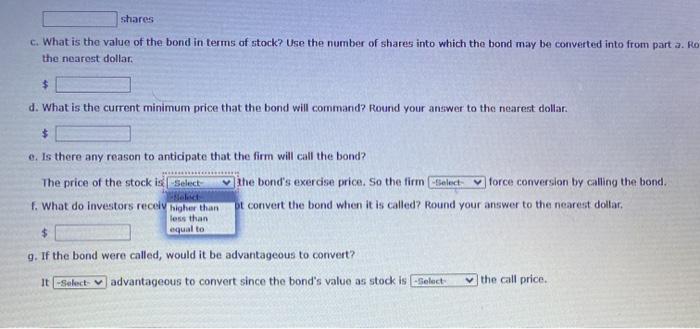
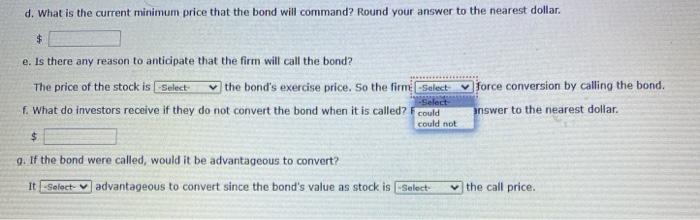
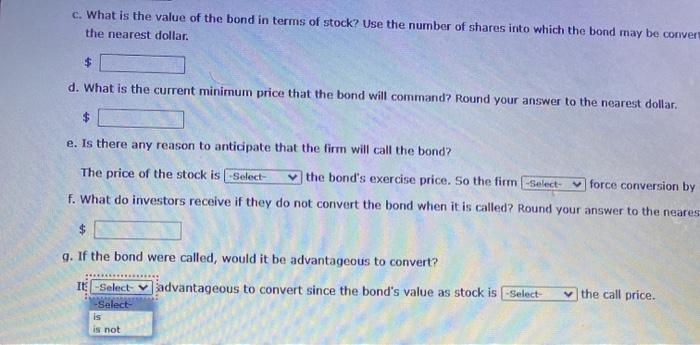
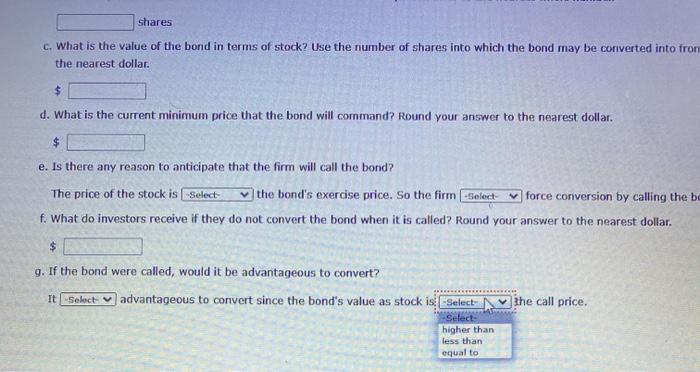
CU eBook Problem 15-02 Given the following information concerning a convertible bond: Coupon: 7 percent ($70 per $1,000 bond) Exercise price: $27 Maturity date: 20 years Call price: $1,030 Price of the common stock: 132 a. If this bond were nonconvertible, what would be its approximate value if comparable interest rates were 9 percent? Assume that the bond pays interest annually. Use Appendix Band Appendix D to answer the question. Round your answer to the nearest dollar b. How many shares can the bond be converted into Round down your answer to the nearest whole number shares c. What is the value of the bond in terms of stock? Use the number of shares into which the bond may be converted into from part a. Round your answer to the nearest dollar $ d. What is the current minimum price that the bond will command? Round your answer to the nearest dollar e. Is there any reason to anticipate that the firm will call the bond? The price of the stock is Select the bond's exercise price. So the firm Select- force conversion by calling the bond. f. What do investors receive if they do not convert the bond when it is called? Round your answer to the nearest dollar $ g. If the bond were called, would it be advantageous to convert? It Select advantageous to convert since the bond's value as stock is Select the call price. shares c. What is the value of the bond in terms of stock? Use the number of shares into which the bond may be converted into from part a. Ro the nearest dollar $ d. What is the current minimum price that the bond will command? Round your answer to the nearest dollar $ e. Is there any reason to anticipate that the firm will call the bond? The price of the stock is Select he bond's exercise price. So the firm Select force conversion by calling the bond. Helt F. What do Investors receiv higher than pt convert the bond when it is called? Round your answer to the nearest dollar, less than equal to g. If the bond were called, would it be advantageous to convert? It Select advantageous to convert since the bond's value as stock is -Select the call price. d. What is the current minimum price that the bond will command? Round your answer to the nearest dollar $ e. Is there any reason to anticipate that the firm will call the bond? The price of the stock is Select the bond's exercise price. So the firme Select force conversion by calling the bond. f. What do investors receive if they do not convert the bond when it is called? could answer to the nearest dollar could not $ -Select g. If the bond were called, would it be advantageous to convert? It-Select- advantageous to convert since the bond's value as stock is Select the call price c. What is the value of the bond in terms of stock? Use the number of shares into which the bond may be convert the nearest dollar. d. What is the current minimum price that the bond will command? Round your answer to the nearest dollar. e. Is there any reason to anticipate that the firm will call the bond? The price of the stock is Select- the bond's exercise price. So the firm -Select- force conversion by f. What do investors receive if they do not convert the bond when it is called? Round your answer to the neares g. If the bond were called, would it be advantageous to convert? IT Select v advantageous to convert since the bond's value as stock is Select the call price. -Select- is is not shares c. What is the value of the bond in terms of stock? Use the number of shares into which the bond may be converted into from the nearest dollar. $ d. What is the current minimum price that the bond will command? Round your answer to the nearest dollar. e. Is there any reason to anticipate that the firm will call the bond? The price of the stock is-Select- v the bond's exercise price. So the firm -Select force conversion by calling the be f. What do investors receive if they do not convert the bond when it is called? Round your answer to the nearest dollar. $ g. If the bond were called, would it be advantageous to convert? It -Select advantageous to convert since the bond's value as stock is Select the call price. -Select- higher than less than equal to
Step by Step Solution
There are 3 Steps involved in it

Get step-by-step solutions from verified subject matter experts
 Study Help