


Question: (d) What is the (1) average turnaround time and (2) average waiting time for these processes with the SRTF (Shortest Remaining Time First) preemptive algorithm?

(d) What is the (1) average turnaround time and (2) average waiting time for these processes
with the SRTF (Shortest Remaining Time First) preemptive algorithm? (10 pts)
(e) Based on the above results, please compare scheduling algorithms. (6 pts)
(d) What is the (1) average turnaround time and
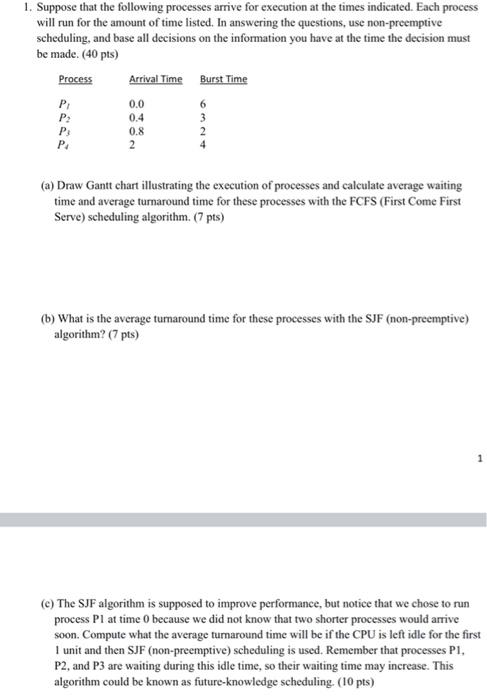
1. Suppose that the following processes arrive for execution at the times indicated. Each process will run for the amount of time listed. In answering the questions, use non-preemptive scheduling, and base all decisions on the information you have at the time the decision must be made. (40 pts) Process Arrival Time Burst Time 0.0 P P P P 0.4 0.8 2 3 2 (a) Draw Gantt chart illustrating the execution of processes and calculate average waiting time and average turnaround time for these processes with the FCFS (First Come First Serve) scheduling algorithm. (7 pts) (b) What is the average turnaround time for these processes with the SJF (non-preemptive) algorithm? (7 pts) 1 (e) The SJF algorithm is supposed to improve performance, but notice that we chose to run process PI at time because we did not know that two shorter processes would arrive soon. Compute what the average turnaround time will be if the CPU is left idle for the first 1 unit and then SJF (non-preemptive) scheduling is used. Remember that processes P1, P2, and P3 are waiting during this idle time, so their waiting time may increase. This algorithm could be known as future-knowledge scheduling. (10 pts)

Step by Step Solution

There are 3 Steps involved in it

1 Expert Approved Answer
Step: 1 Unlock blur-text-image

Question Has Been Solved by an Expert!

Get step-by-step solutions from verified subject matter experts

Step: 2 Unlock
Step: 3 Unlock

Students Have Also Explored These Related General Management Questions!