







Question: D1: Partition the range of each continuous attribute into 3 equal-sized bins. D2: Partition the range of each continuous attribute into 3 bins; where each
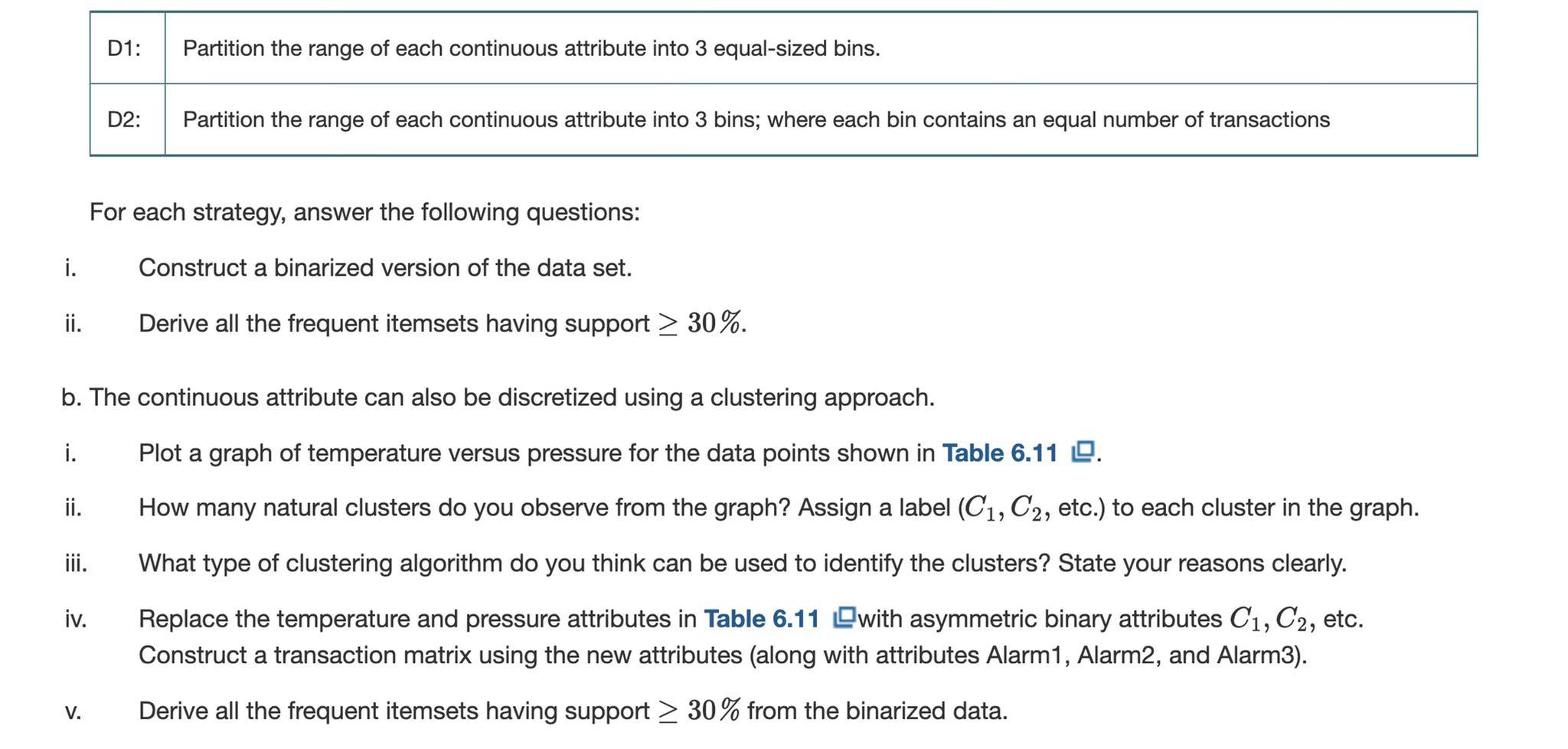
D1: Partition the range of each continuous attribute into 3 equal-sized bins. D2: Partition the range of each continuous attribute into 3 bins; where each bin contains an equal number of transactions For each strategy, answer the following questions: i. Construct a binarized version of the data set. ii. Derive all the frequent itemsets having support > 30%. b. The continuous attribute can also be discretized using a clustering approach. i. Plot a graph of temperature versus pressure for the data points shown in Table 6.11 9. ji. How many natural clusters do you observe from the graph? Assign a label (C1, C2, etc.) to each cluster in the graph. iii. What type of clustering algorithm do you think can be used to identify the clusters? State your reasons clearly. iv. Replace the temperature and pressure attributes in Table 6.11 Owith asymmetric binary attributes C1, C2, etc. Construct a transaction matrix using the new attributes (along with attributes Alarm1, Alarm2, and Alarm3). V. Derive all the frequent itemsets having support > 30% from the binarized data
Step by Step Solution
There are 3 Steps involved in it

Get step-by-step solutions from verified subject matter experts
 Study Help