







Question: Data science/coding question: def match (belief, rules): Determine whether a rule is triggered by the given set of beliefs. The *first* rule in the
Data science/coding question:
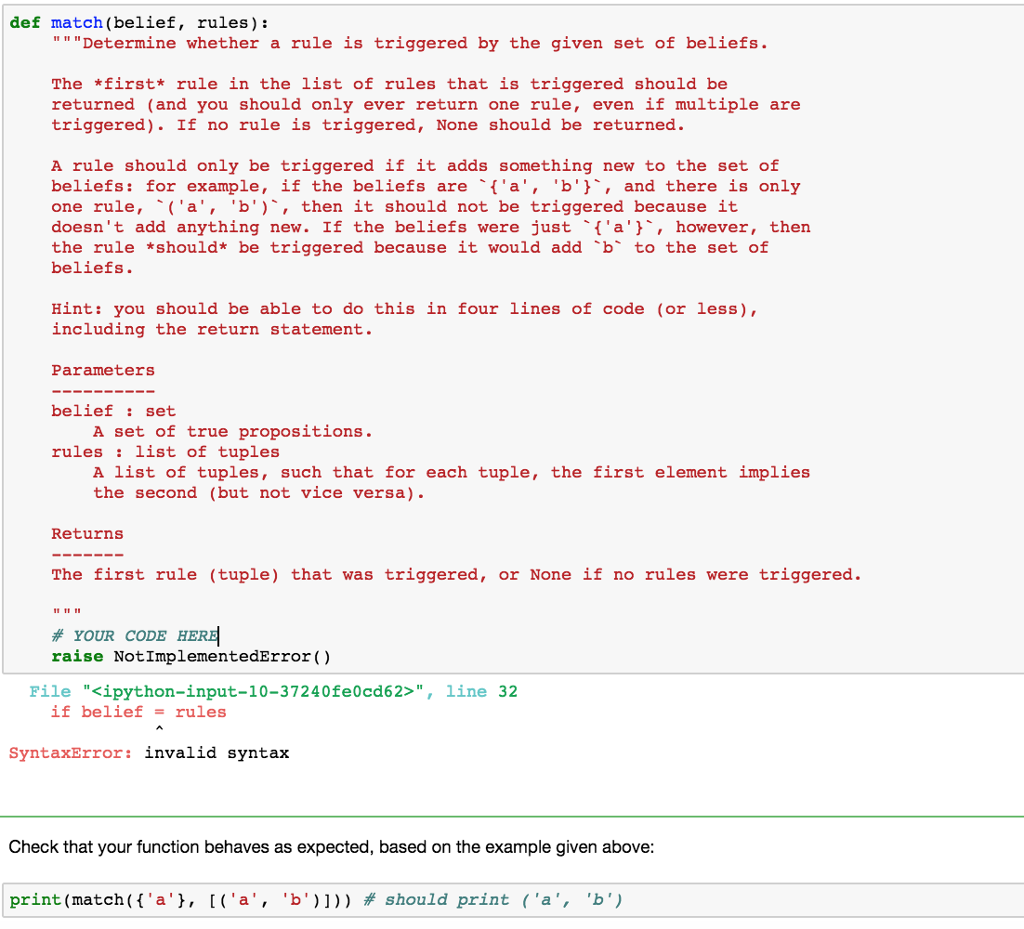
def match (belief, rules): "" "Determine whether a rule is triggered by the given set of beliefs. The *first* rule in the list of rules that is triggered should be returned (and you should only ever return one rule, even if multiple are triggered). If no rule is triggered, None should be returned. A rule should only be triggered if it adds something new to the set of beliefs: for example, if the beliefs are {'a', 'b'), and there is only one rule, a, "b'then it should not be triggered because it doesn't add anything new. If the beliefs were just 'a')', however, then the rule *should* be triggered because it would add b to the set of beliefs. Hint: you should be able to do this in four lines of code (or less), including the return statement. Parameters beliefset A set of true propositions. rules: list of tuples A list of tuples, such that for each tuple, the first element implies the second (but not vice versa). Returns The first rule (tuple) that was triggered, or None if no rules were triggered. # YOUR CODE HER raise NotImplementedError() File
Step by Step Solution
There are 3 Steps involved in it

Get step-by-step solutions from verified subject matter experts
 Study Help