







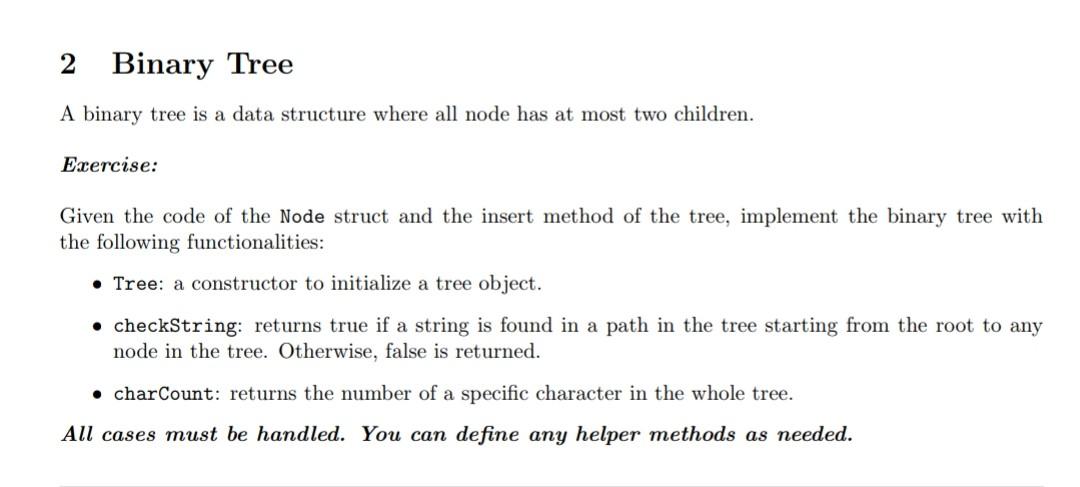
Question: data structure (c++) 2 Binary Tree A binary tree is a data structure where all node has at most two children. Exercise: Given the code
data structure (c++)
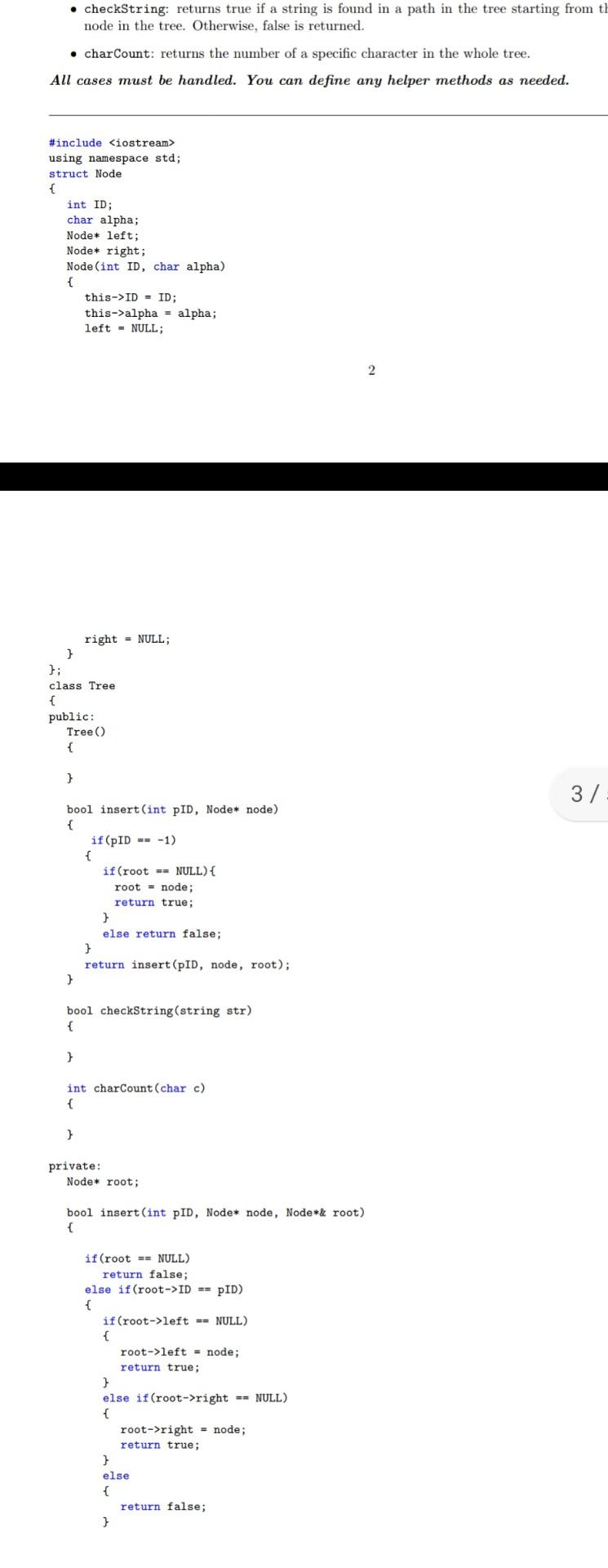
2 Binary Tree A binary tree is a data structure where all node has at most two children. Exercise: Given the code of the Node struct and the insert method of the tree, implement the binary tree with the following functionalities: Tree: a constructor to initialize a tree object. checkString: returns true if a string is found in a path in the tree starting from the root to any node in the tree. Otherwise, false is returned. charCount: returns the number of a specific character in the whole tree. All cases must be handled. You can define any helper methods as needed. checkString: returns true if a string is found in a path in the tree starting from ti node in the tree. Otherwise, false is returned. charCount: returns the number of a specific character in the whole tree. All cases must be handled. You can define any helper methods as needed. #include
Step by Step Solution
There are 3 Steps involved in it

Get step-by-step solutions from verified subject matter experts
 Study Help