







Question: data table in second pic :) Lease versus purchase Northwest Lumber Company needs to expand its facities To do so, the fim must acquire a
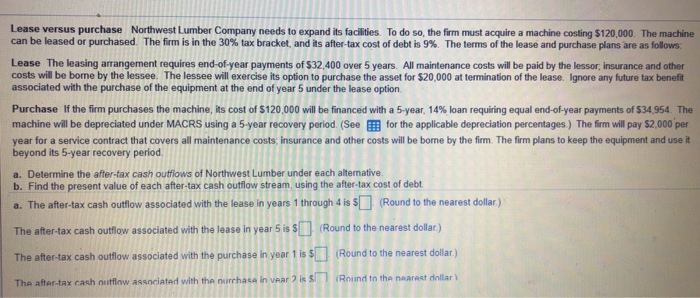
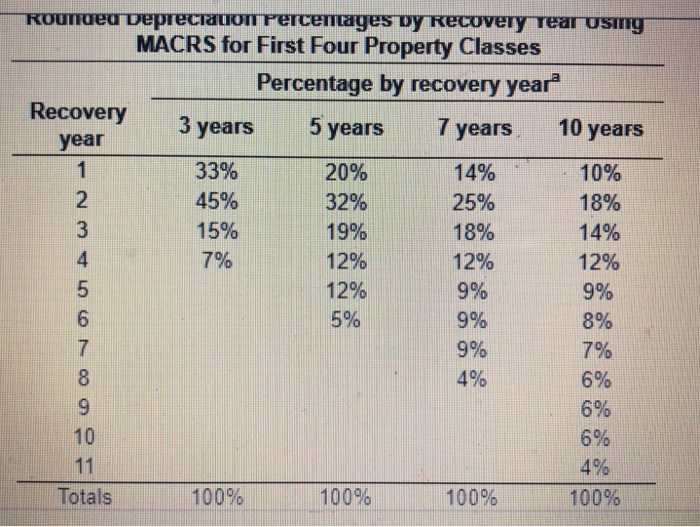
Lease versus purchase Northwest Lumber Company needs to expand its facities To do so, the fim must acquire a machine costing $120,000. The machine can be leased or purchased. The firm is in the 30% tax bracket, and its after tax cost of debt is 9% The terms of he lease and p chase plans are as follo Lease The leasing arrangement requires end-of-year payments of $32.400 over 5 years. All maintenance costs will be paid by the lessor, insurance and other costs will be bome by the lessee. The lessee will exercise its option to purchase the asset for $20,000 at termination of the lease. Ignore any future tax benefit associated with the purchase of the equipment at the end of year 5 under the lease option. Purchase If the firm purchases the machine, its cost of $120,000 will be financed with a 5-year, 14% loan requiring equal end-of-year payments of S34.954 The machine will be depreciated under MACRS using a 5-year recovery period (Seefor the applicable depreciation percentages ) The firm will pay $2,000 per year for a service contract that covers all maintenance costs, insurance and other costs will be bone by the firm. The firm plans to keep the equipment and useit beyond its 5-year recovery period a. Determine the after-tax cash outflows of Northwest Lumber under each alternative b. Find the present value of each after-tax cash outflow stream, using the after-tax cost of debt a. The after-tax cash outflow associated with the lease in years 1 through 4 is (Round to the nearest dollar) The after-tax cash outlow associated with the lease in year 5 is $ (Round to the nearest dollar.) The after-tax cash outfow associated with the purchase in year 1 is(Round to the nearest dollar) The after-tax cash nutflow associated with the ourrhasa in vear ? is S Round to the naarast dollar MACRS for First Four Property Classes Percentage by recovery year Recovery 3 years 5 years 7 years 10 years 10% 18% 14% 12% 9% 8% 7% 6% 6% 6% 4% 100% year 33% 45% 15% 7% 14% 25% 18% 12% 9% 9% 9% 4% 20% 32% 19% 12% 12% 5% 2 3 4 6 8 10 Totals 100% 100% 100% Lease versus purchase Northwest Lumber Company needs to expand its facities To do so, the fim must acquire a machine costing $120,000. The machine can be leased or purchased. The firm is in the 30% tax bracket, and its after tax cost of debt is 9% The terms of he lease and p chase plans are as follo Lease The leasing arrangement requires end-of-year payments of $32.400 over 5 years. All maintenance costs will be paid by the lessor, insurance and other costs will be bome by the lessee. The lessee will exercise its option to purchase the asset for $20,000 at termination of the lease. Ignore any future tax benefit associated with the purchase of the equipment at the end of year 5 under the lease option. Purchase If the firm purchases the machine, its cost of $120,000 will be financed with a 5-year, 14% loan requiring equal end-of-year payments of S34.954 The machine will be depreciated under MACRS using a 5-year recovery period (Seefor the applicable depreciation percentages ) The firm will pay $2,000 per year for a service contract that covers all maintenance costs, insurance and other costs will be bone by the firm. The firm plans to keep the equipment and useit beyond its 5-year recovery period a. Determine the after-tax cash outflows of Northwest Lumber under each alternative b. Find the present value of each after-tax cash outflow stream, using the after-tax cost of debt a. The after-tax cash outflow associated with the lease in years 1 through 4 is (Round to the nearest dollar) The after-tax cash outlow associated with the lease in year 5 is $ (Round to the nearest dollar.) The after-tax cash outfow associated with the purchase in year 1 is(Round to the nearest dollar) The after-tax cash nutflow associated with the ourrhasa in vear ? is S Round to the naarast dollar MACRS for First Four Property Classes Percentage by recovery year Recovery 3 years 5 years 7 years 10 years 10% 18% 14% 12% 9% 8% 7% 6% 6% 6% 4% 100% year 33% 45% 15% 7% 14% 25% 18% 12% 9% 9% 9% 4% 20% 32% 19% 12% 12% 5% 2 3 4 6 8 10 Totals 100% 100% 100%
Step by Step Solution
There are 3 Steps involved in it

Get step-by-step solutions from verified subject matter experts
 Study Help