







Question: - Data table Jan. 5 Purchase 156 crates @ $64 each Jan. 13 Sale 180 crates @ $104 each Jan. 18 Purchase 114 crates @
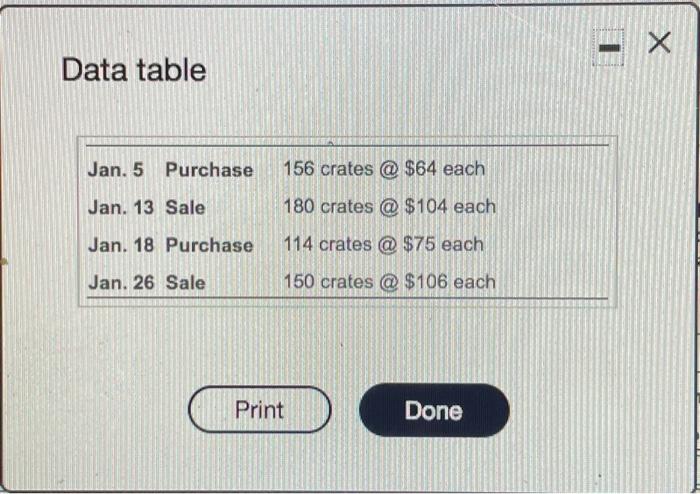
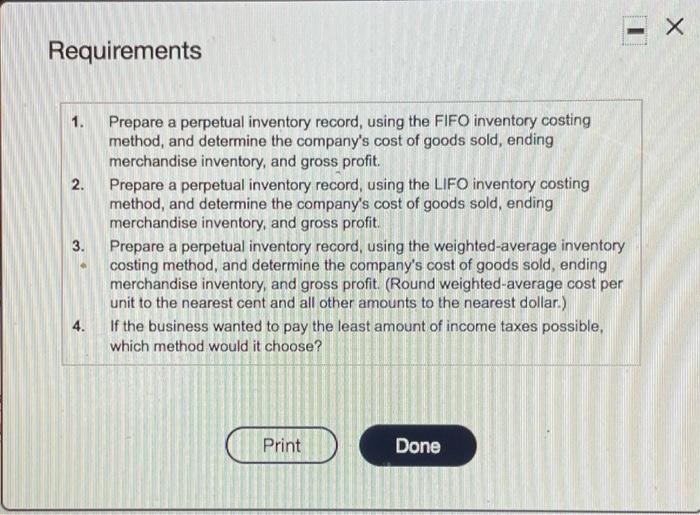

- Data table Jan. 5 Purchase 156 crates @ $64 each Jan. 13 Sale 180 crates @ $104 each Jan. 18 Purchase 114 crates @ $75 each Jan. 26 Sale 150 crates @ $106 each Print Done X Requirements 1. 2. Prepare a perpetual inventory record, using the FIFO inventory costing method, and determine the company's cost of goods sold, ending merchandise inventory, and gross profit. Prepare a perpetual inventory record, using the LIFO inventory costing method, and determine the company's cost of goods sold, ending merchandise inventory, and gross profit. Prepare a perpetual inventory record, using the weighted average inventory costing method, and determine the company's cost of goods sold, ending merchandise inventory, and gross profit. (Round weighted average cost per unit to the nearest cent and all other amounts to the nearest dollar.) If the business wanted to pay the least amount of income taxes possible, which method would it choose? 3. 4. Print Done Atlas Gym began January with merchandise inventory of 78 crates of vitamins that cost a total of $4, 290. During the month, Atlas Gym purchased and sold merchandise on account as follows: (Click the icon to view the transactions.) Tente
Step by Step Solution
There are 3 Steps involved in it
Sure lets go through each method one by one to determine the cost of goods sold COGS ending inventory and gross profit 1 FIFO Method Beginning Invento... View full answer

Get step-by-step solutions from verified subject matter experts
 Study Help