







Question: Data Table - Requirements $ 0.05 0.30 Direct Materials (0.2 lbs @ $0.25 per lb) Direct Labor (3 minutes @ $0.10 per minute) Manufacturing Overhead:
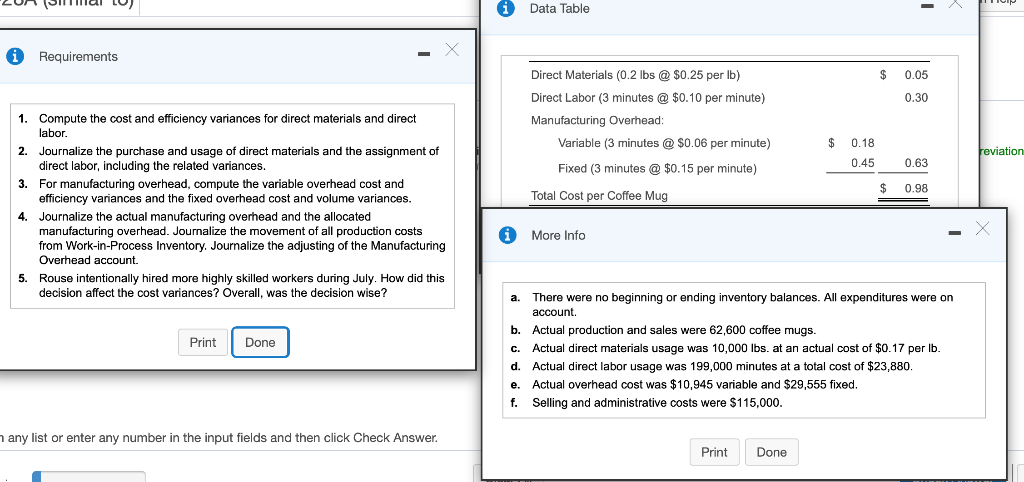


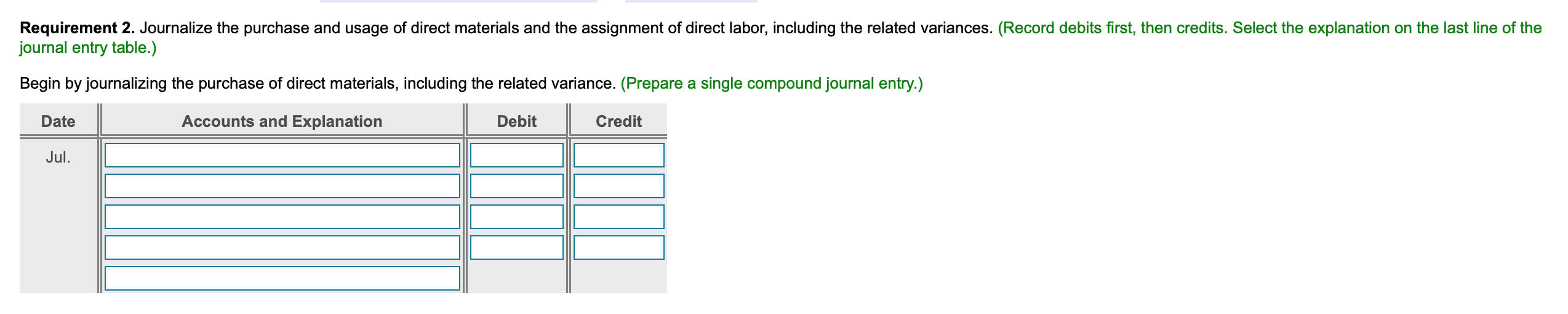






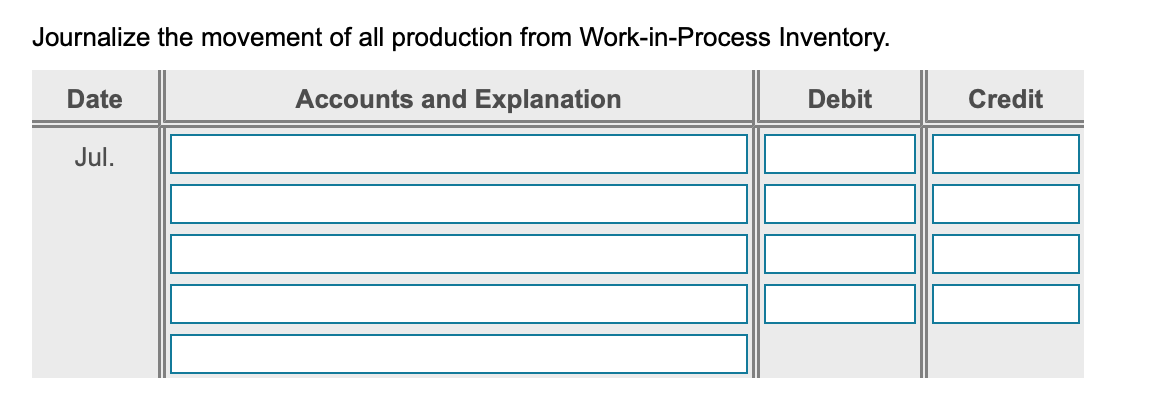
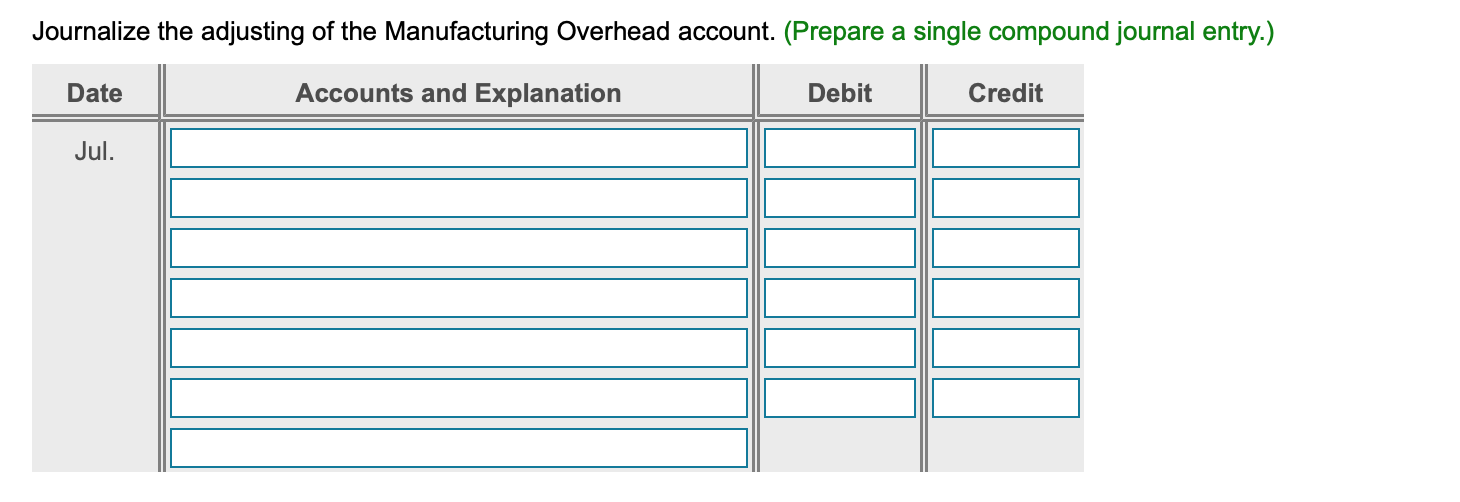
Data Table - Requirements $ 0.05 0.30 Direct Materials (0.2 lbs @ $0.25 per lb) Direct Labor (3 minutes @ $0.10 per minute) Manufacturing Overhead: Variable (3 minutes @ $0.06 per minute) Fixed (3 minutes @ $0.15 per minute) $ 0.18 reviation 0.45 0.63 $ 0.98 Total Cost per Coffee Mug 1. Compute the cost and efficiency variances for direct materials and direct labor. 2. Journalize the purchase and usage of direct materials and the assignment of direct labor, including the related variances. 3. For manufacturing overhead, compute the variable overhead cost and efficiency variances and the fixed overhead cost and volume variances. 4. Journalize the actual manufacturing overhead and the allocated manufacturing overhead. Journalize the movement of all production costs from Work-in-Process Inventory. Journalize the adjusting of the Manufacturing Overhead account. 5. Rouse intentionally hired more highly skilled workers during July. How did this decision affect the cost variances? Overall, was the decision wise? X i More Info a. Print Done There were no beginning or ending inventory balances. All expenditures were on account. b. Actual production and sales were 62,600 coffee mugs. Actual direct materials usage was 10,000 lbs. at an actual cost of $0.17 per lb. d. Actual direct labor usage was 199,000 minutes at a total cost of $23,880. e. Actual overhead cost was $10,945 variable and $29,555 fixed. f. Selling and administrative costs were $115,000. any list or enter any number in the input fields and then click Check Answer. Print Done Requirement 1. Compute the cost and efficiency variances for direct materials and direct labor. Begin with the cost variances. Select the required formulas, compute the cost variances for direct materials and direct labor, and identify whether each variance is favorable (F) or unfavorable (U). (Abbreviations used: AC = actual cost; AQ = actual quantity; FOH = fixed overhead; SC = standard cost; SQ = standard quantity.) Formula Variance Direct materials cost variance Direct labor cost variance Select the required formulas, compute the efficiency variances for direct materials and direct labor, and identify whether each variance is favorable (F) or unfavorable (U). (Abbreviations used: AC = actual cost; AQ = actual quantity; FOH = fixed overhead; SC = standard cost; SQ = standard quantity.) Formula Variance Direct materials efficiency variance = Direct labor efficiency variance 11 II Requirement 2. Journalize the purchase and usage of direct materials and the assignment of direct labor, including the related variances. (Record debits first, then credits. Select the explanation on the last line of the journal entry table.) Begin by journalizing the purchase of direct materials, including the related variance. (Prepare a single compound journal entry.) Date Accounts and Explanation Debit Credit Jul. Now, journalize the usage of direct materials, including the related variance. (Prepare a single compound journal entry.) Date Accounts and Explanation Debit Credit Jul. Journalize the incurrance and assignment of direct labor costs, including the related variances. (Prepare a single compound journal entry.) Date Accounts and Explanation Debit Credit Jul. Requirement 3. For manufacturing overhead, compute the variable overhead cost and efficiency variances and the fixed overhead cost and volume variances. Begin with the variable overhead cost and efficiency variances. Select the required formulas, compute the variable overhead cost and efficiency variances, and identify whether each variance is favorable (F) or unfavorable (U). (Round any interim calculations to four decimal places, X.XXXX, and your final answers to the nearest whole dolllar. Abbreviations used: AC = actual cost; AQ = actual quantity; FOH = fixed overhead; SC = standard cost; SQ = standard quantity; VOH = variable overhead.) Formula Variance VOH cost variance VOH efficiency variance Il Now compute the fixed overhead cost and volume variances. Select the required formulas, compute the fixed overhead cost and volume variances, and identify whether each variance is favorable (F) or unfavorable (U). (Abbreviations used: AC = actual cost; AQ = actual quantity; FOH = fixed overhead; SC = standard cost; SQ = standard quantity.) Formula Variance FOH cost variance FOH volume variance Requirement 4. Journalize the actual manufacturing overhead and the allocated manufacturing overhead. Journalize the movement of all production costs from Work-in-Process Inventory. Journalize the adjusting of the Manufacturing Overhead account. (Record debits first, then credits. Select the explanation on the last line of the journal entry table.) Begin by journalizing the entry to show the actual manufacturing overhead costs incurred. Date Accounts and Explanation Debit Credit Jul. Journalize the applied manufacturing overhead. Date Accounts and Explanation Debit Credit Jul. Journalize the movement of all production from Work-in-Process Inventory. Date Accounts and Explanation Debit Credit Jul. Journalize the adjusting of the Manufacturing Overhead account. (Prepare a single compound journal entry.) Date Accounts and Explanation Debit Credit Jul. Data Table - Requirements $ 0.05 0.30 Direct Materials (0.2 lbs @ $0.25 per lb) Direct Labor (3 minutes @ $0.10 per minute) Manufacturing Overhead: Variable (3 minutes @ $0.06 per minute) Fixed (3 minutes @ $0.15 per minute) $ 0.18 reviation 0.45 0.63 $ 0.98 Total Cost per Coffee Mug 1. Compute the cost and efficiency variances for direct materials and direct labor. 2. Journalize the purchase and usage of direct materials and the assignment of direct labor, including the related variances. 3. For manufacturing overhead, compute the variable overhead cost and efficiency variances and the fixed overhead cost and volume variances. 4. Journalize the actual manufacturing overhead and the allocated manufacturing overhead. Journalize the movement of all production costs from Work-in-Process Inventory. Journalize the adjusting of the Manufacturing Overhead account. 5. Rouse intentionally hired more highly skilled workers during July. How did this decision affect the cost variances? Overall, was the decision wise? X i More Info a. Print Done There were no beginning or ending inventory balances. All expenditures were on account. b. Actual production and sales were 62,600 coffee mugs. Actual direct materials usage was 10,000 lbs. at an actual cost of $0.17 per lb. d. Actual direct labor usage was 199,000 minutes at a total cost of $23,880. e. Actual overhead cost was $10,945 variable and $29,555 fixed. f. Selling and administrative costs were $115,000. any list or enter any number in the input fields and then click Check Answer. Print Done Requirement 1. Compute the cost and efficiency variances for direct materials and direct labor. Begin with the cost variances. Select the required formulas, compute the cost variances for direct materials and direct labor, and identify whether each variance is favorable (F) or unfavorable (U). (Abbreviations used: AC = actual cost; AQ = actual quantity; FOH = fixed overhead; SC = standard cost; SQ = standard quantity.) Formula Variance Direct materials cost variance Direct labor cost variance Select the required formulas, compute the efficiency variances for direct materials and direct labor, and identify whether each variance is favorable (F) or unfavorable (U). (Abbreviations used: AC = actual cost; AQ = actual quantity; FOH = fixed overhead; SC = standard cost; SQ = standard quantity.) Formula Variance Direct materials efficiency variance = Direct labor efficiency variance 11 II Requirement 2. Journalize the purchase and usage of direct materials and the assignment of direct labor, including the related variances. (Record debits first, then credits. Select the explanation on the last line of the journal entry table.) Begin by journalizing the purchase of direct materials, including the related variance. (Prepare a single compound journal entry.) Date Accounts and Explanation Debit Credit Jul. Now, journalize the usage of direct materials, including the related variance. (Prepare a single compound journal entry.) Date Accounts and Explanation Debit Credit Jul. Journalize the incurrance and assignment of direct labor costs, including the related variances. (Prepare a single compound journal entry.) Date Accounts and Explanation Debit Credit Jul. Requirement 3. For manufacturing overhead, compute the variable overhead cost and efficiency variances and the fixed overhead cost and volume variances. Begin with the variable overhead cost and efficiency variances. Select the required formulas, compute the variable overhead cost and efficiency variances, and identify whether each variance is favorable (F) or unfavorable (U). (Round any interim calculations to four decimal places, X.XXXX, and your final answers to the nearest whole dolllar. Abbreviations used: AC = actual cost; AQ = actual quantity; FOH = fixed overhead; SC = standard cost; SQ = standard quantity; VOH = variable overhead.) Formula Variance VOH cost variance VOH efficiency variance Il Now compute the fixed overhead cost and volume variances. Select the required formulas, compute the fixed overhead cost and volume variances, and identify whether each variance is favorable (F) or unfavorable (U). (Abbreviations used: AC = actual cost; AQ = actual quantity; FOH = fixed overhead; SC = standard cost; SQ = standard quantity.) Formula Variance FOH cost variance FOH volume variance Requirement 4. Journalize the actual manufacturing overhead and the allocated manufacturing overhead. Journalize the movement of all production costs from Work-in-Process Inventory. Journalize the adjusting of the Manufacturing Overhead account. (Record debits first, then credits. Select the explanation on the last line of the journal entry table.) Begin by journalizing the entry to show the actual manufacturing overhead costs incurred. Date Accounts and Explanation Debit Credit Jul. Journalize the applied manufacturing overhead. Date Accounts and Explanation Debit Credit Jul. Journalize the movement of all production from Work-in-Process Inventory. Date Accounts and Explanation Debit Credit Jul. Journalize the adjusting of the Manufacturing Overhead account. (Prepare a single compound journal entry.) Date Accounts and Explanation Debit Credit Jul
Step by Step Solution
There are 3 Steps involved in it

Get step-by-step solutions from verified subject matter experts
 Study Help