







Question: Database. Complete the following diagram by dragging the correct node name to the nodes on the top and the blocks that should exist in the
Database.
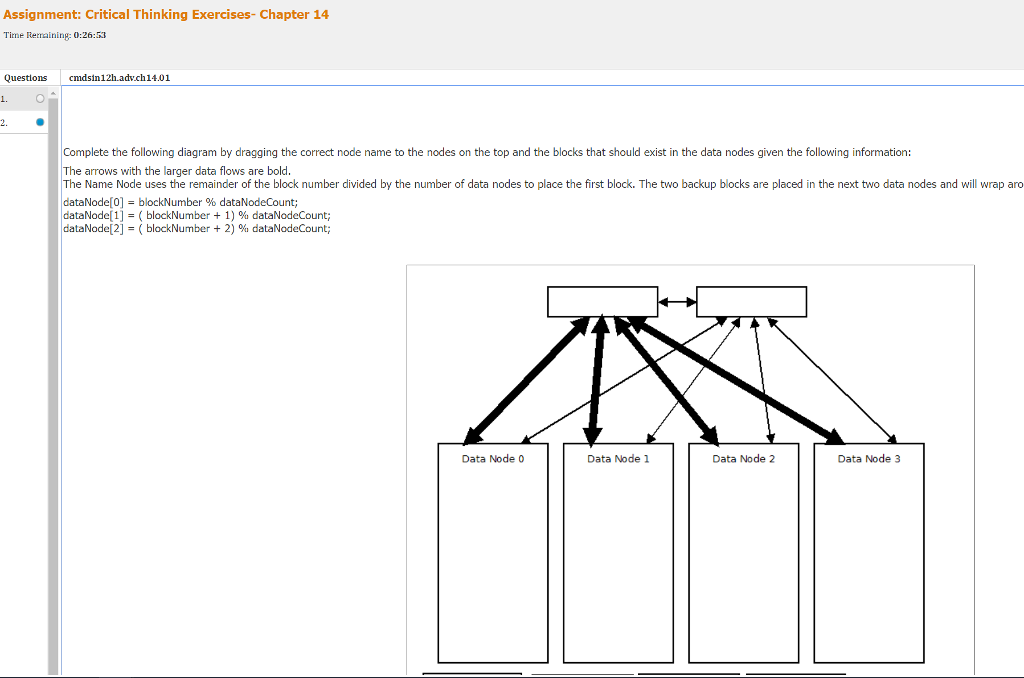
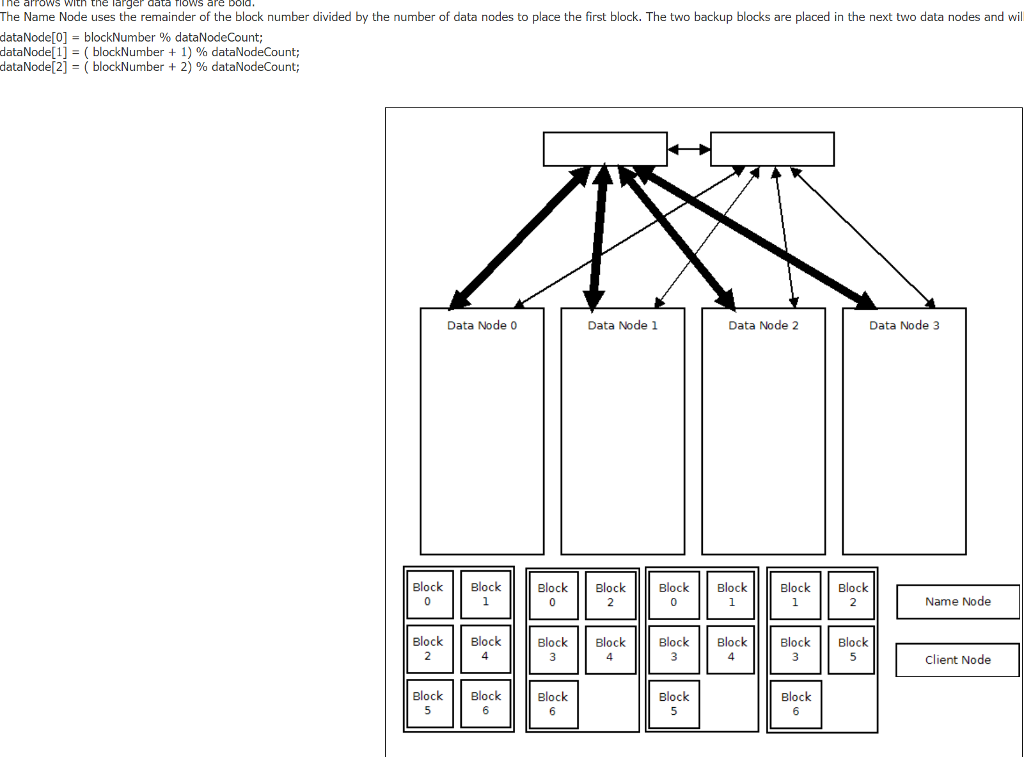
Complete the following diagram by dragging the correct node name to the nodes on the top and the blocks that should exist in the data nodes given the following information:
The arrows with the larger data flows are bold. The Name Node uses the remainder of the block number divided by the number of data nodes to place the first block. The two backup blocks are placed in the next two data nodes and will wrap around to the beginning node.
dataNode[0] = blockNumber % dataNodeCount; dataNode[1] = ( blockNumber + 1) % dataNodeCount; dataNode[2] = ( blockNumber + 2) % dataNodeCount;
Assignment: Critical Thinking Exercises- Chapter 14 Tine Rerraining:0:26: Questions cdsin12h.adv.ch14.01 Complete the following diagram by dragging the correct node name to the nodes on the top and the blocks that should exist in the data nodes given the following information The arrows with the larger data flows are bold. The Name Node uses the remainder of the block number divided by the number of data nodes to place the first block. The two backup blocks are placed in the next two data nodes and will wrap aro dataNode[0] = blockNumber 96 dataNodeCount; dataNode[1]-( blockNumber + 1) % dataNodeCount; dataNode[2]-( blockNumber + 2) % dataNodeCount; Data Node 0 Data Node l Data Node 2 Data Node 3 Assignment: Critical Thinking Exercises- Chapter 14 Tine Rerraining:0:26: Questions cdsin12h.adv.ch14.01 Complete the following diagram by dragging the correct node name to the nodes on the top and the blocks that should exist in the data nodes given the following information The arrows with the larger data flows are bold. The Name Node uses the remainder of the block number divided by the number of data nodes to place the first block. The two backup blocks are placed in the next two data nodes and will wrap aro dataNode[0] = blockNumber 96 dataNodeCount; dataNode[1]-( blockNumber + 1) % dataNodeCount; dataNode[2]-( blockNumber + 2) % dataNodeCount; Data Node 0 Data Node l Data Node 2 Data Node 3
Step by Step Solution
There are 3 Steps involved in it

Get step-by-step solutions from verified subject matter experts
 Study Help