







Question: QUESTION 4 A(n) O a. attribute O b. entity O C. constraint O d. relationship is a restriction placed on the data. QUESTION 5
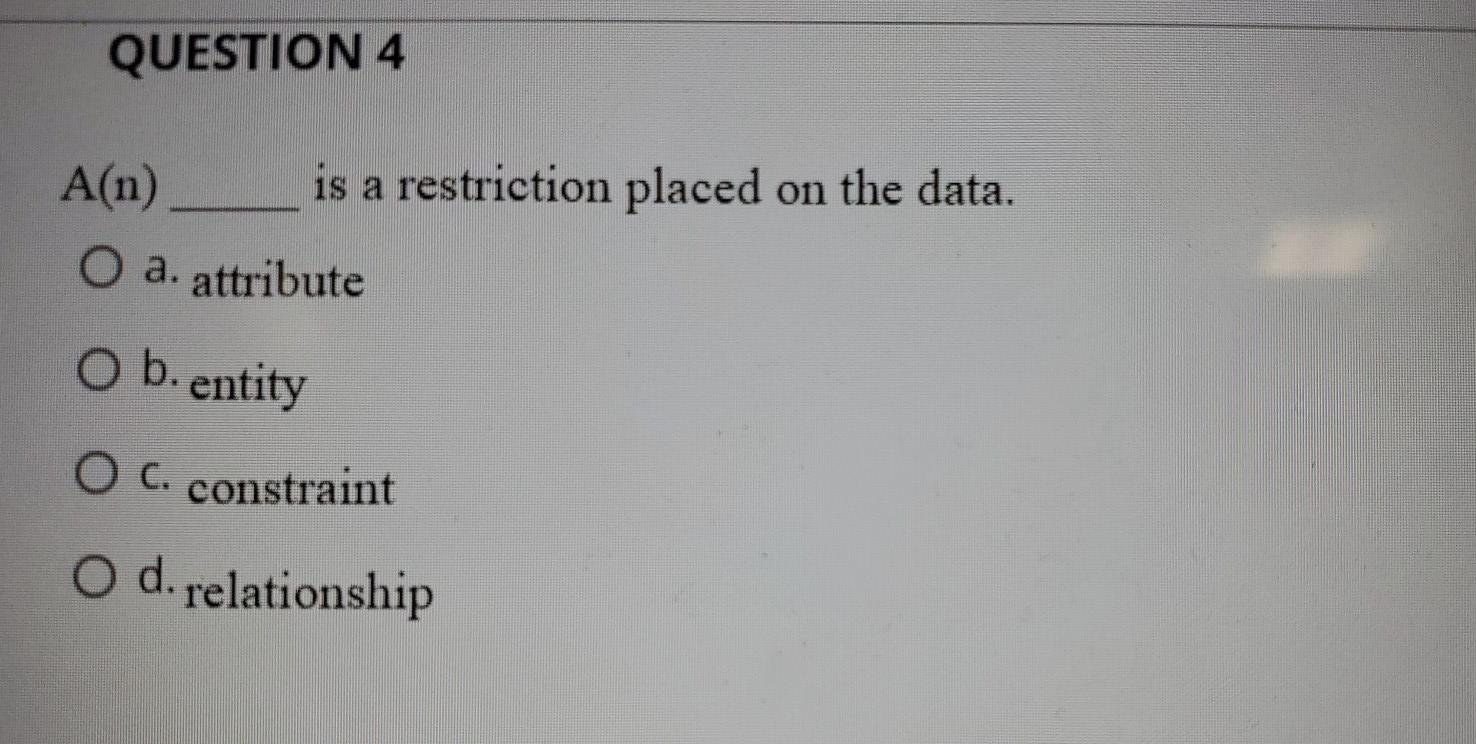
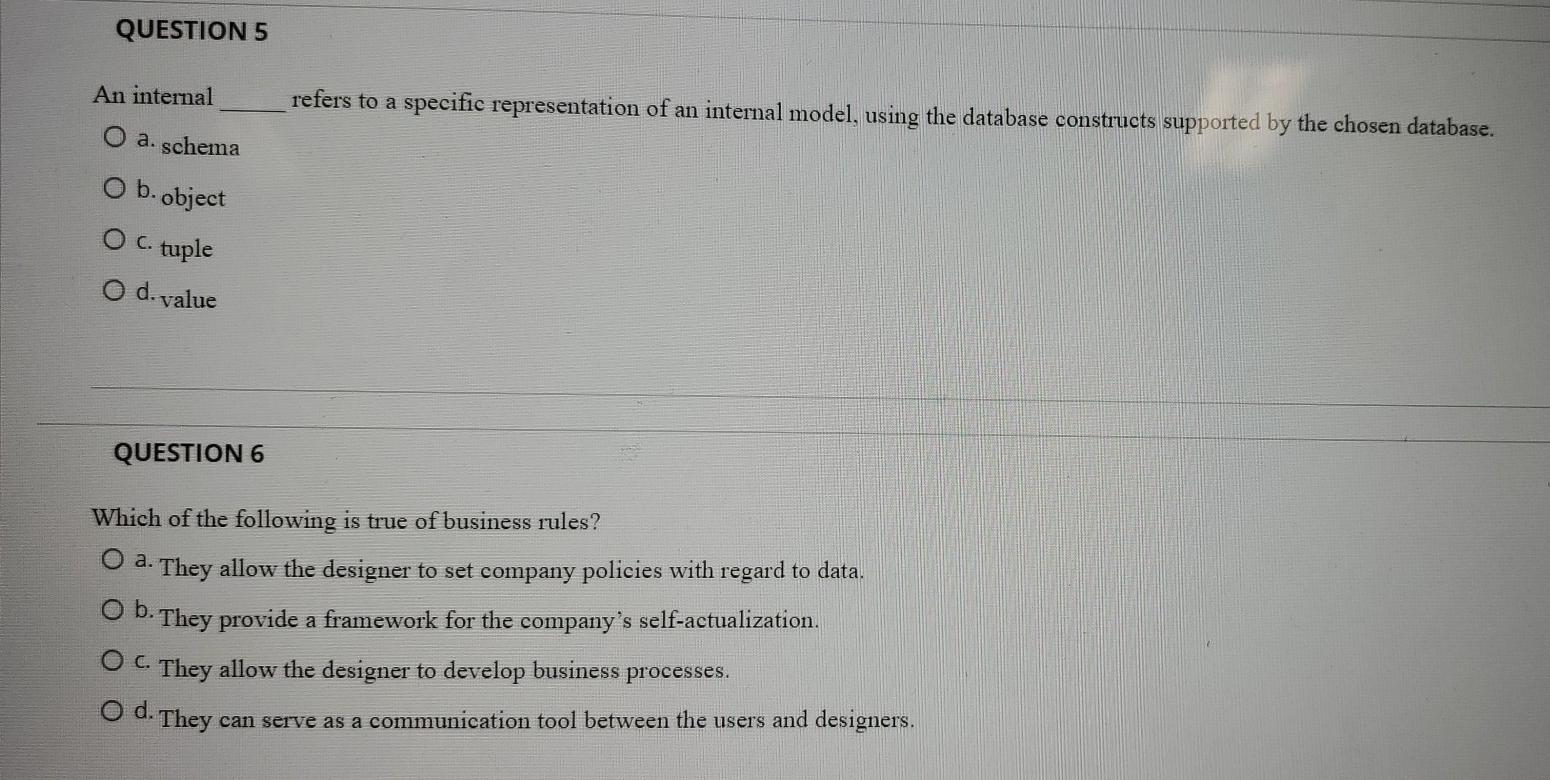
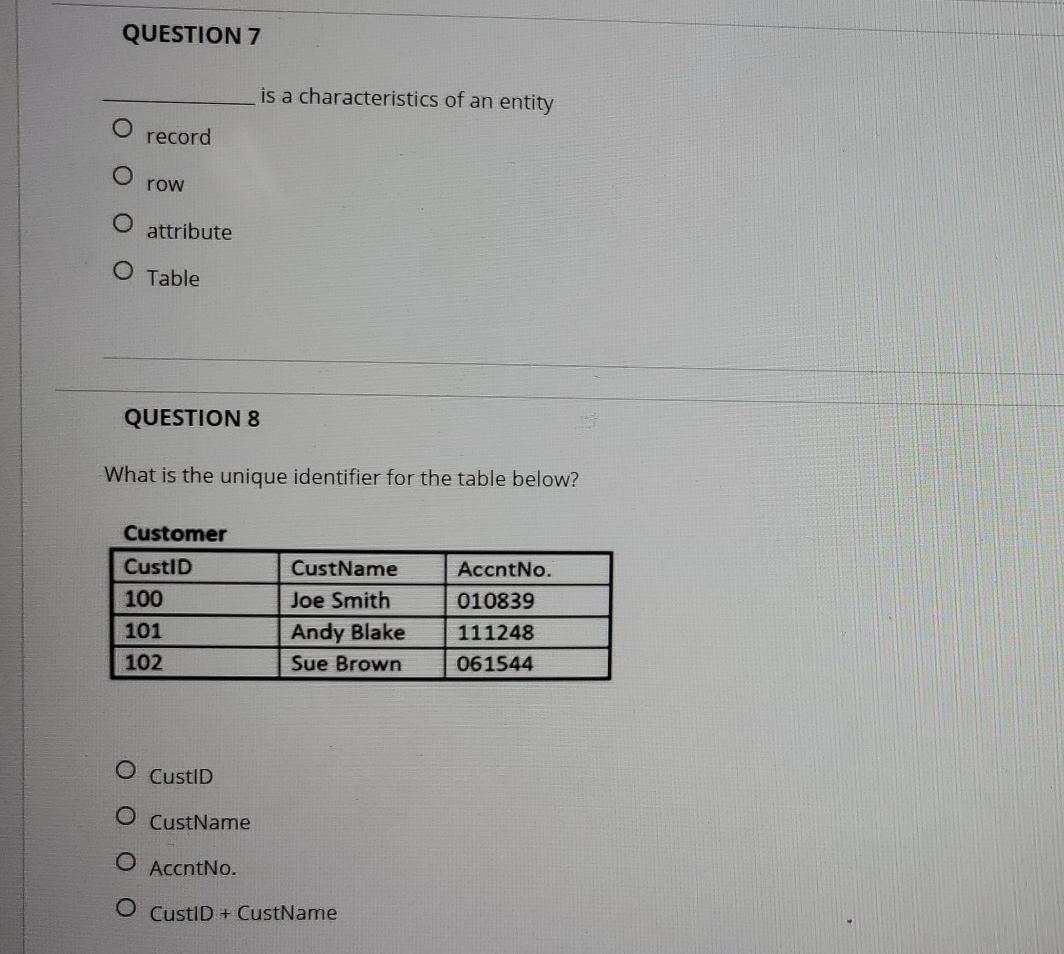
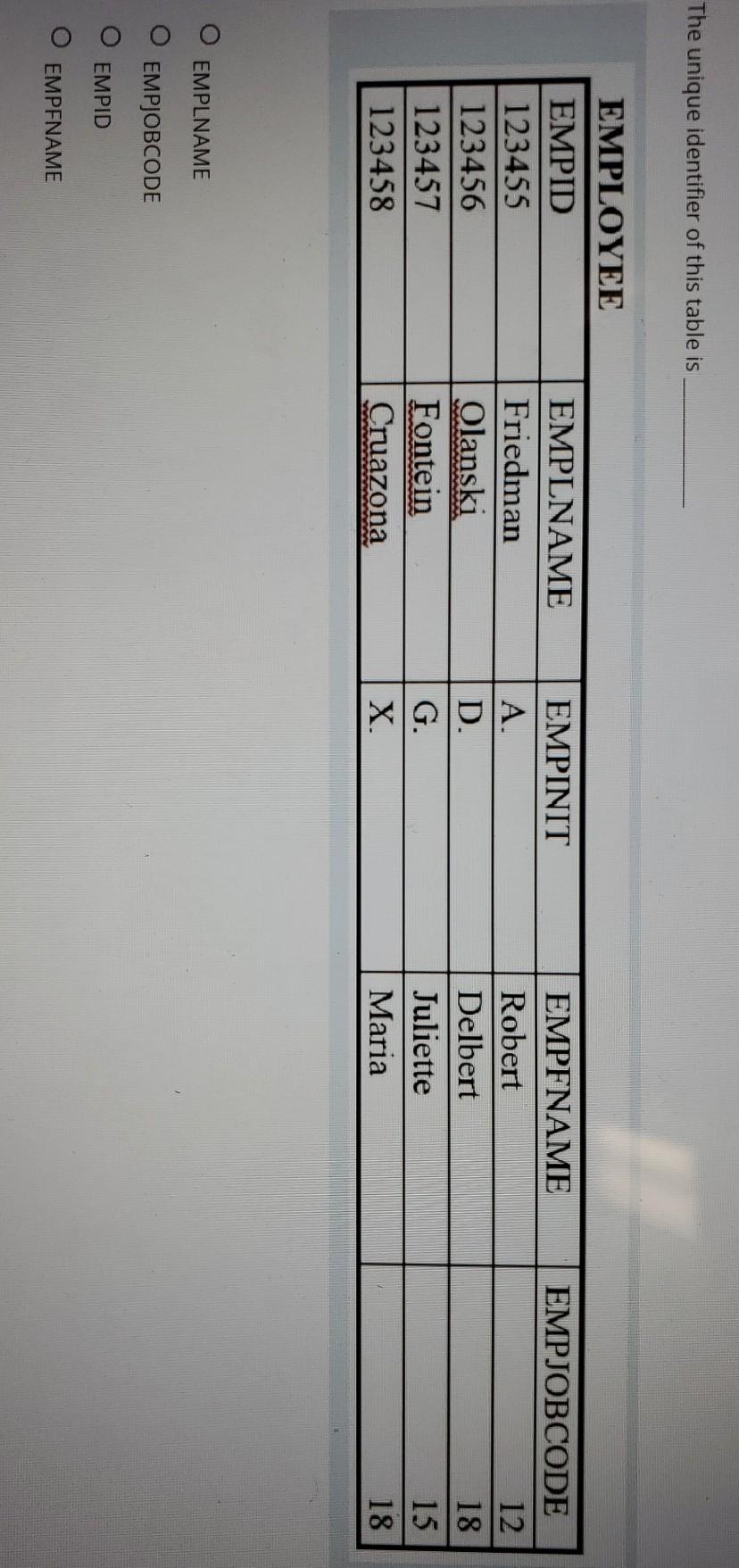
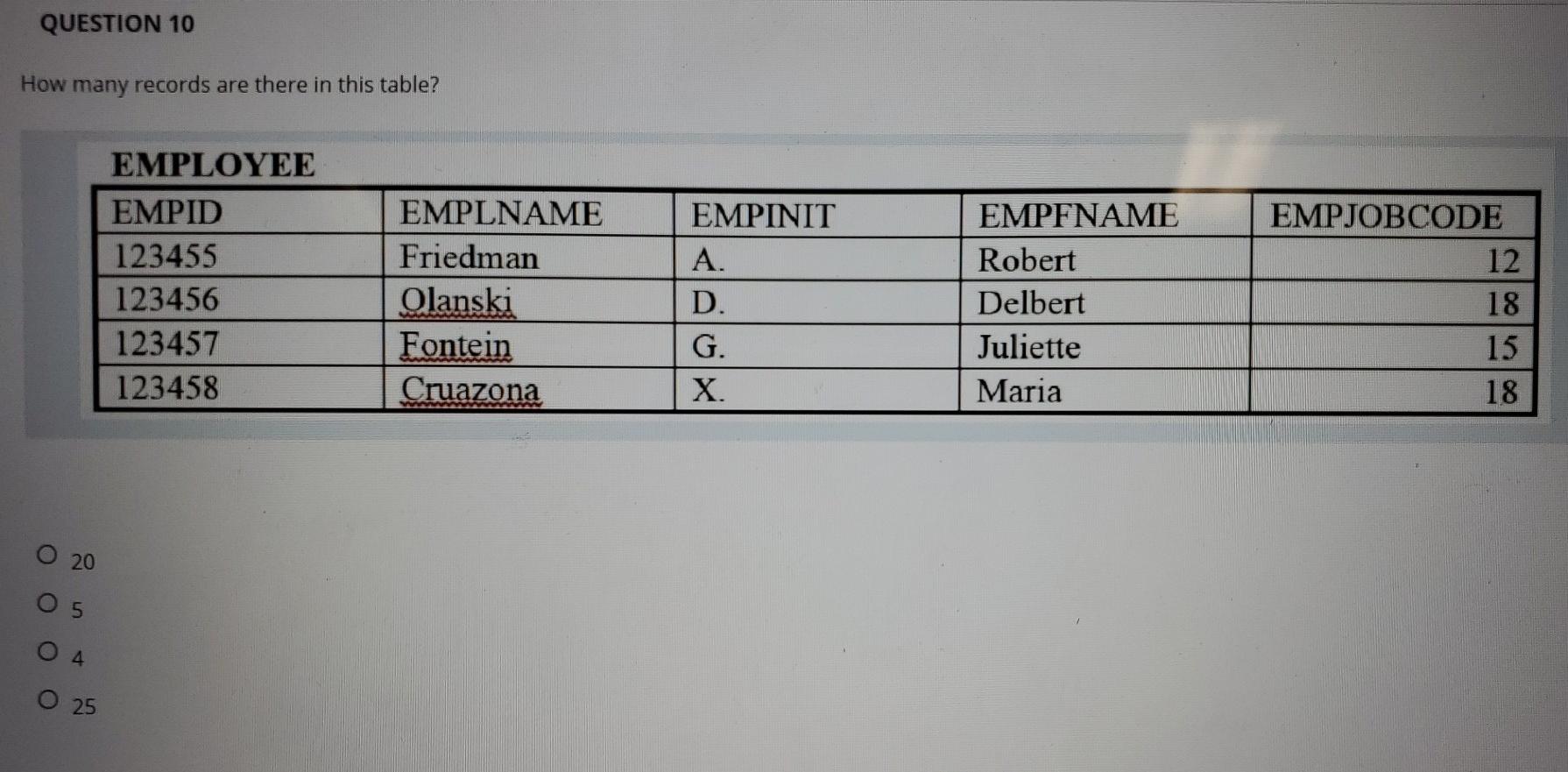
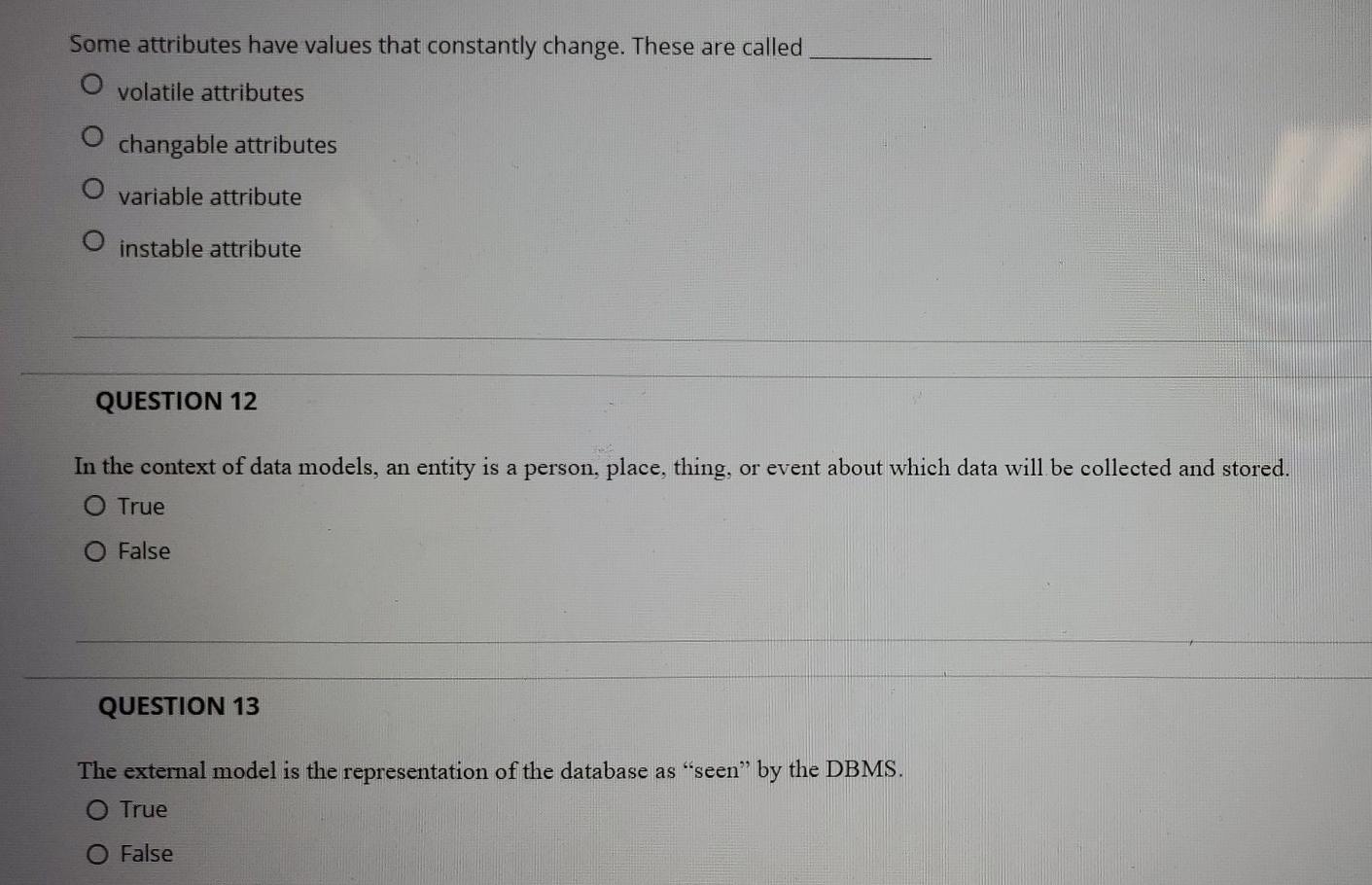
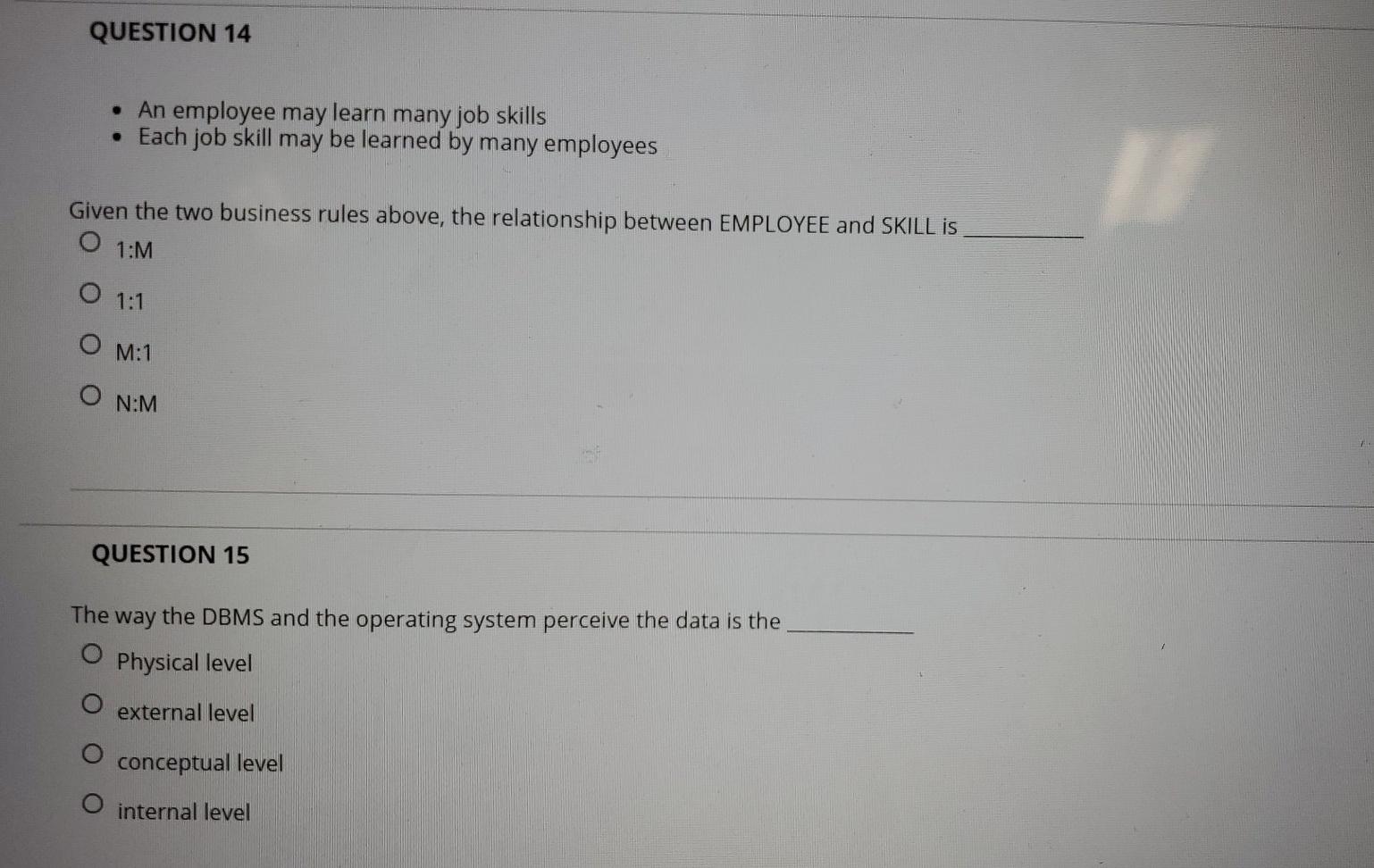
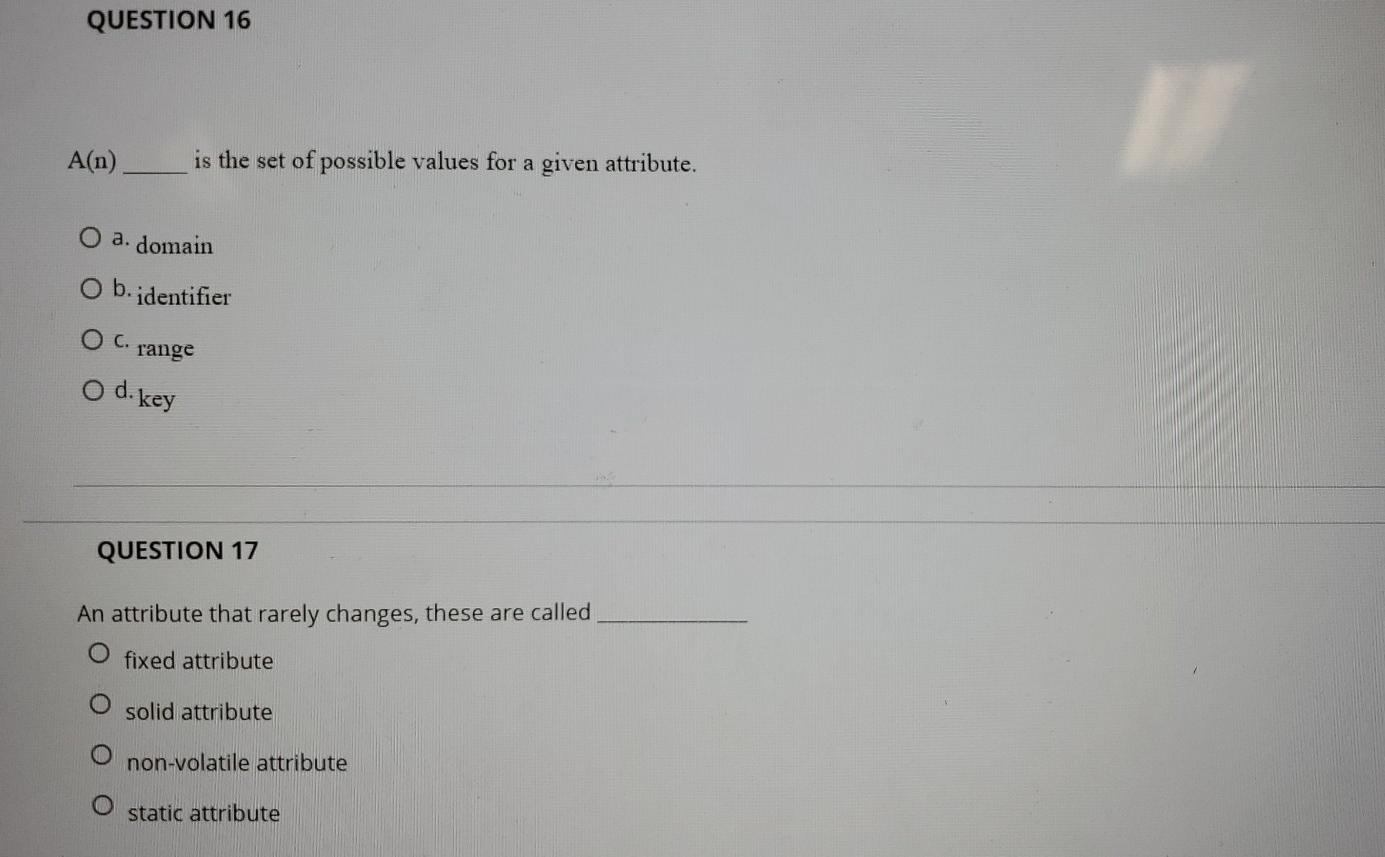
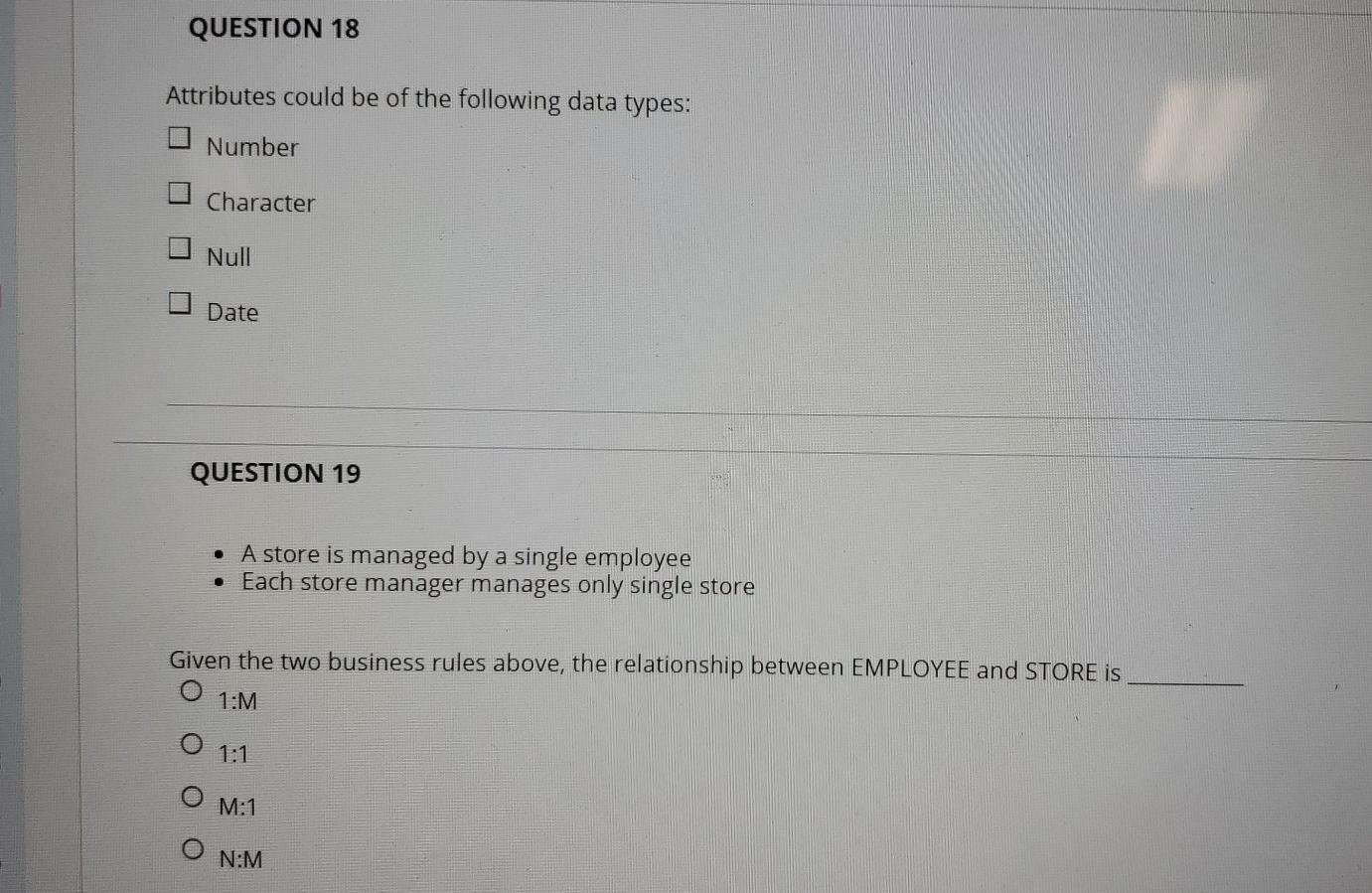
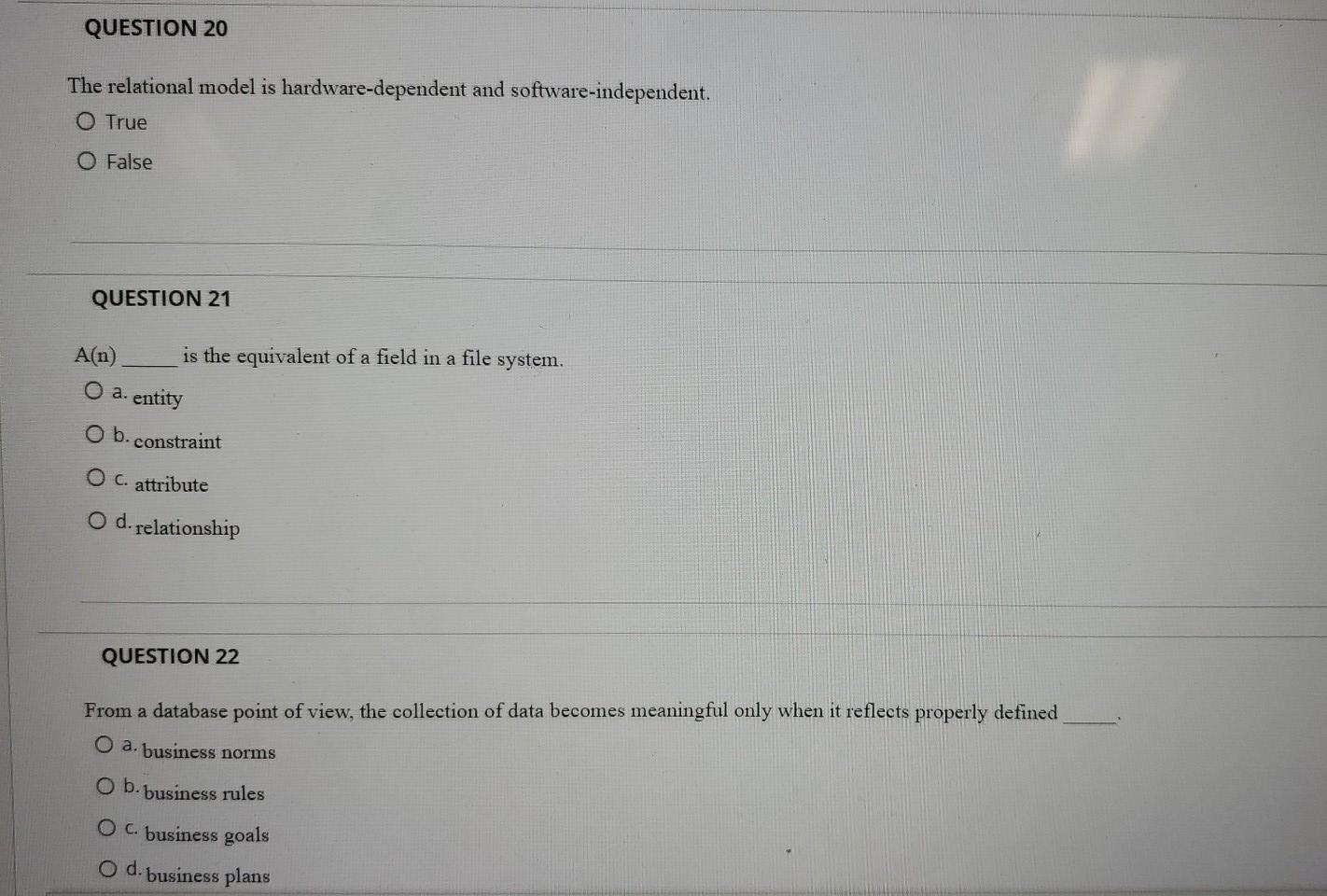
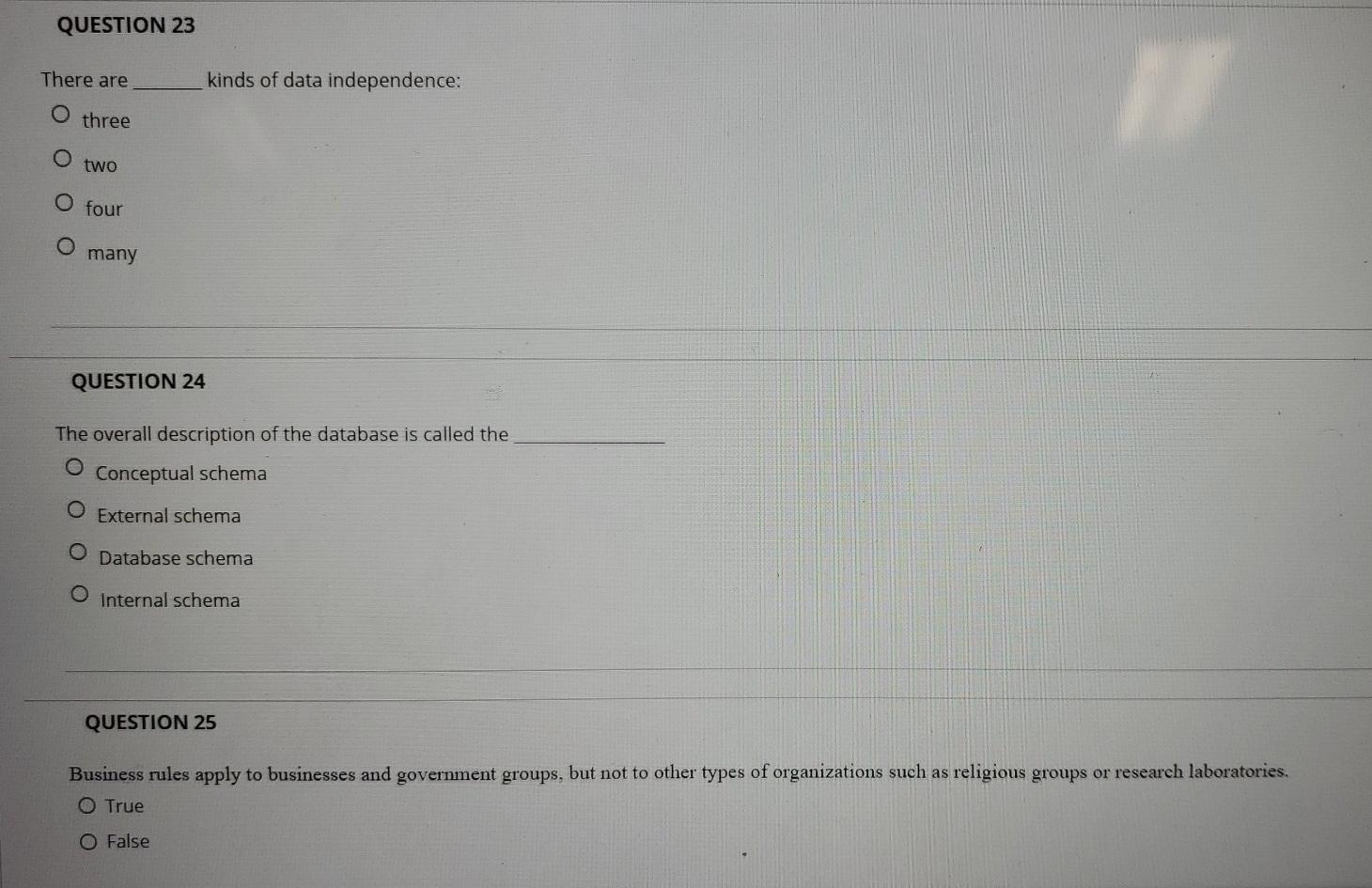
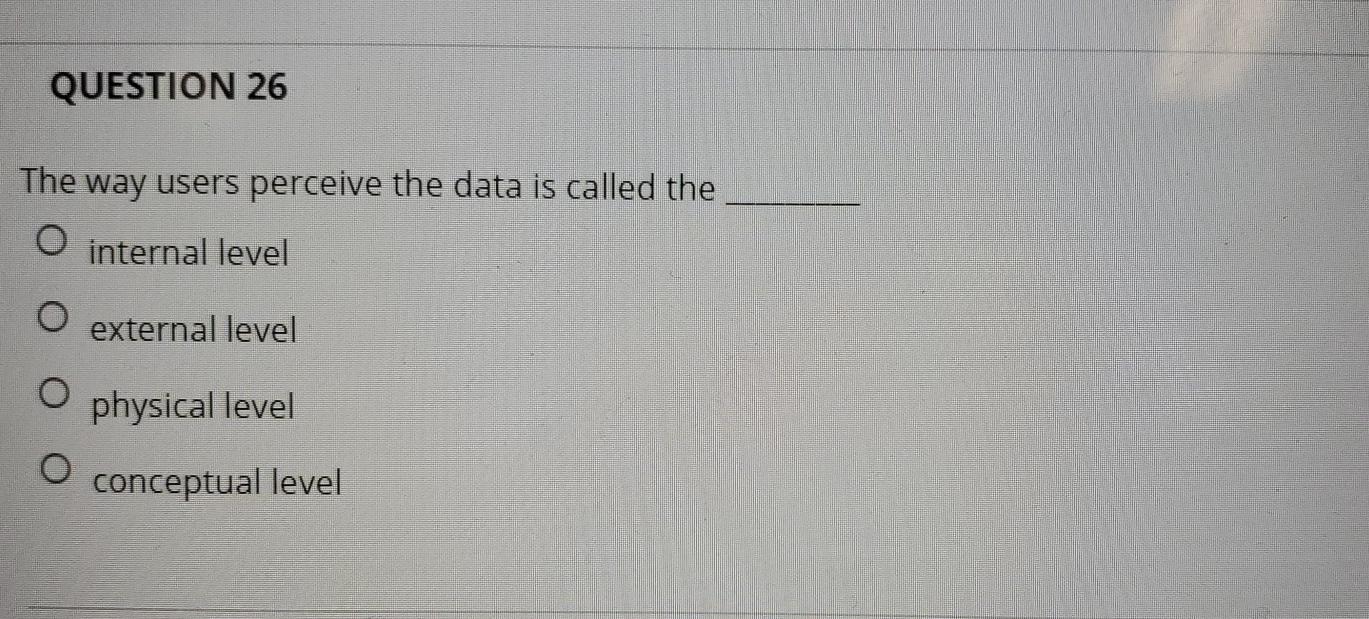
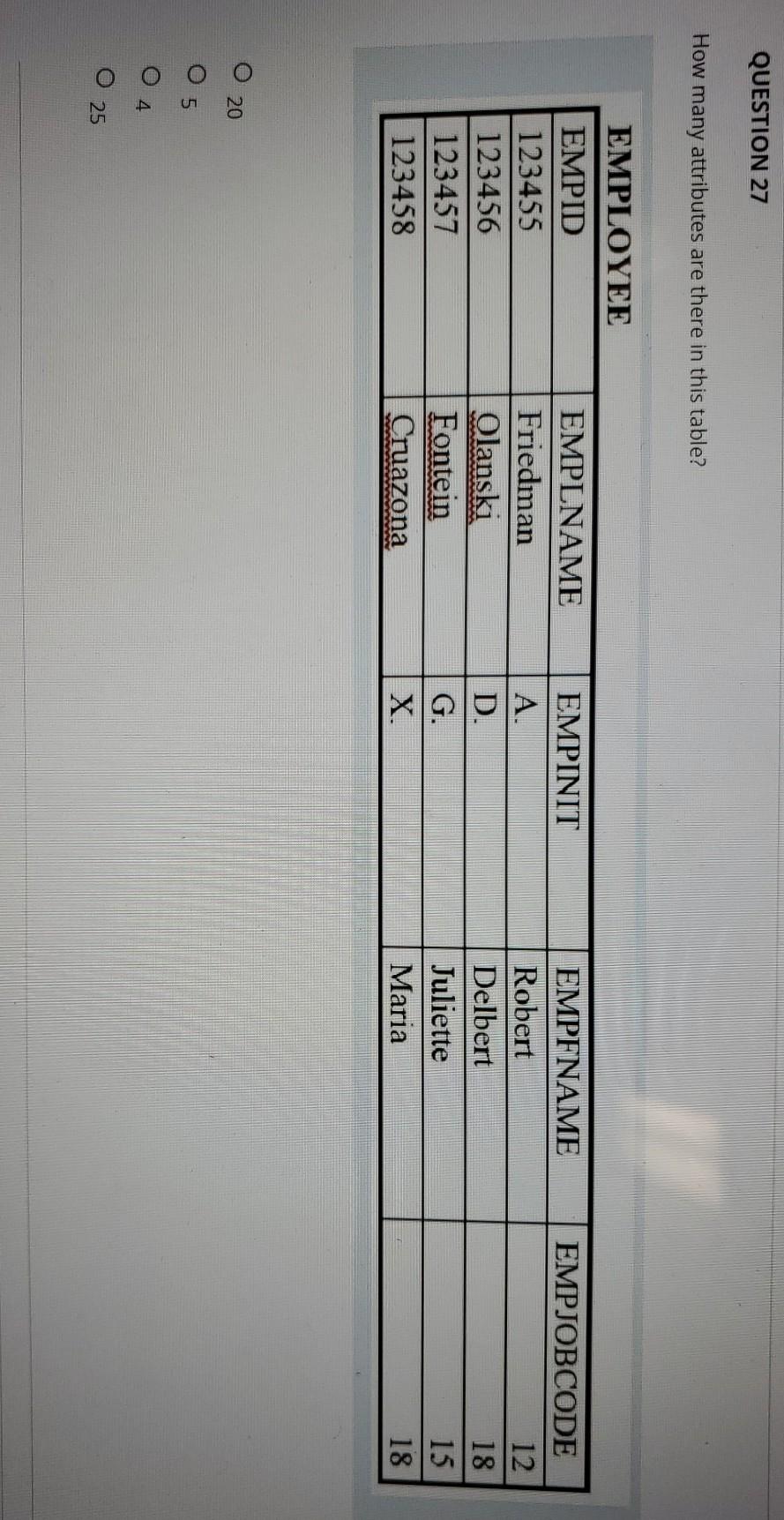
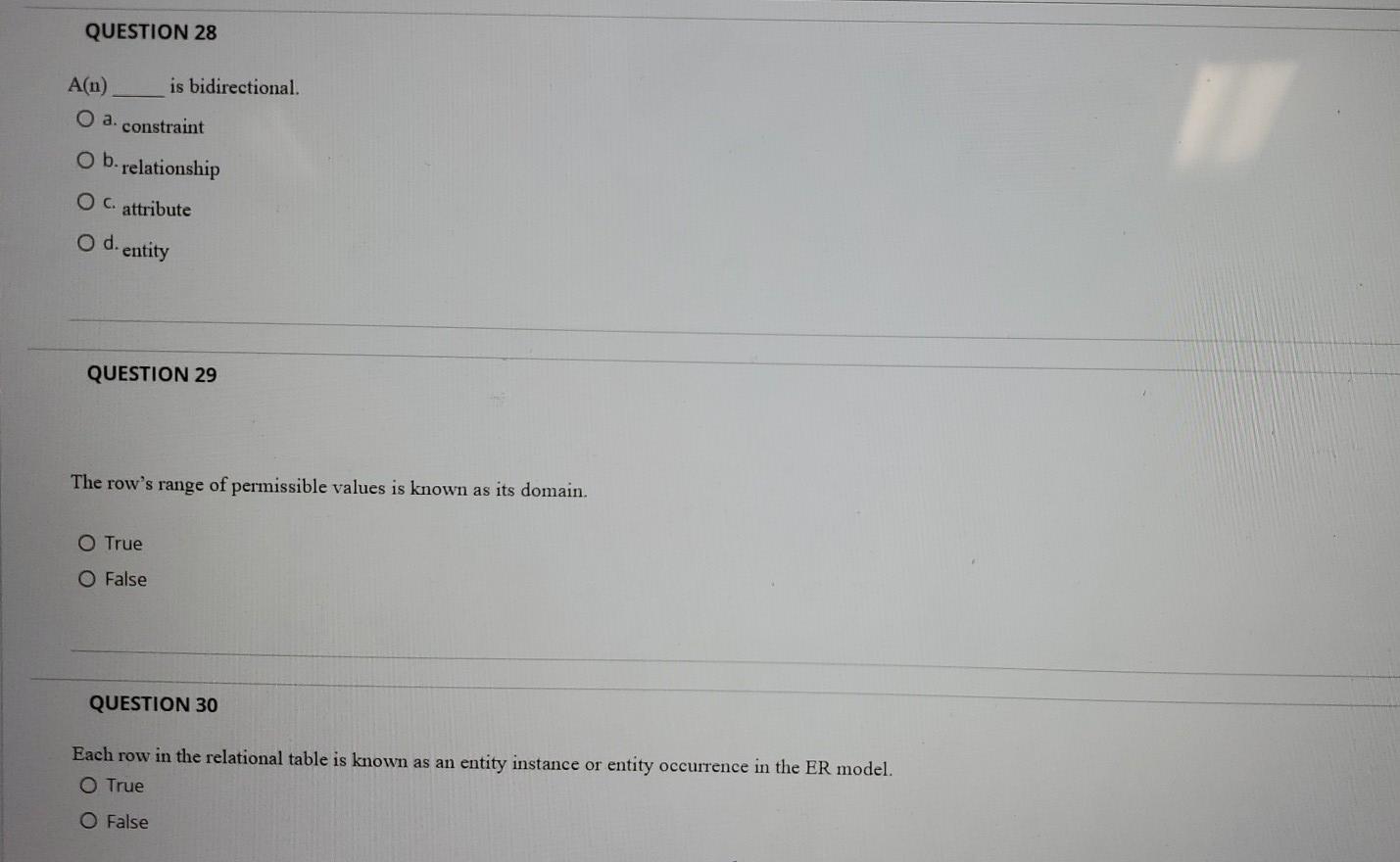
QUESTION 4 A(n) O a. attribute O b. entity O C. constraint O d. relationship is a restriction placed on the data. QUESTION 5 An internal a. schema O b. object OC. tuple d. value refers to a specific representation of an internal model, using the database constructs supported by the chosen database. QUESTION 6 Which of the following is true of business rules? O a. They allow the designer to set company policies with regard to data. O b. They provide a framework for the company's self-actualization. OC. They allow the designer to develop business processes. O d. They can serve as a communication tool between the users and designers. QUESTION 7 record row attribute O Table is a characteristics of an entity QUESTION 8 What is the unique identifier for the table below? Customer CustID 100 101 102 CustName Joe Smith Andy Blake Sue Brown CustID O CustName O AccntNo. O CustID + CustName AccntNo. 010839 111248 061544 The unique identifier of this table is EMPLOYEE EMPID 123455 123456 123457 123458 EMPLNAME EMPJOBCODE EMPID EMPFNAME EMPLNAME Friedman Olanski Fontein Cruazona EMPINIT A. D. G. X. EMPFNAME Robert Delbert Juliette Maria EMPJOBCODE 28 12 18 15 18 QUESTION 10 How many records are there in this table? O 20 05 04 O 25 EMPLOYEE EMPID 123455 123456 123457 123458 EMPLNAME Friedman Olanski Fontein Cruazona EMPINIT A. D. G. X. EMPFNAME Robert Delbert Juliette Maria EMPJOBCODE 12 18 15 18 Some attributes have values that constantly change. These are called O volatile attributes changable attributes variable attribute instable attribute QUESTION 12 In the context of data models, an entity is a person, place, thing, or event about which data will be collected and stored. O True O False QUESTION 13 The external model is the representation of the database as "seen" by the DBMS. O True O False QUESTION 14 . An employee may learn many job skills Each job skill may be learned by many employees Given the two business rules above, the relationship between EMPLOYEE and SKILL is O 1:M O 1:1 O M:1 ON:M QUESTION 15 The way the DBMS and the operating system perceive the data is the Physical level external level conceptual level O internal level 1 QUESTION 16 A(n) is the set of possible values for a given attribute. O a. domain b. identifier O C. range O d. key QUESTION 17 An attribute that rarely changes, these are called fixed attribute solid attribute non-volatile attribute static attribute QUESTION 18 Attributes could be of the following data types: Number Character Null Date QUESTION 19 A store is managed by a single employee Each store manager manages only single store Given the two business rules above, the relationship between EMPLOYEE and STORE is 1:M 1:1 M:1 N:M QUESTION 20 The relational model is hardware-dependent and software-independent. O True O False QUESTION 21 A(n) is the equivalent of a field in a file system. O a. entity O b. constraint OC. attribute O d. relationship QUESTION 22 From a database point of view, the collection of data becomes meaningful only when it reflects properly defined O a. business norms O b. business rules OC. business goals O d. business plans 11 QUESTION 23 There are O three two O four O many kinds of data independence: QUESTION 24 The overall description of the database is called the O Conceptual schema O External schema O Database schema O Internal schema 1 QUESTION 25 Business rules apply to businesses and government groups, but not to other types of organizations such as religious groups or research laboratories. O True O False QUESTION 26 The way users perceive the data is called the O internal level O external level O physical level O conceptual level QUESTION 27 How many attributes are there in this table? O 20 05 4 0 25 EMPLOYEE EMPID 123455 123456 123457 123458 EMPLNAME Friedman Olanski Fontein Cruazona EMPINIT A. D. G. X. EMPFNAME Robert Delbert Juliette Maria EMPJOBCODE 12 18 15 18 QUESTION 28 A(n) O a. constraint Ob-relationship OC. attribute O d. entity is bidirectional. QUESTION 29 The row's range of permissible values is known as its domain. O True O False QUESTION 30 Each row in the relational table is known as an entity instance or entity occurrence in the ER model. O True O False
Step by Step Solution
3.51 Rating (181 Votes )
There are 3 Steps involved in it
The detailed answer for the above question is provided below Question 4 Answer c constraint Explanation A constraint is a restriction placed on the data it ensures that the data entered into the datab... View full answer

Get step-by-step solutions from verified subject matter experts
 Study Help