



Question: days per year.) a) The economic order quantity is units (round your response to the nearest whole number). b) The average inventory is units (round
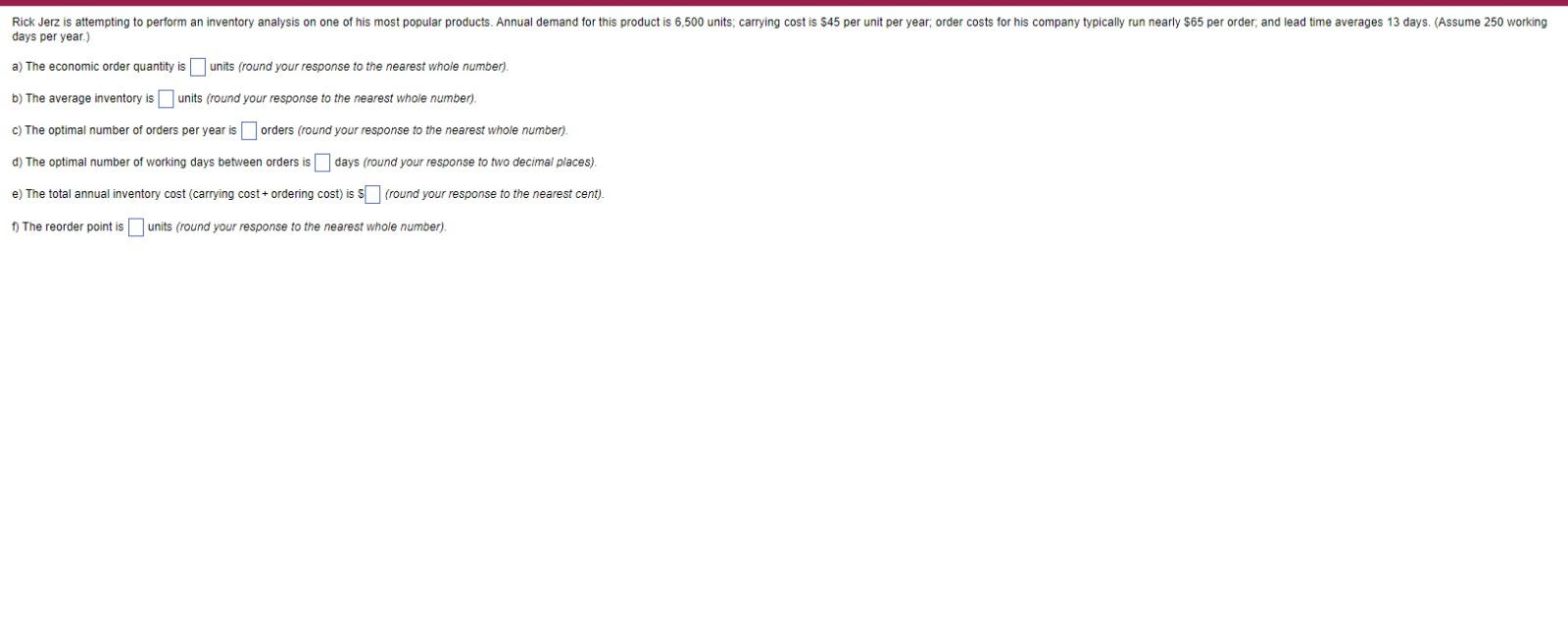
days per year.) a) The economic order quantity is units (round your response to the nearest whole number). b) The average inventory is units (round your response to the nearest whole number). c) The optimal number of orders per year is orders (round your response to the nearest whole number). d) The optimal number of working days between orders is days (round your response to two decimal places). e) The total annual inventory cost (carrying cost + ordering cost) is S (round your response to the nearest cent). f) The reorder point is units (round your response to the nearest whole number). days per year.) a) The economic order quantity is units (round your response to the nearest whole number). b) The average inventory is units (round your response to the nearest whole number). c) The optimal number of orders per year is orders (round your response to the nearest whole number). d) The optimal number of working days between orders is days (round your response to two decimal places). e) The total annual inventory cost (carrying cost + ordering cost) is S (round your response to the nearest cent). f) The reorder point is units (round your response to the nearest whole number)
Step by Step Solution
There are 3 Steps involved in it

Get step-by-step solutions from verified subject matter experts