







Question: Dear Tutor, can you assist me with this homework? They are all just multiple choices. There is no need to show the solutions. Thank you
Dear Tutor, can you assist me with this homework? They are all just multiple choices. There is no need to show the solutions. Thank you very much.
1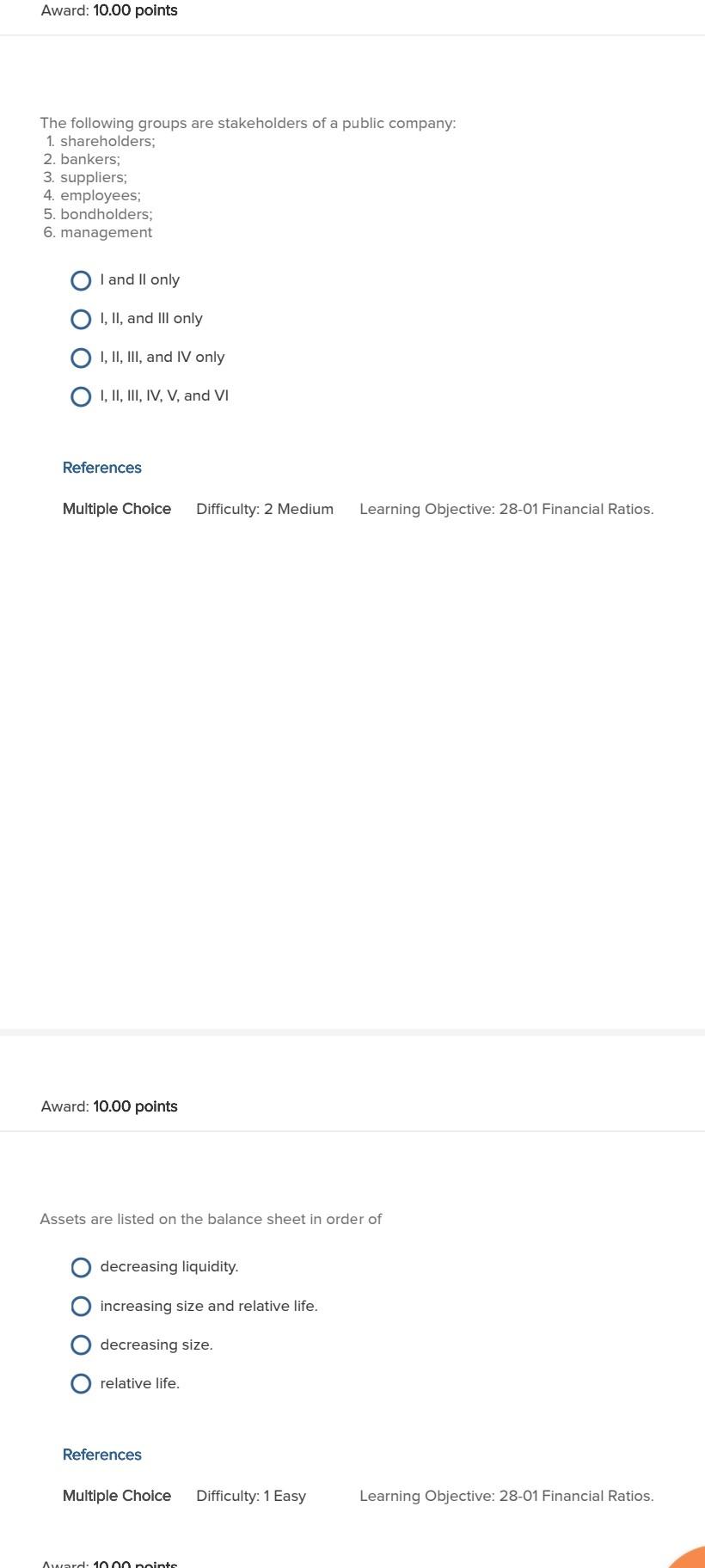
Thank you.
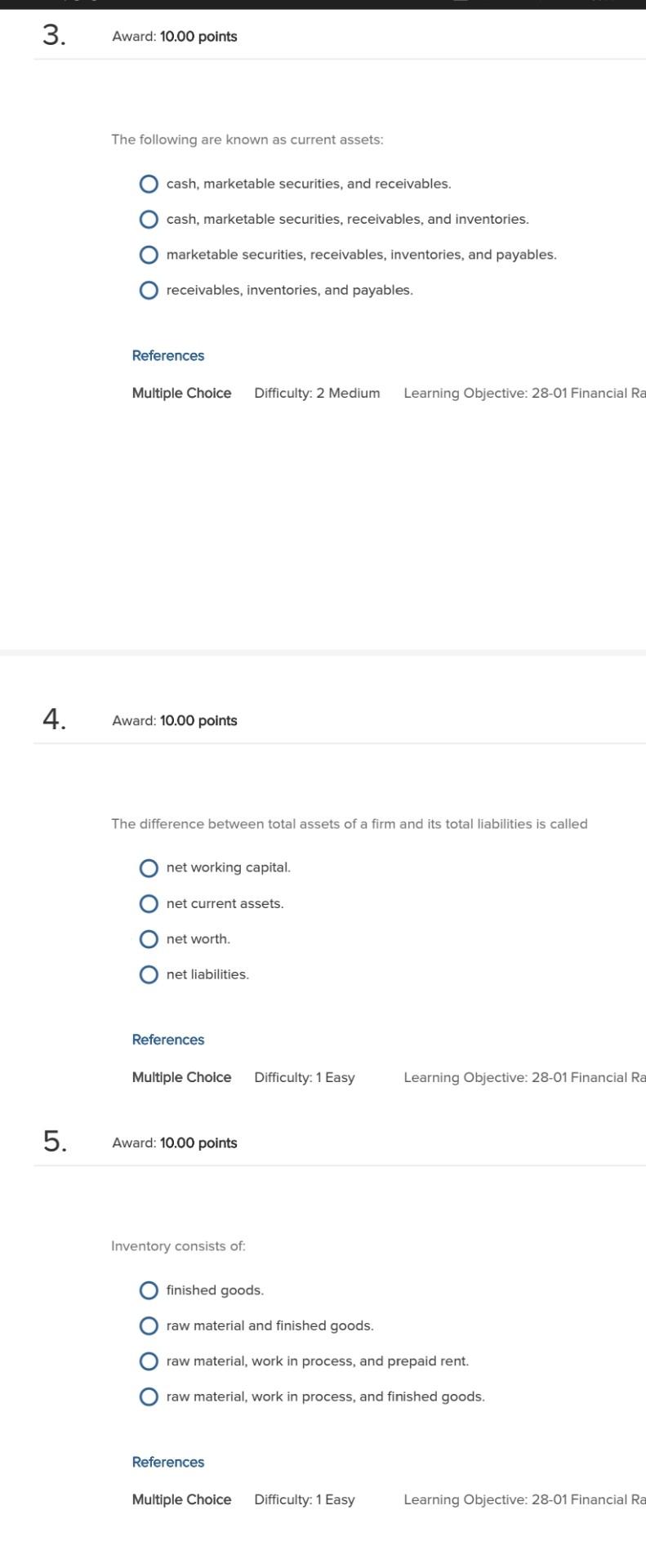
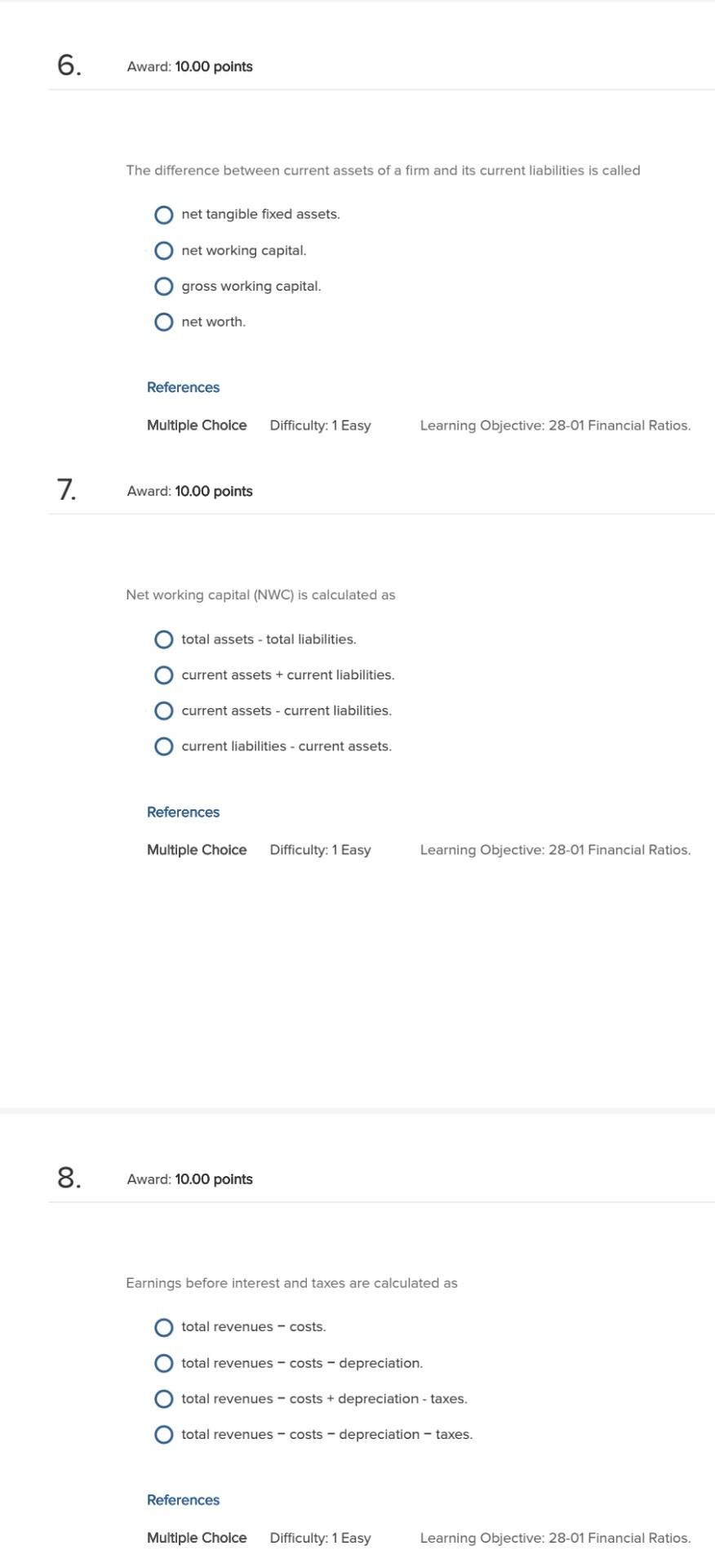
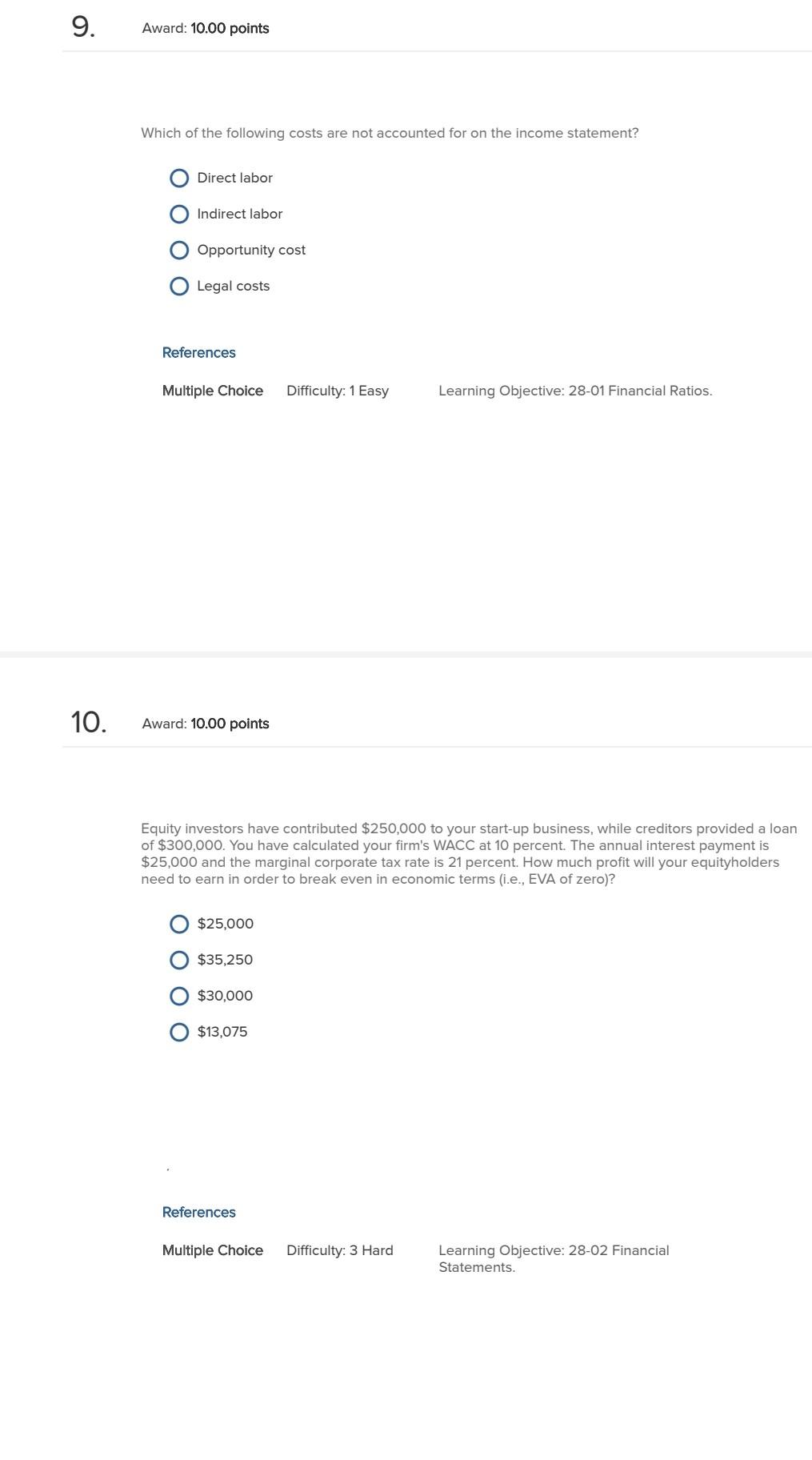
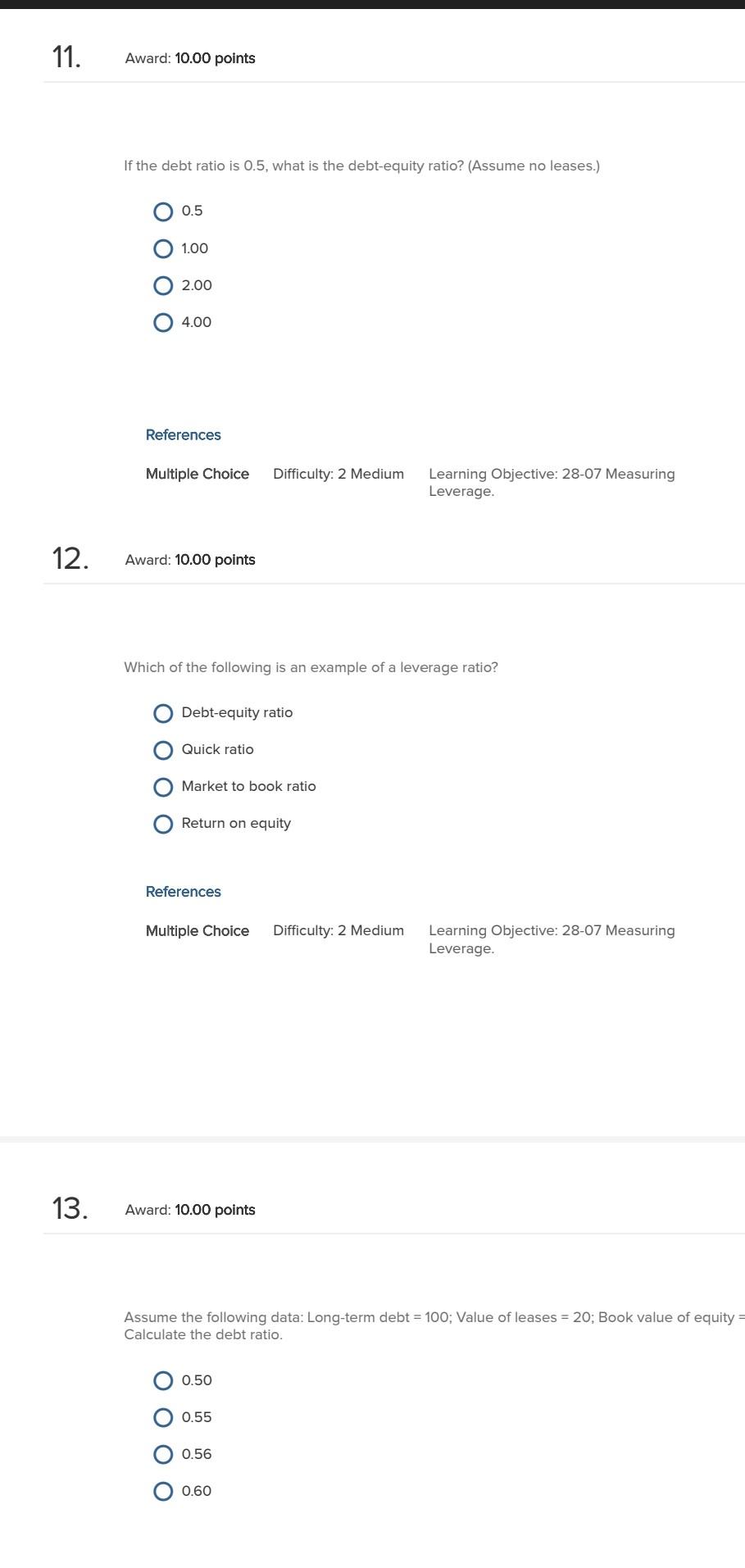
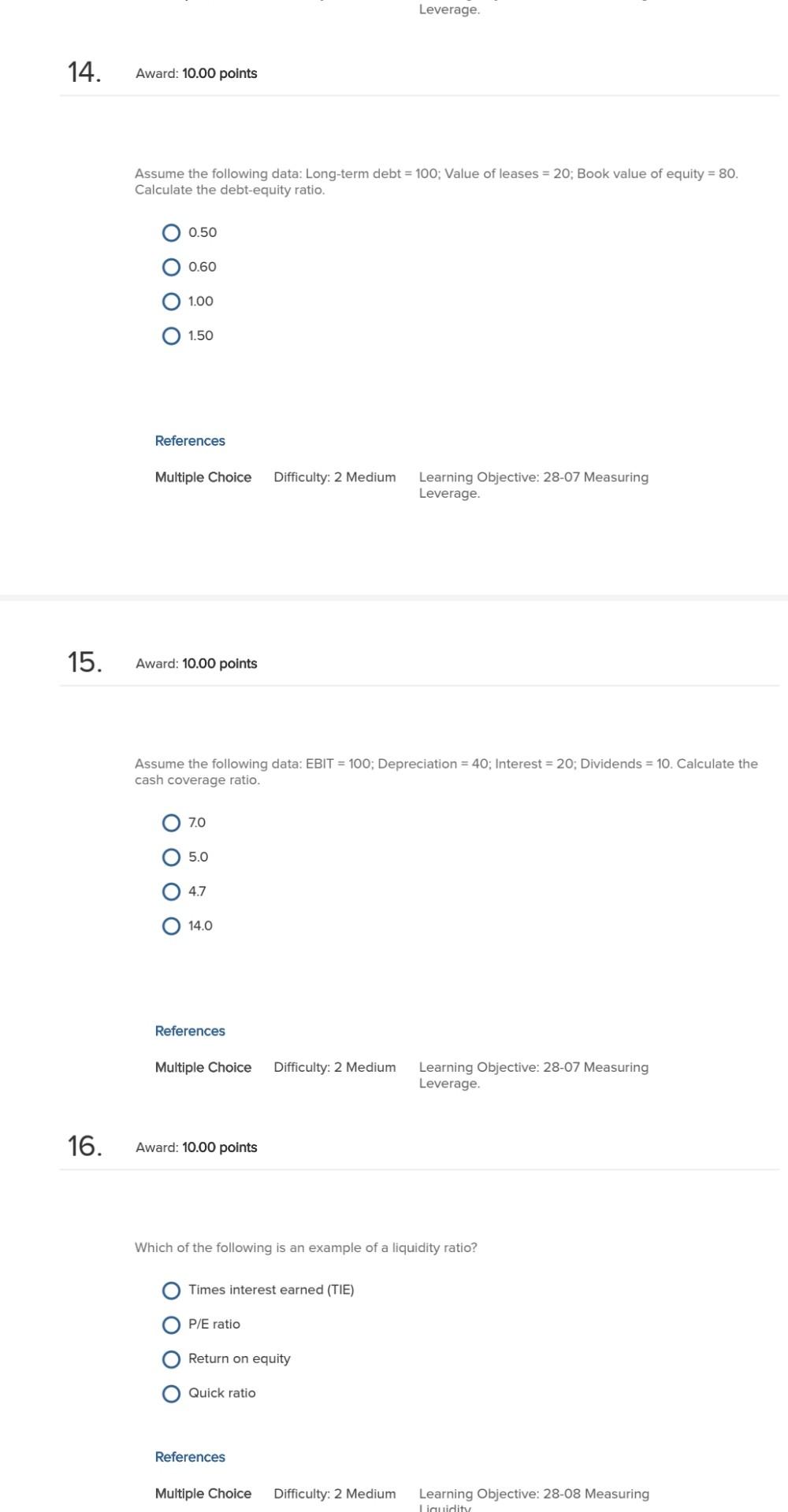
Award: 10.00 points The following groups are stakeholders of a public company: 1. shareholders; 2. bankers; 3. suppliers; 4. employees; 5. bondholders; 6. management I and II only I, II, and Ill only I, II, III, and IV only I, II, III, IV, V, and VI References Multiple Choice Difficulty: 2 Medium Learning Objective: 28-01 Financial Ratios. Award: 10.00 points Assets are listed on the balance sheet in order of decreasing liquidity. increasing size and relative life. decreasing size. O relative life. References Multiple Choice Difficulty: 1 Easy Learning Objective: 28-01 Financial Ratios. Award. 10 points 3. Award: 10.00 points The following are known as current assets: cash, marketable securities, and receivables. cash, marketable securities, receivables, and inventories. O O O marketable securities, receivables, inventories, and payables. receivables, inventories, and payables. References Multiple Choice Difficulty: 2 Medium Learning Objective: 28-01 Financial Ra 4. Award: 10.00 points The difference between total assets of a firm and its total liabilities is called net working capital. net current assets. net worth. net liabilities. References Multiple Choice Difficulty: 1 Easy Learning Objective: 28-01 Financial Ra 5. Award: 10.00 points Inventory consists of: finished goods. raw material and finished goods. raw material, work in process, and prepaid rent. raw material, work in process, and finished goods. References Multiple Choice Difficulty: 1 Easy Learning Objective: 28-01 Financial Ra 6. Award: 10.00 points The difference between current assets of a firm and its current liabilities is called net tangible fixed assets. net working capital. O O O O gross working capital. net worth. References Multiple Choice Difficulty: 1 Easy Learning Objective: 28-01 Financial Ratios. 7. Award: 10.00 points Net working capital (NWC) is calculated as total assets - total liabilities. current assets + current liabilities. O O O current assets - current liabilities. current liabilities - current assets. References Multiple Choice Difficulty: 1 Easy Learning Objective: 28-01 Financial Ratios. . 8. Award: 10.00 points Earnings before interest and taxes are calculated as total revenues - costs. total revenues - costs - depreciation. O O O total revenues - costs + depreciation - taxes. total revenues - costs - depreciation - taxes. References Multiple Choice Difficulty: 1 Easy Learning Objective: 28-01 Financial Ratios. 9. Award: 10.00 points Which of the following costs are not accounted for on the income statement? Direct labor Indirect labor Opportunity cost Legal costs References Multiple Choice Difficulty: 1 Easy Learning Objective: 28-01 Financial Ratios. 10. Award: 10.00 points Equity investors have contributed $250,000 to your start-up business, while creditors provided a loan of $300,000. You have calculated your firm's WACC at 10 percent. The annual interest payment is $25,000 and the marginal corporate tax rate is 21 percent. How much profit will your equityholders need to earn in order to break even in economic terms (i.e., EVA of zero)? $25,000 $35,250 $30,000 $13,075 References Multiple Choice Difficulty: 3 Hard Learning Objective: 28-02 Financial Statements. 11. Award: 10.00 points If the debt ratio is 0.5, what is the debt-equity ratio? (Assume no leases.) 0.5 1.00 2.00 4.00 References Multiple Choice Difficulty: 2 Medium Learning Objective: 28-07 Measuring Leverage. 12. Award: 10.00 points Which of the following is an example of a leverage ratio? O Debt-equity ratio Quick ratio Market to book ratio Return on equity References Multiple Choice Difficulty: 2 Medium Learning Objective: 28-07 Measuring Leverage. 13. Award: 10.00 points Assume the following data: Long-term debt = 100; Value of leases = 20; Book value of equity = Calculate the debt ratio. 0.50 0.55 0.56 0.60 Leverage. 14. Award: 10.00 points Assume the following data: Long-term debt = 100; Value of leases = 20; Book value of equity = 80. Calculate the debt-equity ratio. 0.50 0.60 1.00 1.50 References Multiple Choice Difficulty: 2 Medium Learning Objective: 28-07 Measuring Leverage. 15. Award: 10.00 points Assume the following data: EBIT = 100; Depreciation = 40; Interest = 20; Dividends = 10. Calculate the cash coverage ratio. 7.0 5.0 4.7 14.0 References Multiple Choice Difficulty: 2 Medium Learning Objective: 28-07 Measuring Leverage. 16. Award: 10.00 points Which of the following is an example of a liquidity ratio? Times interest earned (TIE) P/E ratio Return on equity Quick ratio References Multiple Choice Difficulty: 2 Medium Learning Objective: 28-08 Measuring liquidity
Step by Step Solution
There are 3 Steps involved in it

Get step-by-step solutions from verified subject matter experts
 Study Help