







Question: Dear Tutor, If possible I would like some support, I have managed to come up with almost everything except a conclusion for my assignment, I
Dear Tutor, If possible I would like some support, I have managed to come up with almost everything except a conclusion for my assignment, I am stuck and need another 1500 or so words, I anyone could give me an example, just to get an idea and not to copy verbatim. The Subject relates to resilience in the aviation workplace and I have attached what I have wrote and the task sheet to give context and explain further, p.s i am still putting things together and will edit further nearer to completion
1st Attachment is task sheet, the 2nd is my introduction, 3rd discusses resilience and human emotion, 4th is about the subconcepts of human emotion, 5th and 6th pages discuss cognitive flexibility and the final page is my recomendation, it is from this point, it is my conclusion but am stuck
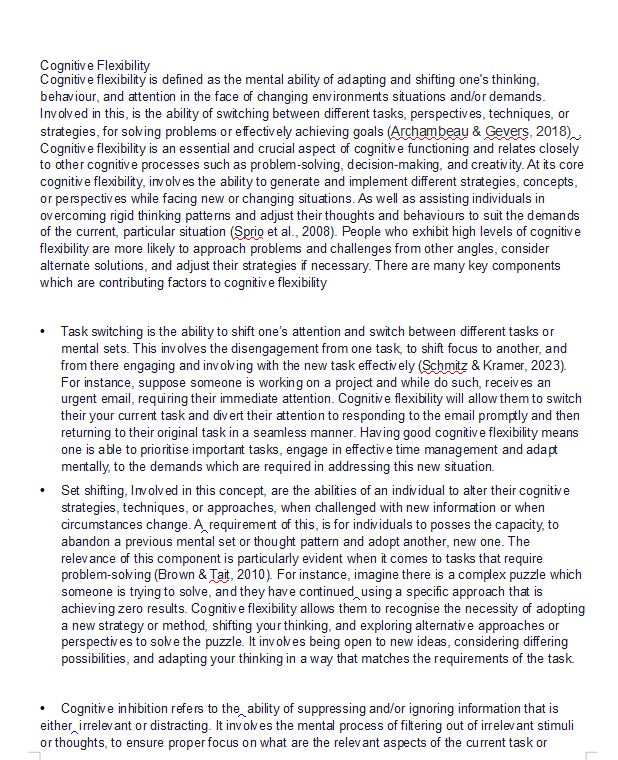
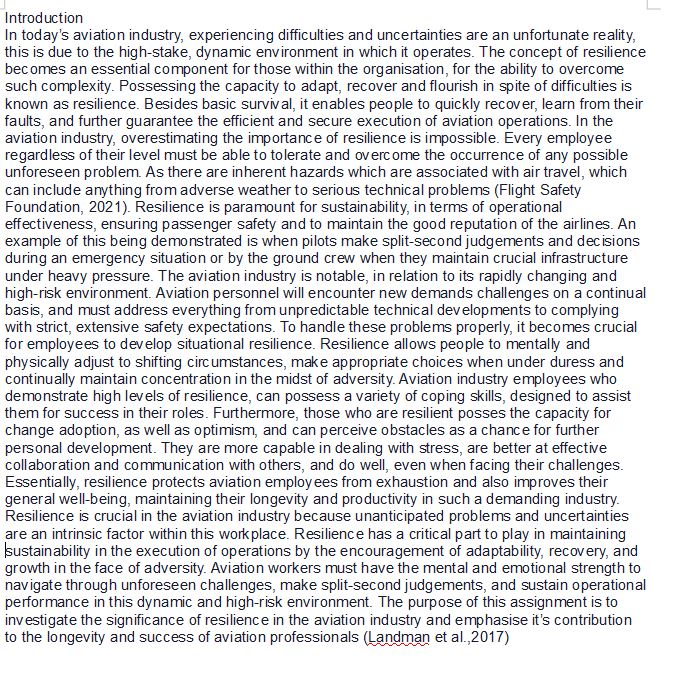
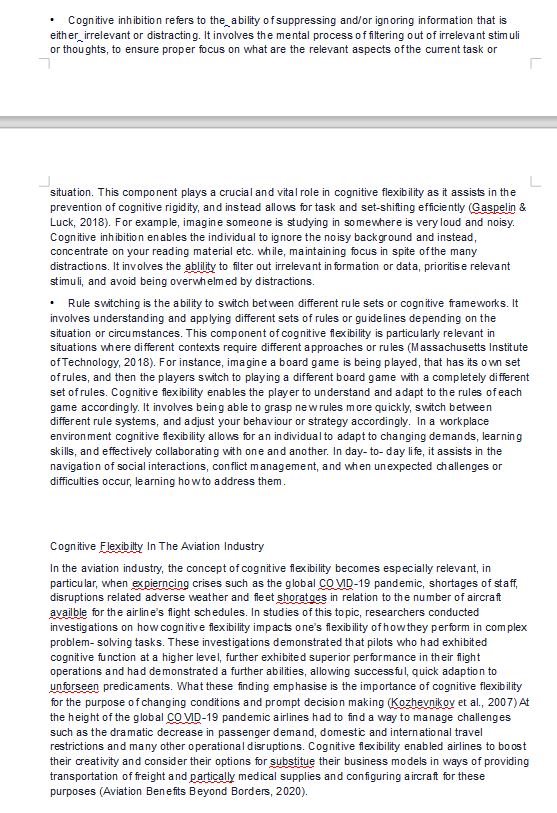
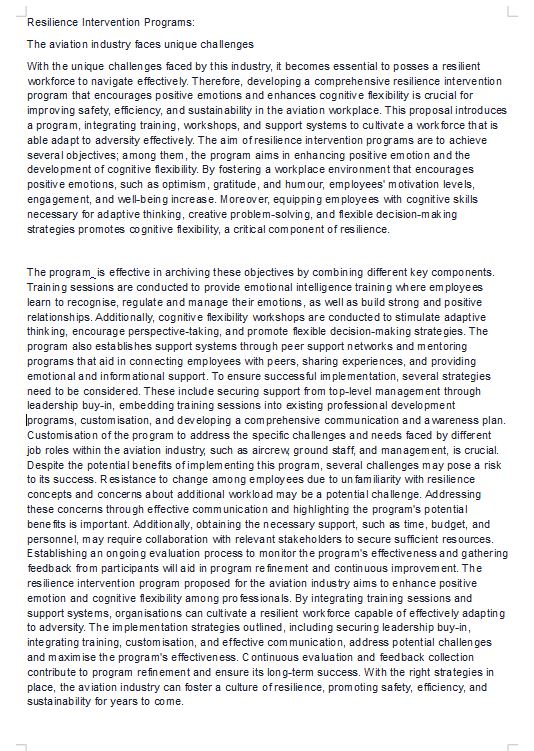
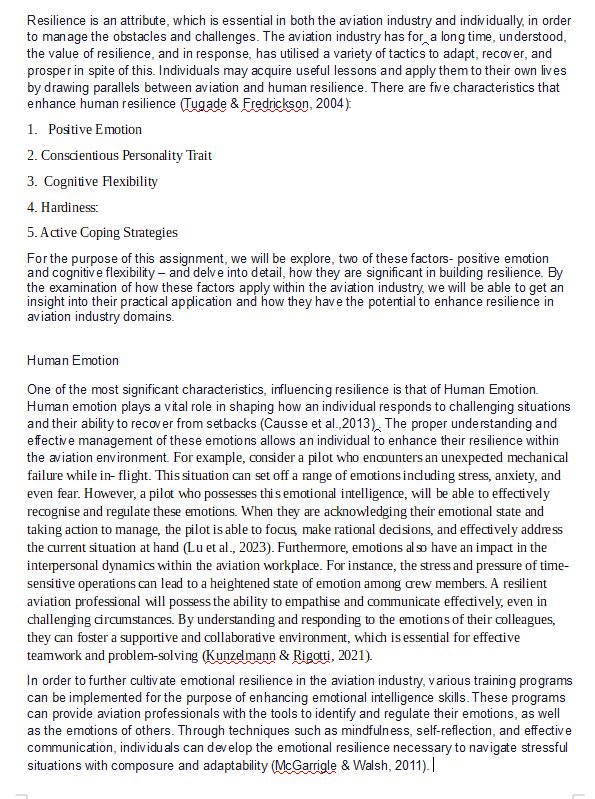
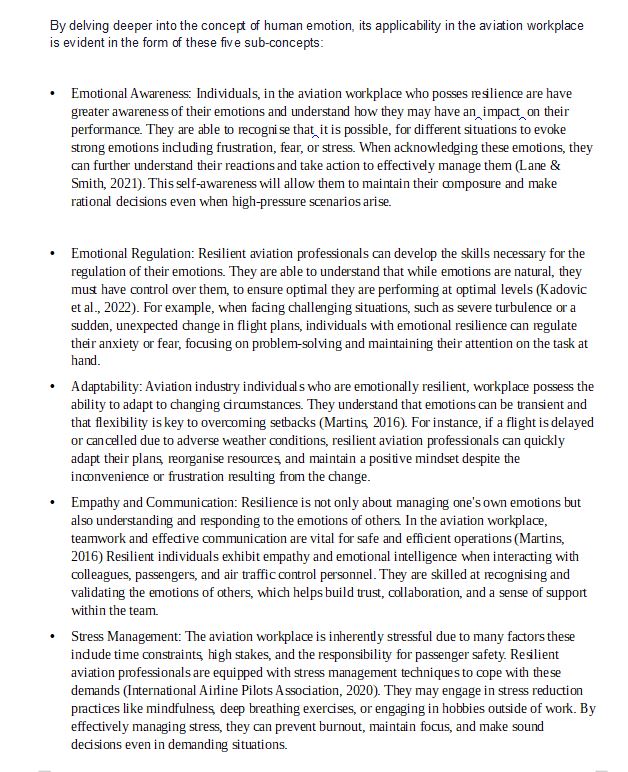
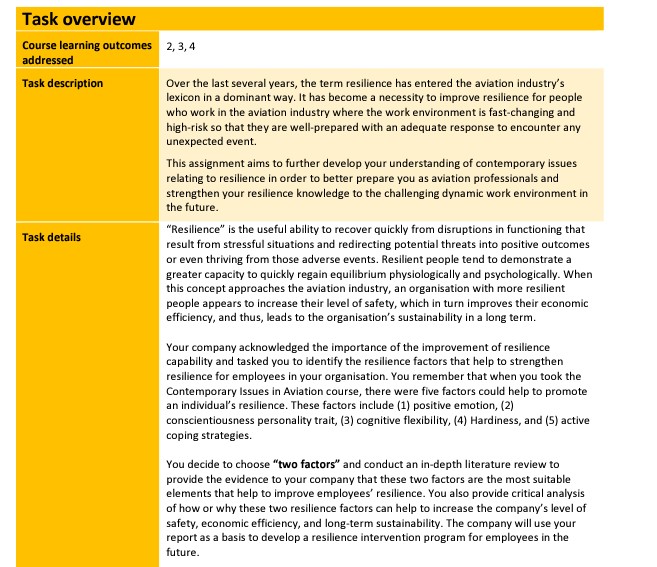
Cognitive Flexibility Cognitive flexibility is defined as the mental ability of adapting and shifting one's thinking, behaviour, and attention in the face of changing environments situations and/or demands. Involved in this, is the ability of switching between different tasks, perspectives, techniques, or strategies, for solving problems or effectively achieving goals (Archambeau & Gevers, 2018). Cognitive flexibility is an essential and crucial aspect of cognitive functioning and relates closely to other cognitive processes such as problem-solving, decision-making, and creativity. At its core cognitive flexibility, involves the ability to generate and implement different strategies, concepts, or perspectives while facing new or changing situations. As well as assisting individuals in overcoming rigid thinking patterns and adjust their thoughts and behaviours to suit the demands of the current, particular situation (Sprig et al., 2008). People who exhibit high levels of cognitive flexibility are more likely to approach problems and challenges from other angles, consider alternate solutions, and adjust their strategies if necessary. There are many key components which are contributing factors to cognitive flexibility . Task switching is the ability to shift one's attention and switch between different tasks or mental sets. This involves the disengagement from one task, to shift focus to another, and from there engaging and involving with the new task effectively (Schmitz & Kramer, 2023) For instance, suppose someone is working on a project and while do such, receives an urgent email, requiring their immediate attention. Cognitive flexibility will allow them to switch their your current task and divert their attention to responding to the email promptly and then returning to their original task in a seamless manner. Having good cognitive flexibility means one is able to prioritise important tasks, engage in effective time management and adapt mentally, to the demands which are required in addressing this new situation. Set shifting, Involved in this concept, are the abilities of an individual to alter their cognitive strategies, techniques, or approaches, when challenged with new information or when circumstances change. A_ requirement of this, is for individuals to posses the capacity, to abandon a previous mental set or thought pattern and adopt another, new one. The relevance of this component is particularly evident when it comes to tasks that require problem-solving (Brown & Tait, 2010). For instance, imagine there is a complex puzzle which someone is trying to solve, and they have continued_ using a specific approach that is achieving zero results. Cognitive flexibility allows them to recognise the necessity of adopting a new strategy or method, shifting your thinking, and exploring alternative approaches or perspectives to solve the puzzle. It involves being open to new ideas, considering differing possibilities, and adapting your thinking in a way that matches the requirements of the task . Cognitive inhibition refers to the ability of suppressing and/or ignoring information that is either_irrelevant or distracting. It involves the mental process of filtering out of irrelevant stimuli or thoughts, to ensure proper focus on what are the relevant aspects of the current task orIntroduction In today's aviation industry, experiencing difficulties and uncertainties are an unfortunate reality, this is due to the high-stake, dynamic environment in which it operates. The concept of resilience becomes an essential component for those within the organisation, for the ability to overcome such complexity. Possessing the capacity to adapt, recover and flourish in spite of difficulties is known as resilience. Besides basic survival, it enables people to quickly recover, learn from their faults, and further guarantee the efficient and secure execution of aviation operations. In the aviation industry, overestimating the importance of resilience is impossible. Every employee regardless of their level must be able to tolerate and overcome the occurrence of any possible unforeseen problem. As there are inherent hazards which are associated with air travel, which can include anything from adverse weather to serious technical problems (Flight Safety Foundation, 2021). Resilience is paramount for sustainability, in terms of operational effectiveness, ensuring passenger safety and to maintain the good reputation of the airlines. An example of this being demonstrated is when pilots make split-second judgements and decisions during an emergency situation or by the ground crew when they maintain crucial infrastructure under heavy pressure. The aviation industry is notable, in relation to its rapidly changing and high-risk environment. Aviation personnel will encounter new demands challenges on a continual basis, and must address everything from unpredictable technical developments to complying with strict, extensive safety expectations. To handle these problems properly, it becomes crucial for employees to develop situational resilience. Resilience allows people to mentally and physically adjust to shifting circumstances, make appropriate choices when under duress and continually maintain concentration in the midst of adversity. Aviation industry employees who demonstrate high levels of resilience, can possess a variety of coping skills, designed to assist them for success in their roles. Furthermore, those who are resilient posses the capacity for change adoption, as well as optimism, and can perceive obstacles as a chance for further personal development. They are more capable in dealing with stress, are better at effective collaboration and communication with others, and do well, even when facing their challenges. Essentially, resilience protects aviation employees from exhaustion and also improves their general well-being, maintaining their longevity and productivity in such a demanding industry. Resilience is crucial in the aviation industry because unanticipated problems and uncertainties are an intrinsic factor within this workplace. Resilience has a critical part to play in maintaining sustainability in the execution of operations by the encouragement of adaptability, recovery, and growth in the face of adversity. Aviation workers must have the mental and emotional strength to navigate through unforeseen challenges, make split-second judgements, and sustain operational performance in this dynamic and high-risk environment. The purpose of this assignment is to investigate the significance of resilience in the aviation industry and emphasise it's contribution to the longevity and success of aviation professionals (Landman et al.,2017). Cognitive inhibition refers to the ability of suppressing and or ignoring information that is eith er_ irrelevant or distracting. It involves the mental process of filtering out of irrelevant stimuli or thoughts, to ensure proper focus on what are the relevant aspects of the current task or situation. This component plays a crucial and vital role in cognitive flexibility as it assists in the prevention of cognitive rigidity, and instead allows for task and set-shifting efficiently (Gaspelin & Luck, 2018). For example, imagine someone is studying in somewhere is very loud and noisy. Cognitive inhibition enables the individual to ignore the noisy background and instead, concentrate on your reading material etc. while, maintaining focus in spite of the many distractions. It involves the ablility to filter out irrelevant in formation or data, prioritise relevant stimuli, and avoid being overwhelmed by distractions. . Rule switching is the ability to switch between different rule sets or cognitive frameworks. It involves understanding and applying different sets of rules or guidelines depending on the situation or circumstances. This component of cognitive flexibility is particularly relevant in situations where different contexts require different approaches or rules (Massachusetts Institute of Technology, 2018). For instance, imagine a board game is being played, that has its own set of rules, and then the players switch to playing a different board game with a completely different set of rules. Cognitive flexibility enables the player to understand and adapt to the rules of each game accordingly. It involves being able to grasp newrules more quickly, switch between different rule systems, and adjust your behaviour or strategy accordingly. In a workplace environment cognitive flexibility allows for an individual to adapt to changing demands, learning skills, and effectively collaborating with one and another. In day- to- day life, it assists in the navigation of social interactions, conflict management, and when unexpected challenges or difficulties occur, learning how to address them. Cognitive Flexibilty In The Aviation Industry In the aviation industry, the concept of cognitive flexibility becomes especially relevant, in particular, when expierncing crises such as the global CO MID-19 pandemic, shortages of staff, disruptions related adverse weather and fleet shoratges in relation to the number of aircraft availble for the airline's flight schedules. In studies of this topic, researchers conducted investigations on how cognitive flexibility impacts one's flexibility of how they perform in complex problem- solving tasks. These investigations demonstrated that pilots who had exhibited cognitive function at a higher level, further exhibited superior performance in their flight operations and had demonstrated a further abilities, allowing successful, quick adaption to unforseen predicaments. What these finding emphasise is the importance of cognitive flexibility for the purpose of changing conditions and prompt decision making (Kozheynikgy et al., 2007) At the height of the global CO VID-19 pandemic airlines had to find a way to manage challenges such as the dramatic decrease in passenger demand, domestic and international travel restrictions and many other operational disruptions. Cognitive flexibility enabled airlines to boost their creativity and consider their options for substituentheir business models in ways of providing transportation of freight and partically medical supplies and configuring aircraft for these purposes (Aviation Benefits Beyond Borders, 2020).Resilience Intervention Programs: The aviation industry faces unique challenges With the unique challenges faced by this industry, it becomes essential to posses a resilient workforce to navigate effectively. Therefore, developing a comprehensive resilience intervention program that encourages positive emotions and enhances cognitive flexibility is crucial for improving safety, efficiency, and sustain ability in the aviation workplace. This proposal introduces a program, integrating training, workshops, and support systems to cultivate a work force that is able adapt to adversity effectively. The aim of resilience intervention programs are to achieve several objectives; among them, the program aims in enhancing positive emotion and the development of cognitive flexibility. By fostering a workplace environment that encourages positive emotions, such as optimism, gratitude, and humour, employees' motivation levels, engagement, and well-being increase. Moreover, equipping employees with cognitive skills necessary for adaptive thinking, creative problem-solving, and flexible decision-making strategies promotes cognitive flexibility, a critical component of resilience. The program_ is effective in archiving these objectives by combining different key components. Training sessions are conducted to provide emotional intelligence training where employees learn to recognise, regulate and manage their emotions, as well as build strong and positive relationships. Additionally, cognitive flexibility workshops are conducted to stimulate adaptive thinking, encourage perspective-taking, and promote flexible decision-making strategies. The program also establishes support systems through peer support networks and mentoring programs that aid in connecting employees with peers, sharing experiences, and providing emotional and informational support. To ensure success ful implementation, several strategies need to be considered. These include securing support from top-level management through leadership buy-in, embedding training sessions into existing professional development programs, customisation, and developing a comprehensive communication and awareness plan. Customisation of the program to address the specific challenges and needs faced by different job roles within the aviation industry, such as aircrew, ground staff, and management, is crucial. Despite the potential benefits of implementing this program, several challenges may pose a risk to its success. Resistance to change among employees due to un familiarity with resilience concepts and concerns about additional workload may be a potential challenge. Addressing these concerns through effective communication and highlighting the program's potential benefits is important. Additionally, obtaining the necessary support, such as time, budget, and personnel, may require collaboration with relevant stakeholders to secure sufficient resources. Establishing an on going evaluation process to monitor the program's effectiveness and gathering feedback from participants will aid in program refinement and continuous improvement. The resilience intervention program proposed for the aviation industry aims to enhance positive emotion and cognitive flexibility among professionals. By integrating training sessions and support systems, organisations can cultivate a resilient workforce capable of effectively adapting to adversity. The implementation strategies outlined, including securing leadership buy-in, integrating training, customisation, and effective communication, address potential challenges and maxim ise the program's effectiveness. Continuous evaluation and feedback collection contribute to program refinement and ensure its long-term success. With the right strategies in place, the aviation industry can foster a culture of resilience, promoting safety, efficiency, and sustainability for years to come.Resilience is an attribute, which is essential in both the aviation industry and individually, in order to manage the obstacles and challenges. The aviation industry has for a long time, understood, the value of resilience, and in response, has utilised a variety of tactics to adapt, recover, and prosper in spite of this. Individuals may acquire useful lessons and apply them to their own lives by drawing parallels between aviation and human resilience. There are five characteristics that enhance human resilience (Tugade & Fredrickson, 2004) 1. Positive Emotion 2. Conscientious Personality Trait 3. Cognitive Flexibility 4. Hardiness: 5. Active Coping Strategies For the purpose of this assignment, we will be explore, two of these factors- positive emotion and cognitive flexibility - and delve into detail, how they are significant in building resilience. By the examination of how these factors apply within the aviation industry, we will be able to get an insight into their practical application and how they have the potential to enhance resilience in aviation industry domains. Human Emotion One of the most significant characteristics, influencing resilience is that of Human Emotion. Human emotion plays a vital role in shaping how an individual responds to challenging situations and their ability to recover from setbacks (Causse et al.,2013) The proper understanding and effective management of these emotions allows an individual to enhance their resilience within the aviation environment. For example, consider a pilot who encounters an unexpected mechanical failure while in- flight. This situation can set off a range of emotions including stress, anxiety, and even fear. However, a pilot who possesses this emotional intelligence, will be able to effectively recognise and regulate these emotions. When they are acknowledging their emotional state and taking action to manage, the pilot is able to focus, make rational decisions, and effectively address the current situation at hand (Lu et al., 2023). Furthermore, emotions also have an impact in the interpersonal dynamics within the aviation workplace. For instance, the stress and pressure of time- sensitive operations can lead to a heightened state of emotion among crew members. A resilient aviation professional will possess the ability to empathise and communicate effectively, even in challenging circumstances. By understanding and responding to the emotions of their colleagues, they can foster a supportive and collaborative environment, which is essential for effective teamwork and problem-solving (Kunzelmann & Rigotti, 2021). In order to further cultivate emotional resilience in the aviation industry, various training programs can be implemented for the purpose of enhancing emotional intelligence skills. These programs can provide aviation professionals with the tools to identify and regulate their emotions, as well as the emotions of others. Through techniques such as mindfulness, self-reflection, and effective communication, individuals can develop the emotional resilience necessary to navigate stressful situations with composure and adaptability (McGarrigle & Walsh, 2011).|By delving deeper into the concept of human emotion, its applicability in the aviation workplace is evident in the form of these five sub-concepts: Emotional Awareness: Individuals, in the aviation workplace who posses resilience are have greater awareness of their emotions and understand how they may have an_impact on their performance. They are able to recognise that it is possible, for different situations to evoke strong emotions including frustration, fear, or stress. When acknowledging these emotions, they can further understand their reactions and take action to effectively manage them (Lane & Smith, 2021). This self-awareness will allow them to maintain their composure and make rational decisions even when high-pressure scenarios arise. Emotional Regulation: Resilient aviation professionals can develop the skills necessary for the regulation of their emotions. They are able to understand that while emotions are natural, they must have control over them, to ensure optimal they are performing at optimal levels (Kadovic et al., 2022). For example, when facing challenging situations, such as severe turbulence or a sudden, unexpected change in flight plans, individuals with emotional resilience can regulate their anxiety or fear, focusing on problem-solving and maintaining their attention on the task at hand. Adaptability: Aviation industry individuals who are emotionally resilient, workplace possess the ability to adapt to changing circumstances. They understand that emotions can be transient and that flexibility is key to overcoming setbacks (Martins, 2016). For instance, if a flight is delayed or can celled due to adverse weather conditions, resilient aviation professionals can quickly adapt their plans, reorganise resources, and maintain a positive mindset despite the inconvenience or frustration resulting from the change. Empathy and Communication: Resilience is not only about managing one's own emotions but also understanding and responding to the emotions of others In the aviation workplace, teamwork and effective communication are vital for safe and efficient operations (Martins, 2016) Resilient individuals exhibit empathy and emotional intelligence when interacting with colleagues, passengers, and air traffic control personnel. They are skilled at recognising and validating the emotions of others, which helps build trust, collaboration, and a sense of support within the team. Stress Management: The aviation workplace is inherently stressful due to many factors these indude time constraints, high stakes, and the responsibility for passenger safety. Resilient aviation professionals are equipped with stress management techniques to cope with these demands (International Airline Pilots Association, 2020). They may engage in stress reduction practices like mindfulness, deep breathing exercises, or engaging in hobbies outside of work. By effectively managing stress, they can prevent burnout, maintain focus, and make sound decisions even in demanding situations.Task overview Course learning outcomes 2, 3, 4 addressed Task description Over the last several years, the term resilience has entered the aviation industry's lexicon in a dominant way. It has become a necessity to improve resilience for people who work in the aviation industry where the work environment is fast-changing and high-risk so that they are well-prepared with an adequate response to encounter any unexpected event. This assignment aims to further develop your understanding of contemporary issues relating to resilience in order to better prepare you as aviation professionals and strengthen your resilience knowledge to the challenging dynamic work environment in the future. Task details "Resilience" is the useful ability to recover quickly from disruptions in functioning that result from stressful situations and redirecting potential threats into positive outcomes or even thriving from those adverse events. Resilient people tend to demonstrate a greater capacity to quickly regain equilibrium physiologically and psychologically. When this concept approaches the aviation industry, an organisation with more resilient people appears to increase their level of safety, which in turn improves their economic efficiency, and thus, leads to the organisation's sustainability in a long term. Your company acknowledged the importance of the improvement of resilience capability and tasked you to identify the resilience factors that help to strengthen resilience for employees in your organisation. You remember that when you took the Contemporary Issues in Aviation course, there were five factors could help to promote an individual's resilience. These factors include (1) positive emotion, (2) conscientiousness personality trait, (3) cognitive flexibility, (4) Hardiness, and (5) active coping strategies. You decide to choose "two factors" and conduct an in-depth literature review to provide the evidence to your company that these two factors are the most suitable elements that help to improve employees' resilience. You also provide critical analysis of how or why these two resilience factors can help to increase the company's level of safety, economic efficiency, and long-term sustainability. The company will use your report as a basis to develop a resilience intervention program for employees in the future
Step by Step Solution
There are 3 Steps involved in it

Get step-by-step solutions from verified subject matter experts
 Study Help