



Question: Decision 3 Wool Inc. also sells wool so that crafters can use their signature wool to create their own products at home. Wool Inc. produces
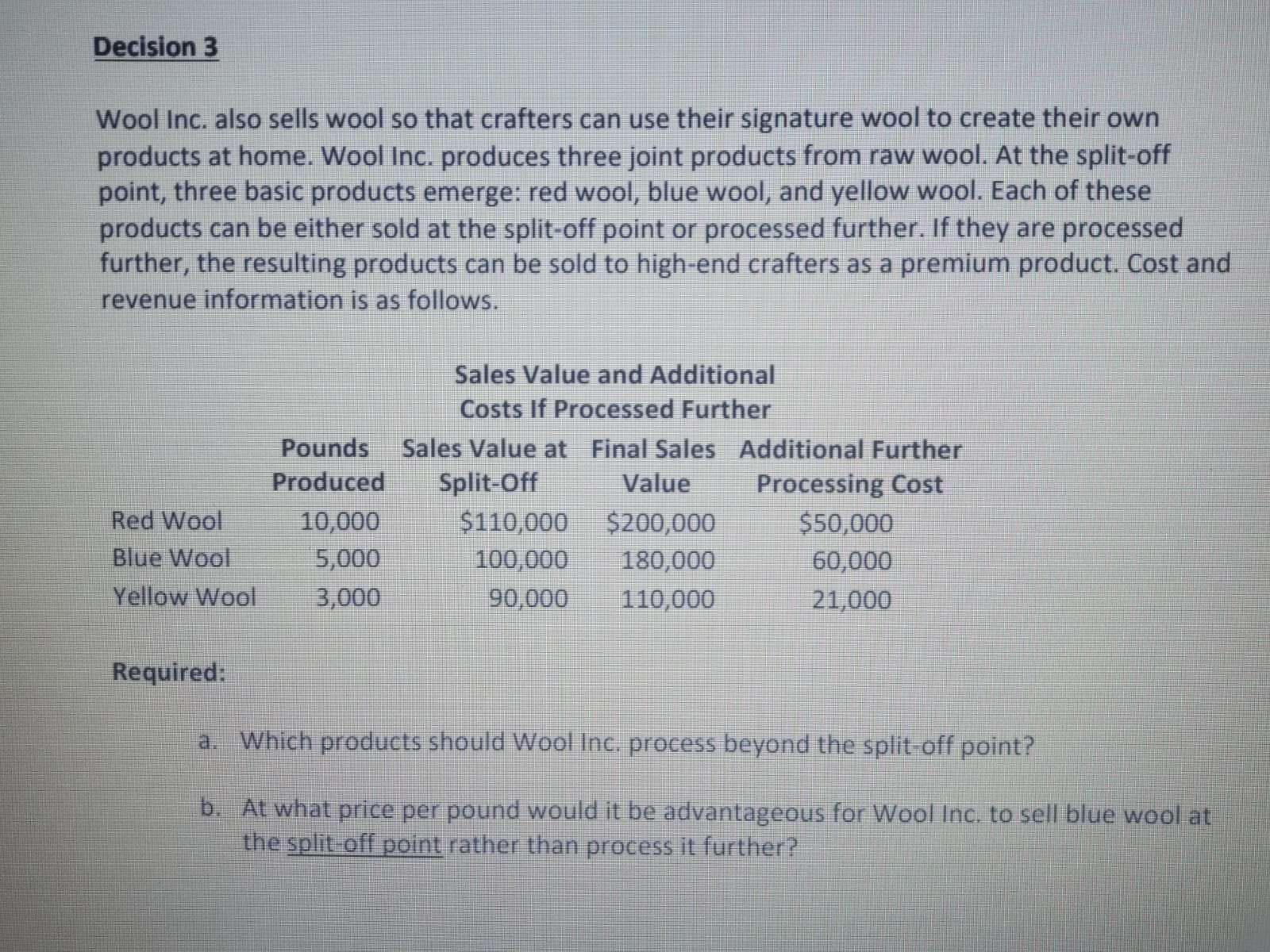
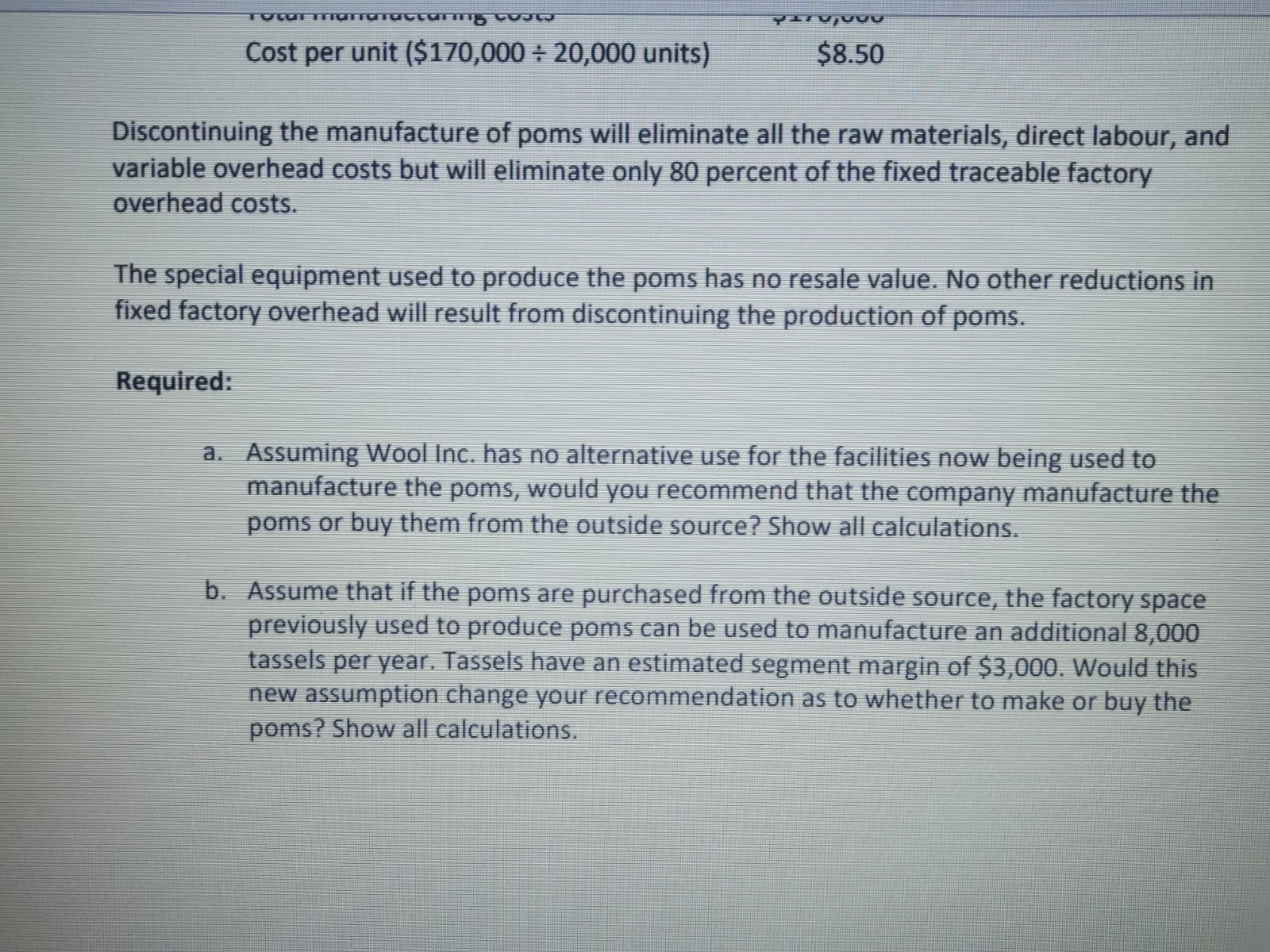
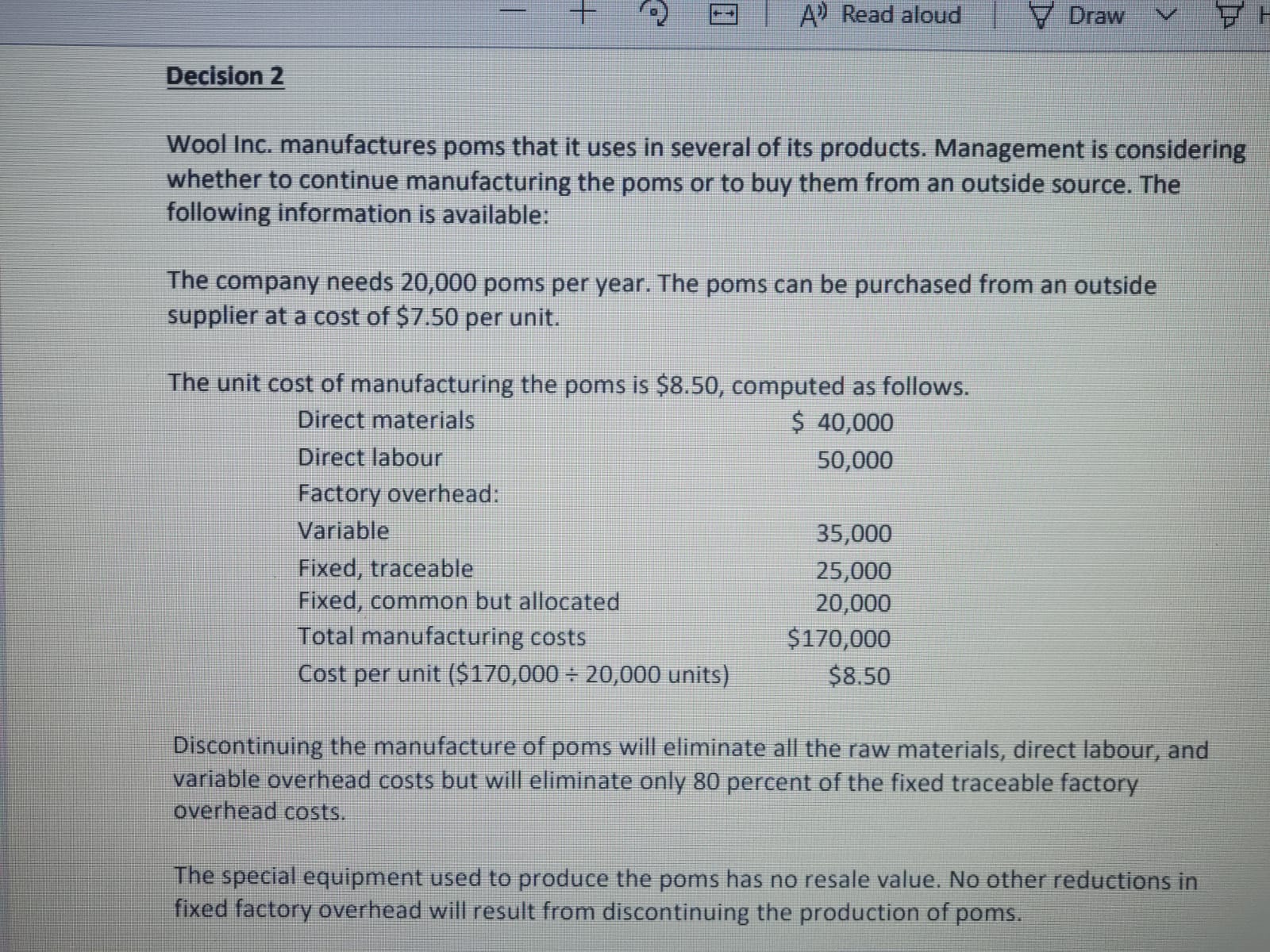
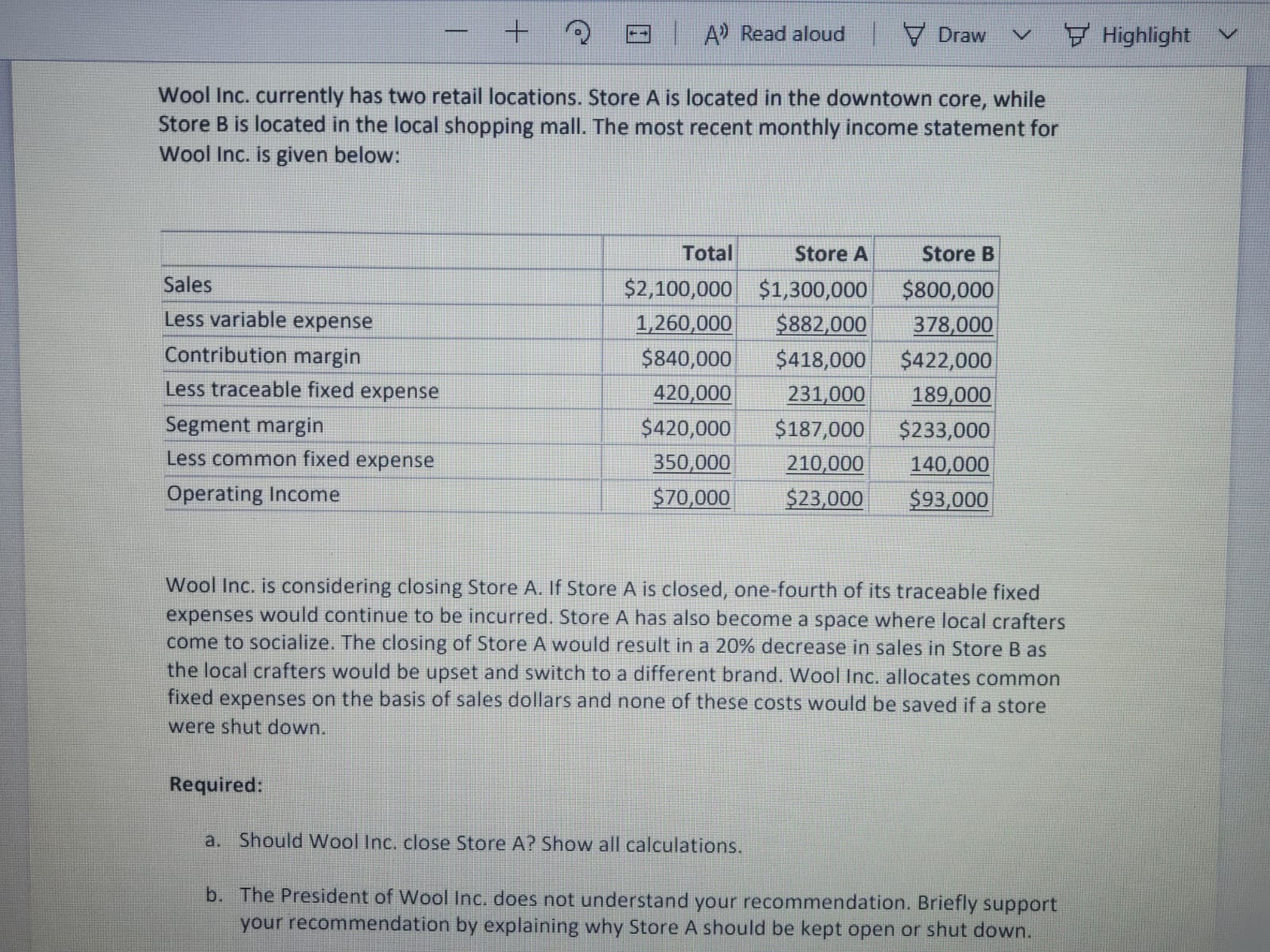
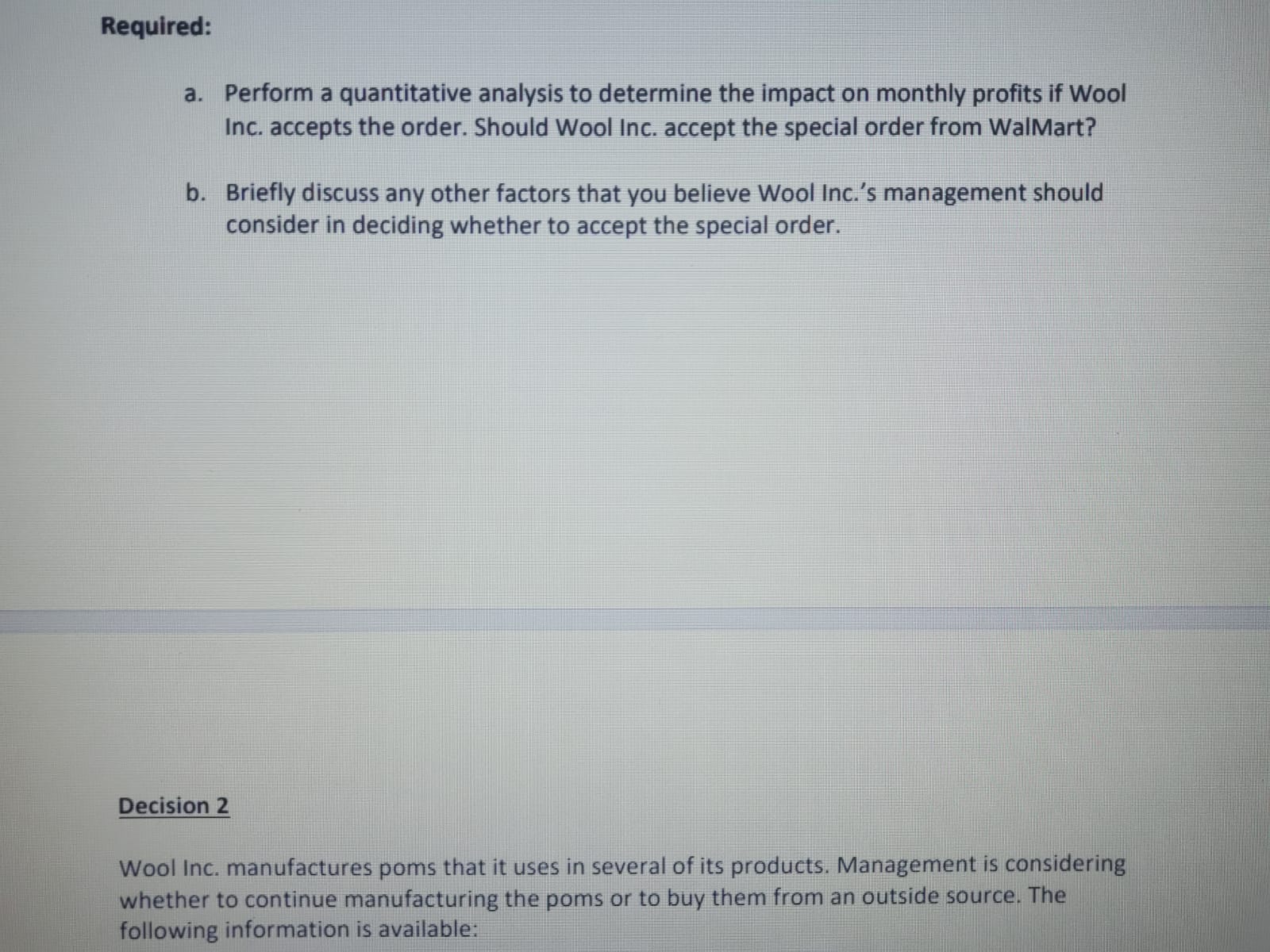
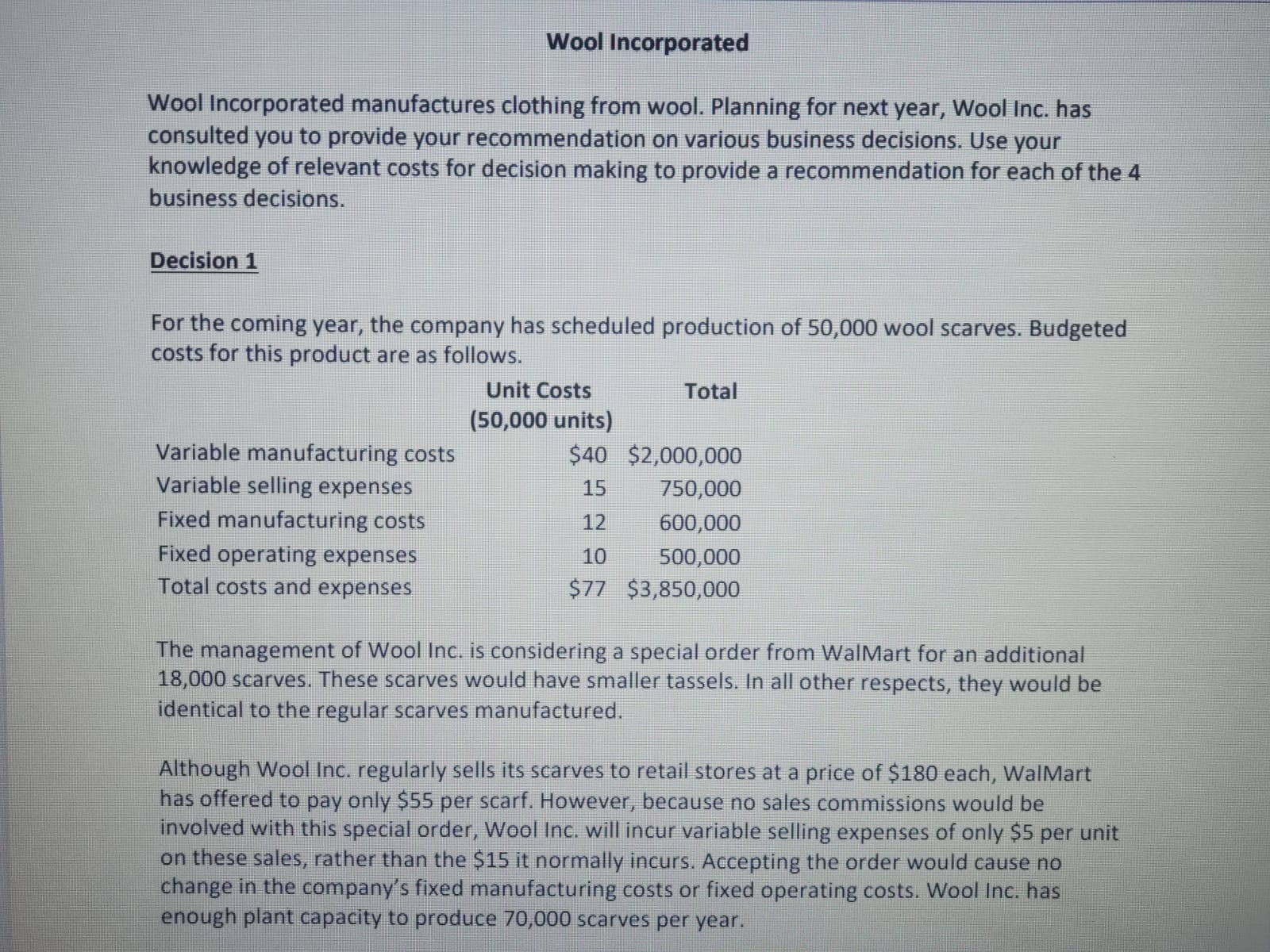
Decision 3 Wool Inc. also sells wool so that crafters can use their signature wool to create their own products at home. Wool Inc. produces three joint products from raw wool. At the split-off point, three basic products emerge: red wool, blue wool, and yellow wool. Each of these products can be either sold at the split-off point or processed further. If they are processed further, the resulting products can be sold to high-end crafters as a premium product. Cost and revenue information is as follows. Sales Value and Additional Costs If Processed Further Pounds Sales Value at Final Sales Additional Further Produced Split-Off Value Processing Cost Red Wool 10,000 $110,000 $200,000 $50,000 Blue Wool 5,000 100,000 180,000 60,000 Yellow Wool 3,000 90,000 110,000 21,000 Required: a. Which products should Wool Inc. process beyond the split-off point? b. At what price per pound would it be advantageous for Wool Inc. to sell blue wool at the split off point rather than process it further?TOCUT MUTTUTO Cost per unit ($170,000 + 20,000 units) $8.50 Discontinuing the manufacture of poms will eliminate all the raw materials, direct labour, and variable overhead costs but will eliminate only 80 percent of the fixed traceable factory overhead costs. The special equipment used to produce the poms has no resale value. No other reductions in fixed factory overhead will result from discontinuing the production of poms. Required: a. Assuming Wool Inc. has no alternative use for the facilities now being used to manufacture the poms, would you recommend that the company manufacture the poms or buy them from the outside source? Show all calculations. b. Assume that if the poms are purchased from the outside source, the factory space previously used to produce poms can be used to manufacture an additional 8,000 tassels per year. Tassels have an estimated segment margin of $3,000. Would this new assumption change your recommendation as to whether to make or buy the poms? Show all calculations.+ A) Read aloud Draw Decision 2 Wool Inc. manufactures poms that it uses in several of its products. Management is considering whether to continue manufacturing the poms or to buy them from an outside source. The following information is available: The company needs 20,000 poms per year. The poms can be purchased from an outside supplier at a cost of $7.50 per unit. The unit cost of manufacturing the poms is $8.50, computed as follows. Direct materials $ 40,000 Direct labour 50,000 Factory overhead: Variable 35,000 Fixed, traceable 25,000 Fixed, common but allocated 20,000 Total manufacturing costs $170,000 Cost per unit ($170,000 + 20,000 units) $8.50 Discontinuing the manufacture of poms will eliminate all the raw materials, direct labour, and variable overhead costs but will eliminate only 80 percent of the fixed traceable factory overhead costs. The special equipment used to produce the poms has no resale value. No other reductions in fixed factory overhead will result from discontinuing the production of poms.A) Read aloud | V Draw V Highlight Wool Inc. currently has two retail locations. Store A is located in the downtown core, while Store B is located in the local shopping mall. The most recent monthly income statement for Wool Inc. is given below: Total Store A Store B Sales $2,100,000 $1,300,000 $800,000 Less variable expense 1,260,000 $882,000 378,000 Contribution margin $840,000 $418,000 $422,000 Less traceable fixed expense 420,000 231,000 189,000 Segment margin $420,000 $187,000 $233,000 Less common fixed expense 350,000 210,000 140,000 Operating Income $70,000 $23,000 $93,000 Wool Inc. is considering closing Store A. If Store A is closed, one-fourth of its traceable fixed expenses would continue to be incurred. Store A has also become a space where local crafters come to socialize. The closing of Store A would result in a 20% decrease in sales in Store B as the local crafters would be upset and switch to a different brand. Wool Inc. allocates common fixed expenses on the basis of sales dollars and none of these costs would be saved if a store were shut down. Required: a. Should Wool Inc. close Store A? Show all calculations. b. The President of Wool Inc. does not understand your recommendation. Briefly support your recommendation by explaining why Store A should be kept open or shut down.Required: a. Perform a quantitative analysis to determine the impact on monthly profits if Wool Inc. accepts the order. Should Wool Inc. accept the special order from WalMart? b. Briefly discuss any other factors that you believe Wool Inc.'s management should consider in deciding whether to accept the special order. Decision 2 Wool Inc. manufactures poms that it uses in several of its products. Management is considering whether to continue manufacturing the poms or to buy them from an outside source. The following information is available:Wool Incorporated Wool Incorporated manufactures clothing from wool. Planning for next year, Wool Inc. has consulted you to provide your recommendation on various business decisions. Use your knowledge of relevant costs for decision making to provide a recommendation for each of the 4 business decisions. Decision 1 For the coming year, the company has scheduled production of 50,000 wool scarves. Budgeted costs for this product are as follows. Unit Costs Total (50,000 units) Variable manufacturing costs $40 $2,000,000 Variable selling expenses 15 750,000 Fixed manufacturing costs 12 600,000 Fixed operating expenses 10 500,000 Total costs and expenses $77 $3,850,000 The management of Wool Inc. is considering a special order from WalMart for an additional 18,000 scarves. These scarves would have smaller tassels. In all other respects, they would be identical to the regular scarves manufactured. Although Wool Inc. regularly sells its scarves to retail stores at a price of $180 each, WalMart has offered to pay only $55 per scarf. However, because no sales commissions would be involved with this special order, Wool Inc. will incur variable selling expenses of only $5 per unit on these sales, rather than the $15 it normally incurs. Accepting the order would cause no change in the company's fixed manufacturing costs or fixed operating costs. Wool Inc. has enough plant capacity to produce 70,000 scarves per year
Step by Step Solution
There are 3 Steps involved in it

Get step-by-step solutions from verified subject matter experts