







Question: DECISION PROBLEM 3: Managing Constraints Reminder: A single constraint in a system can impact the entire output as sub-processes sit idle, waiting for work. Identifying
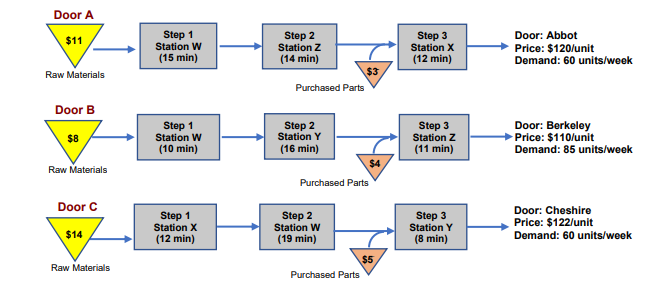
DECISION PROBLEM 3: Managing Constraints Reminder: A single constraint in a system can impact the entire output as sub-processes sit idle, waiting for work. Identifying and reducing (even eliminating) a single constraint can have a dramatic improvement on performance and profitability. To match the three styles of window frames Olde World produces - the Abbot, the Berkeley, and the Cheshire - the company also produces the same three styles of door frames. These are fabricated at four different stations - W, X, Y and Z. They utilize a batch process that is quite efficient resulting in setup times that are negligible. The process sequence below shows the prices, weekly demand, and processing times for each of the three door styles. The costs for raw materials and any parts that are purchased from outside suppliers are per-unit consumption rates as shown in the inverted triangles. Additional information: ? There is no additional cost or penalty for not meeting the full demand. ? There is one worker at each station who is paid $20/hour and works a 40-hour week. ? Fixed costs for overhead are $10,000/week.
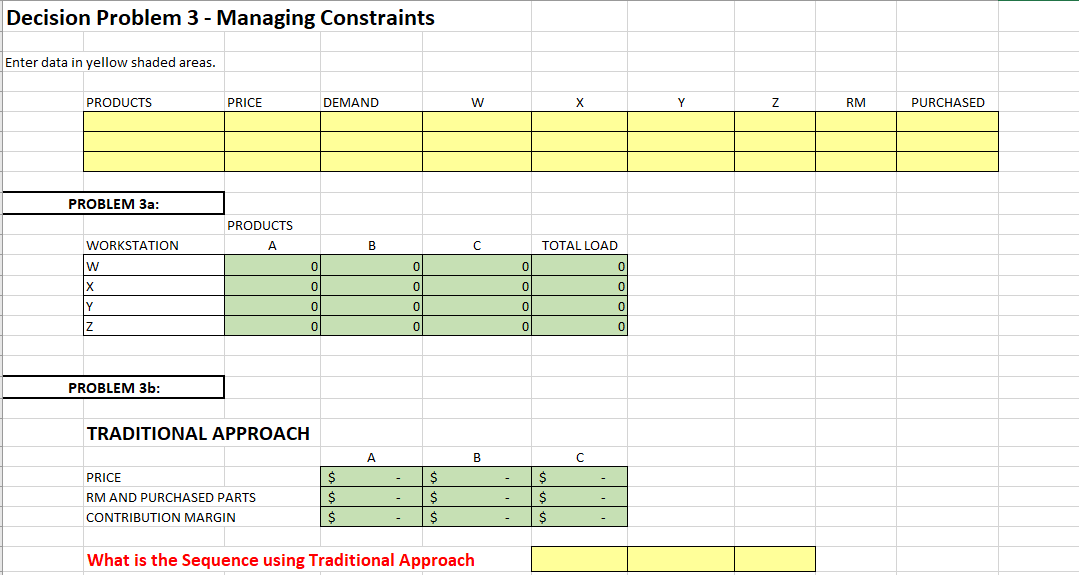
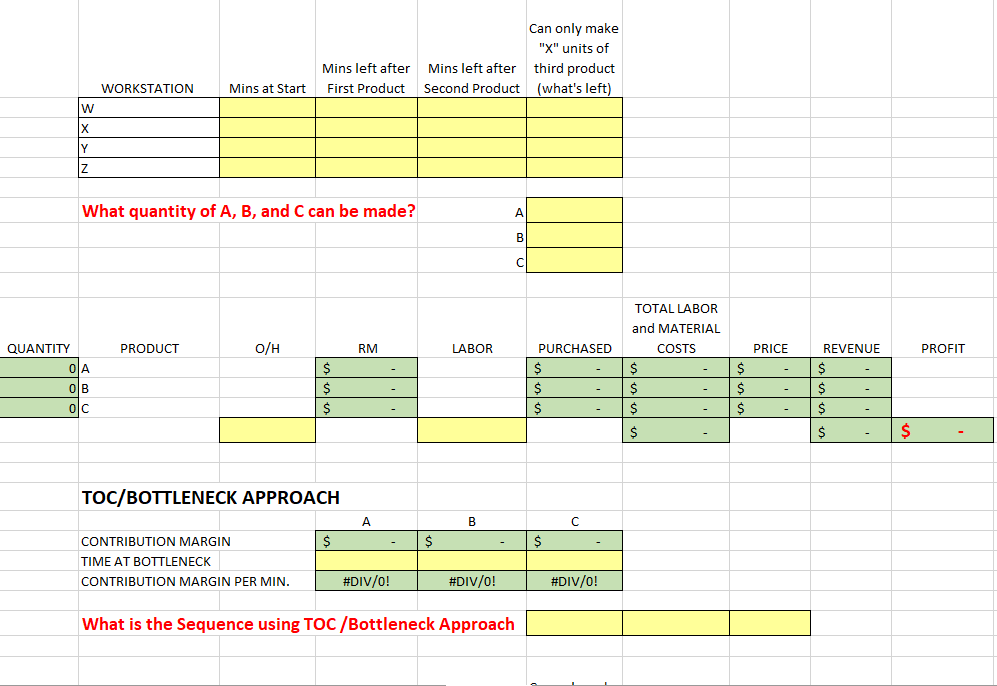
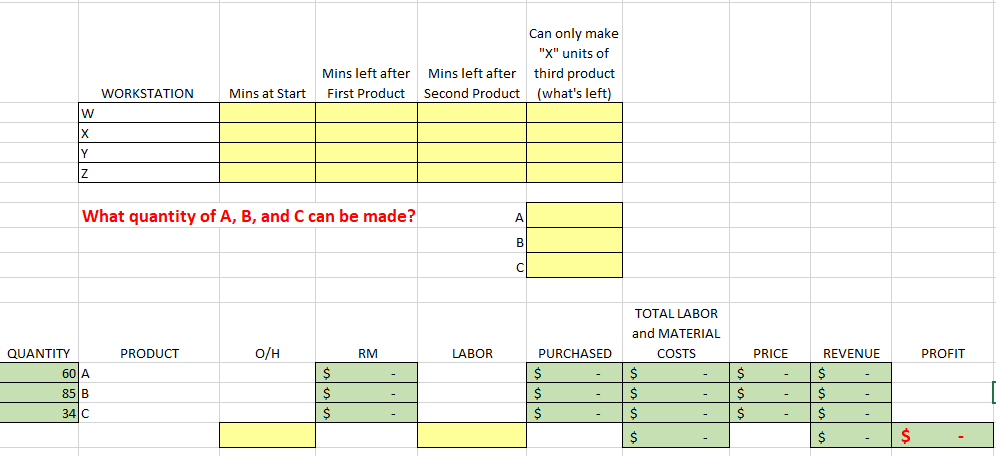
\fDecision Problem 3 - Managing Constraints Enter data in yellow shaded areas. PRODUCTS PRICE DEMAND W X Y Z RM PURCHASED PROBLEM 3a: I PRODUCTS WORKSTATION A B C TOTAL LOAD W O O O O X 0 0 O 0 Y 0 0 O 0 Z 0 0 O 0 PROBLEM ah: I TRAD |T| 0 NAL APP ROACH A B C PRICE 5 S - S - RM AND PURCHASED PARTS 5 S S CONTRIBUTION MARGIN s S - S - What is the Sequence using Traditional Approach \fCan only make "X" units of Mins left after Mins left after third product WORKSTATION Mins at Start First Product Second Product {what's left} W X Y Z What quantity of A, B, and C can be made? A B C TOTAL LABOR and MATERIAL QUANTITY PRODUCT OfH RM LABOR PURCHASED COSTS PRICE REVENUE PROFIT 50 A s 35 E $ 34 c S S
Step by Step Solution
There are 3 Steps involved in it

Get step-by-step solutions from verified subject matter experts
 Study Help