Question: Decision-Making Steps Order Identify the alternatives. Evaluate the results. Select the best alternative. Evaluate the alternatives. Define the decision situation. Implement the chosen alternative. After
Decision-Making Steps Order Identify the
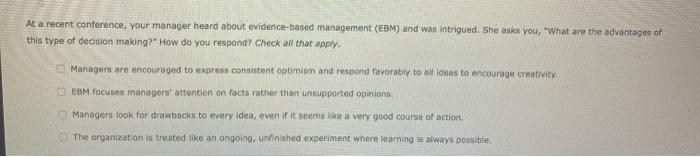
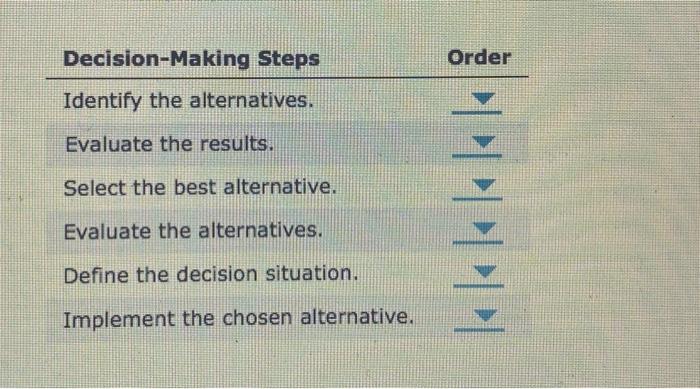
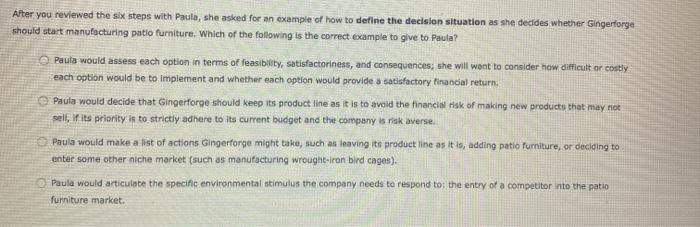
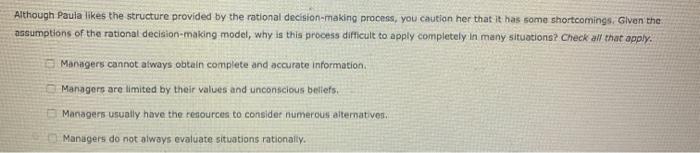
Decision-Making Steps Order Identify the alternatives. Evaluate the results. Select the best alternative. Evaluate the alternatives. Define the decision situation. Implement the chosen alternative. After you reviewed the six steps with Paula, she asked for an example of how to define the decision situation as she decides whether Gingerforge should start manufacturing patio furniture. Which of the following is the correct example to give to Paula? Paula would assess each option in terms of feasibility, satisfactoriness, and consequences; she will want to consider how difficult or costly each option would be to implement and whether each option would provide a satisfactory financial return. Paula would decide that Gingerforge should keep its product line as it is to avoid the financial risk of making new products that may not self , in its priority in to strictly adhere to its current budget and the company is risk averse Paula would make a list of actions Gingerforge might take, such as leaving its product line as it is, adding patio Furniture, or deciding to enter some other niche market (such as manufacturing wrought iron bird cages), Paula would articulate the specific environmental stimulus the company needs to respond to the entry of a competitor into the patio furniture market. Although Paula likes the structure provided by the rational decision-making process, you caution her that it has some shortcomings. Given the assumptions of the rational decision-making model, why is this process difficult to apply completely in many situations? Check all that apply. Managers cannot always obtain complete and accurate information Managers are limited by their values and unconscious beliefs. Managers usually have the resources to consider numerous alternativen. Managers do not always evaluate situations rationally. At a recent conference, your manager heard about evidence-based management (EBM) and was intrigued. She asks you, "What are the advantages of this type of decision making? How do you respond? Check all that apply. Managers are encouraged to express consistent optimism and respond favorably to all ideas to encourage creativity, EBM focuses managers' attention on facts rather than unsupported opinions Managers look for drawbacks to every idea, even if it seems like a very good course of action The organization is treated like an ongoing, unfinished experiment where learning is always possible
Step by Step Solution

There are 3 Steps involved in it

1 Expert Approved Answer
Step: 1 Unlock blur-text-image

Question Has Been Solved by an Expert!

Get step-by-step solutions from verified subject matter experts

Step: 2 Unlock
Step: 3 Unlock

Students Have Also Explored These Related General Management Questions!